

All Sights
The sights, landmarks, points of interest, entertainment and dining on the Costa Brava. Filter by type and location to quickly find places to visit on the Costa Brava coast.

Phone number: 972 222 229
Opening hours (October-April): Tuesday-Saturday 10:30 am to 5:30 pm, Sundays and holidays 10:30 am to 1:30 pm.
Opening hours (May-September): Tuesday-Saturday 10:30 am to 6:30 pm, Sundays and holidays 10:30 am to 1:30 pm.
Closed on 25th and 26th December, 1st and 6th January. Open on 5th January 10:30 am to 1:30 pm.
Museum of History of Girona
41.9869040000, 2.8250910000
Phone number: 972 216 761
Opening hours (September-June): Tuesday-Saturday 10:00 am to 6:00 pm; Mondays, Sundays and holidays 10:00 am to 2:00 pm.
Opening hours (July-August): Monday-Saturday 10:00 am to 8:00 pm, Sundays and holidays 10:00 am to 2:00 pm.
Open 24th and 31st December 10:00 am to 2:00 am.
Closed on 25th and 26th December, 1st and 6th January.
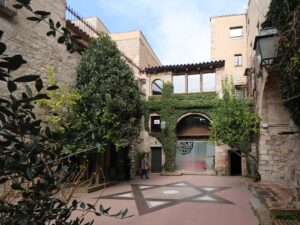
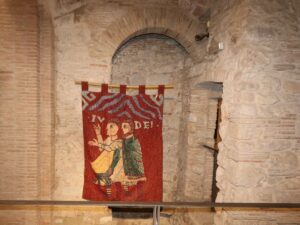
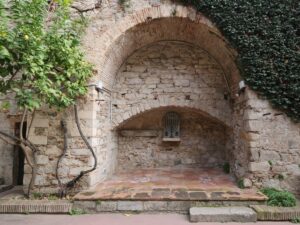
Museum of Jewish History
41.9859910000, 2.8252720000
Phone: 972 755 180
Opening hours (September-June): Mondays and Wednesday-Saturday 10:00 am to 2:00 pm and 5:00 pm to 8:00 pm, Sundays 10:00 am to 2:00 pm.
Opening hours (July-August): Monday-Saturday 10:00 am to 2:00 pm and 5:30 pm to 9:00 pm, closed on Sundays and holidays, except Sant Genís.
Closed on 25th and 26th December, 1st and 6th January.
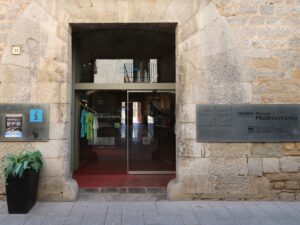
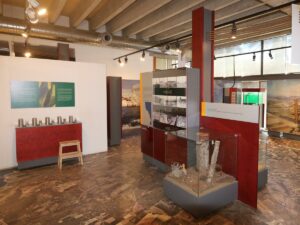
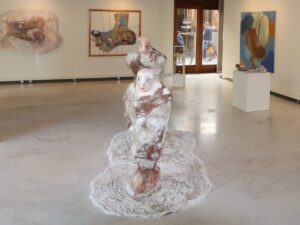
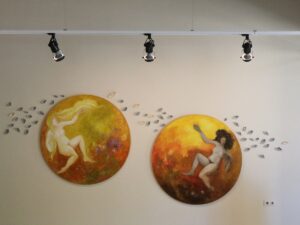
Museum of Mediterrània
42.0412200000, 3.1246620000
Fundació Vila Casas is a non-profit organization created in 1986 to finance projects promoting modern arts and medical research. Its founder was Antoni Vila Casas, a Catalan pharmaceutical entrepreneur and one of the richest people in Spain.
Today, the foundation supports three museums located in Catalonia: Can Framis, the museum of modern painting in Barcelona, Can Mario, the museum of modern sculpture in Palafrugell, and Palau Solterra, the museum of modern photography in Torroella de Montgrí.
The museum of Palau Solterra opened in 2000 in a 15th-century palace that was once the residence of Counts of Torroella de Montgrí. The collection boasts over 200 photographic works by artists from all over the world.
For opening hours of Palau Solterra, visit its official website.
Phone: 972 761 976
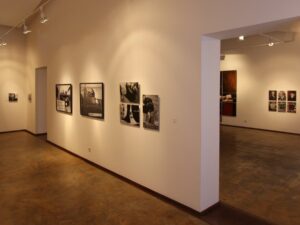


Museum of Palau Solterra
42.0415630000, 3.1260100000
Phone number: 972 538 125
Door opening time points (September-June): Tuesday-Saturday 10:00 am, 11:00 am, 12:00 pm, 3:30 pm, 4:30 pm and 5:30 pm; Sundays and holidays 10:00 am, 11:00 am and 12:00 pm.
Door opening time points (July-August): every day 10:00 am, 11:00 am, 12:00 pm, 4:00 pm, 5:00 pm, 6:00 pm, 7:00 pm and 8:00 pm.
Closed on 1st and 6th January, 25th and 26th December.
Museum of the Castle of Peralada
42.3075510000, 3.0097530000
Phone number: 972 250 859
Opening hours (1st November to 31st March): Tuesday-Sunday 10:00 am to 2:00 pm and 4:00 pm to 6:00 pm, visits on Mondays by appointment only.
Opening hours (1st April to 30th June): Tuesday-Sunday and holidays 10:00 am to 2:00 pm and 4:00 pm to 7:00 pm, visits on Mondays by appointment only.
Opening hours (1st July to 10th September and Festival Terra de Trobadors): every day (except holidays) 10:00 am to 8:00 pm.
Opening hours (12th September to 31st October): Tuesday-Sunday and holidays 10:00 am to 2:00 pm and 4:00 pm to 7:00 pm, visits on Mondays by appointment only.
Closed on 1st and 6th January, 11th September, 25th and 26th December.
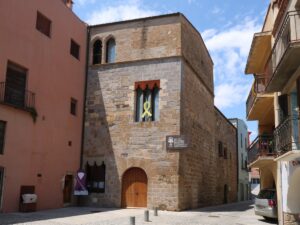
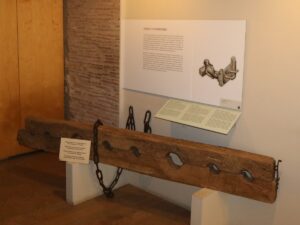
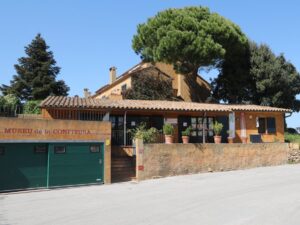
Museum of the History of the Medieval Courts and Prisons, XIV c.
42.2579450000, 3.0747800000
Phone number: 972 841 213
Opening hours: Monday-Friday 9:00 am to 1:00 pm and 3:00 pm to 7:00 pm, Sundays and Saturdays by appointment only.
Museum of Trias
41.8571490000, 2.6745230000
Phone number: 972 251 015
Opening hours: official site
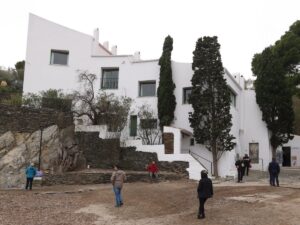


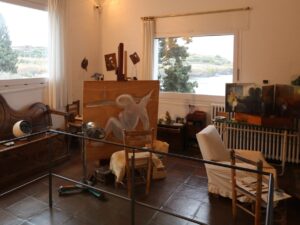
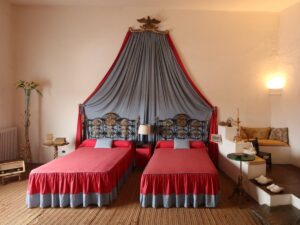

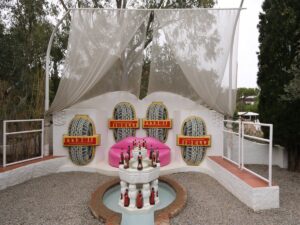
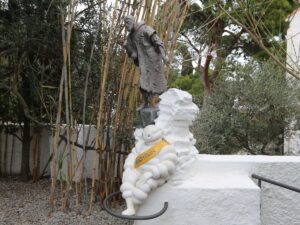
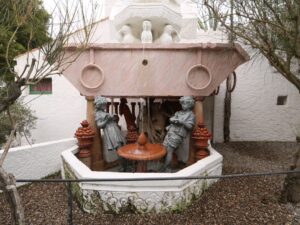
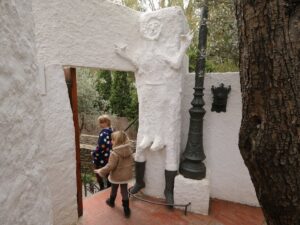
Museum-House of Salvador Dalí
42.2932180000, 3.2859740000
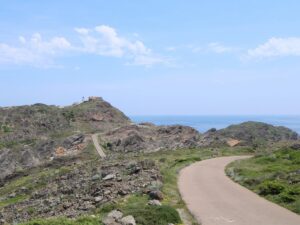
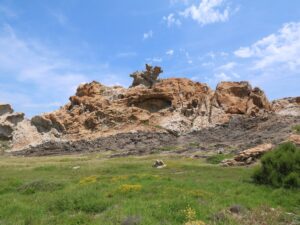
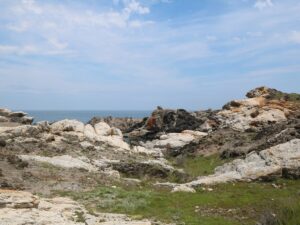
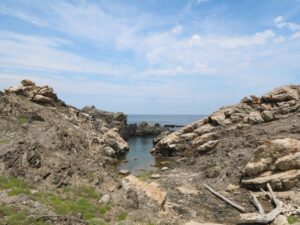
This swimming pool, located right by the sea between the beaches Platja de Fornells and Platja Fonda in Begur is marked as a local attraction on Google Maps, known to the world as Piscina natural Es Cau (the natural pool Es Cau). The water in it is definitely from the sea, but the way it gets in is not natural. Rather, it is replenished by a pump hidden in a small stone enclosure on the side. Calling it “natural” is a bit of a stretch, but the desire of passersby and tourists strolling along Camí de Ronda1 to take a dip is anything but!
Just as natural is the annoyance it causes the apartment owners nearby to whom the pool actually belongs—the seemingly brilliant idea to put smooth rocks on the shore to good use occurred to local residents about half a century ago. Today, explaining that the pool is, in fact, private property is a bit of a drag, and the problem is made worse by the fact that thousands of new people encounter the beautiful spot every day of the season.
Fencing it off isn’t an option due to the municipal law prohibiting any construction within 20 meters off the sea. The residents could disconnect the pump entirely, but thankfully it hasn’t yet come to that.
1)Camí de Ronda is a hiking route running between Blanes and Portbou along the Costa Brava coast.
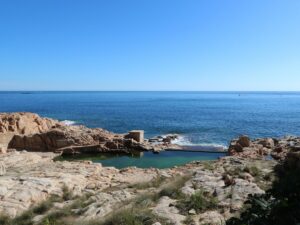
Natural pool Es Cau
41.9399620000, 3.2175940000
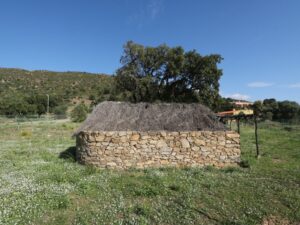
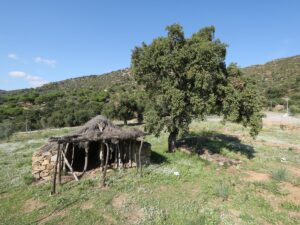
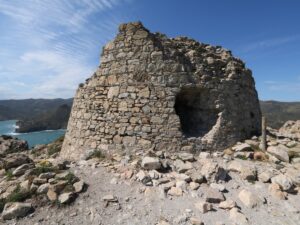
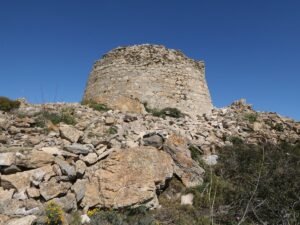
The Norfeu Tower (Torre Norfeu) stands 174 metres above the coves Cala Calitjàs and Cala Jóncols. It’s not part of Spain’s cultural heritage list, even though of course it gets mentioned in architectural monument catalogues and is labelled as a “monument of local interest”.
It’s a shame; the history of the Norfeu Tower is full of curiosities—it is one of the dozens of lookout towers built in the Costa Brava between the 15th and 16th centuries that, unlike its counterparts, has plenty of stories to tell.
Usually, this type of fortification tower was built by local municipalities or even private citizens, so most of the construction, occupation and decommission flew under the radar of historical archives. Not the Norfeu Tower: the royal decree by King Felipe III, dated June 30, 1599, specifically orders the establishment, staffing and arming of a lookout tower on the Cape of Norfeu. The explicit goal was to prevent Arab pirates from collecting drinking water from the springs in the area of Calitjàs and Jóncols coves, of which there are three—Norfeu, Floris and Canadell. Italian architect Hyeronimo Marahi was named head of the project and paid from the royal coffers directly.
None of the original blueprints have survived to this day, but we have records of schematic drawings and detailed descriptions put together by the engineer Agustín de Alberti.
Where the modern-day ruins of Torre Norfeu now stand, once was a two-storey tower with a circular base and a roof battlement. The ground floor housed a 50 cubic litre water tank with a round opening in its lid to facilitate drawing. Rainwater collected on the roof and drained into the tank through tiled pipes. The water tank and the remnants of the water collection system survived to this day.
The entrance to the tower was on the second floor, accessible only by a retractable ladder. The second floor is divided into four rooms, each with its own loophole. The battlement access ladder was right by the entrance door. The parapet of the battlement was equipped with machicolations, or floor openings, on three sides to make it easier to throw stones or pour boiling water over attackers. The eastern side of the battlement contained a semispherical arch to temper the force of the local strong wind Tramuntana. The total height of the tower from the ground to the highest point of the battlement was 7.5 metres.
Norfeu Tower
42.243420, 3.250281
The Norfeu Tower (Torre Norfeu), the lone structure standing on the mountain between the coves Cala Pelosa and Cala Joncols some ten kilometres from Roses, was built between 1598 and 1599 as part of the chain of watchtowers spread along the coast between Roses and Cadaqués to protect the locals from pirates.
Originally, the tower had two floors and a battlement protected by a serrated parapet. It was 7.5 m tall and contained a wooden staircase used by its garrison to move between floors and embrasures to open fire on the enemy. The ground floor of the tower was equipped with a water reservoir.
Most structures of this kind that were built away from residential areas slowly unravel and deteriorate, unable to resist nature’s claim or visitors seeking construction material to steal. As evidenced by the archives of the parish church of Cadaqués, it didn’t take long for the tower of Norfeu to meet its demise—a hit by lightning in the 17th century rendered it unusable.
The climb towards the tower Norfeu begins from the point with the coordinates 42.247698, 3.247532, found on the highway Carretera de Montjoi leading out of Roses.
Norfeu Tower
42.2434200000, 3.2502810000