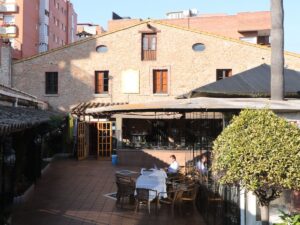


Sights of Lloret de Mar

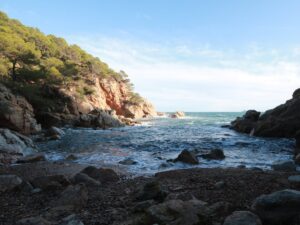
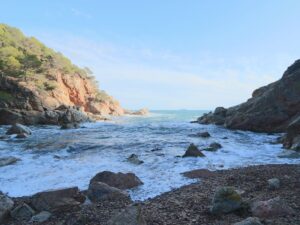
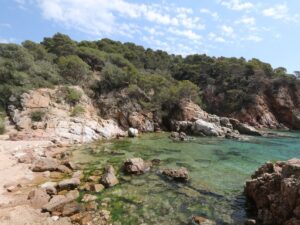
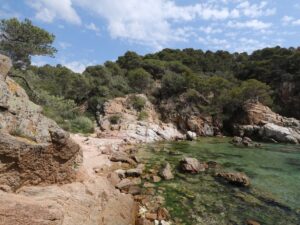
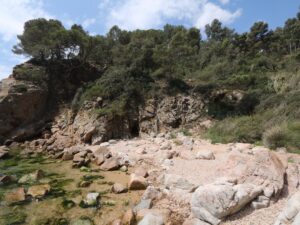
Directions: From the Castell de Plaja on the northern end of the city beach, walk 5 minutes along Camí de Ronda.
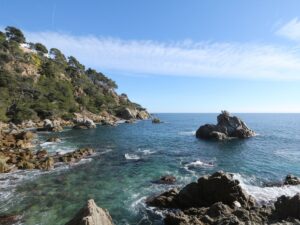
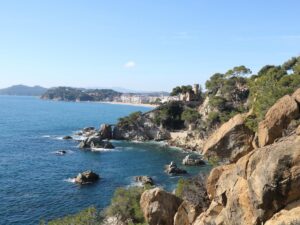
Cala dels Frares
41.6992450000, 2.8605180000
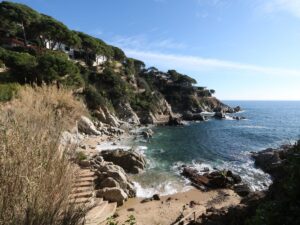
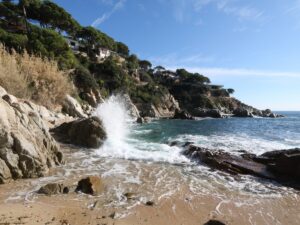
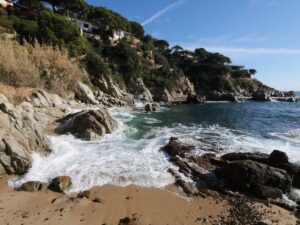
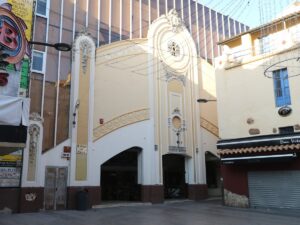
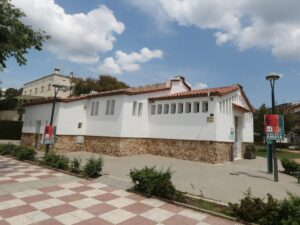
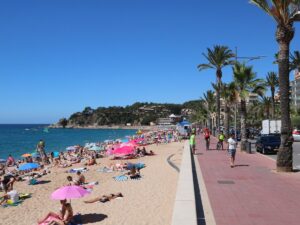
The beach of Fenals (Platja de Fenals) is the second largest beach in Lloret de Mar, surpassed only by the main city beach in the number of visitors. The beach of Fenals is a sand beach that’s 725 m long and 45 m wide. It is equipped with outdoor showers, parasol and hammock rentals, surrounded by cafés and restaurants. Platja Fenals a favourite among families visiting the central part of the Costa Brava coast.
The beach is also the starting point for two open water swimming lanes within the Vies Braves network that’s been growing here since 2014. From Platja de Fenals, swim towards Platja Santa Cristina to the south or to the city beach of Lloret de Mar in the north.
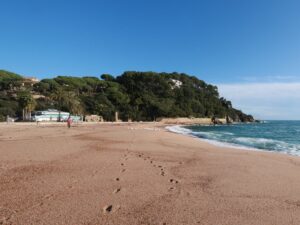
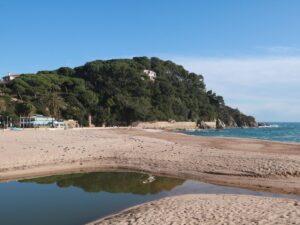
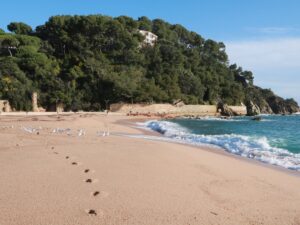
Fenals Beach
41.6947370000, 2.8348000000
Phone: 972 364 454
Opening hours: June-August Saturdays 5:00 pm to 7:00 pm
Iberian Village of Puig del Castellet
41.7160750000, 2.8482360000
Phone: 972 364 454
Opening hours:
October-May Saturdays, Sundays and holidays 10:00 am to 2:00 pm,
June-September every day 10:00 am to 1:00 pm and 5:00 pm to 7:00 pm
Closed on 1st and 6th January, 25th and 26th December
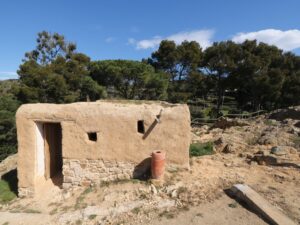


Iberian Village of Turó Rodó
41.6997800000, 2.8597770000
Starting almost any building project in Catalonia at the end of the 19th and the beginning of the 20th century guaranteed predictable, eye-pleasing results: Art Nouveau had taken the region by storm and started resembling an epidemic during that era. For the art lovers today, who are enthralled by the architectural style, this is a blessing and a curse: not only do we visit museums, theatres and lush houses of the bourgeoisie, but also explore former hospitals1, slaughterhouses2, tuberculosis dispensaries3 and even active cemeteries to get our fix.
The restoration works at the cemetery of Lloret de Mar took place in the heyday of Catalan Art Nouveau (the renovated cemetery was inaugurated on November 2, 1901) and coincided with the return home of yet another group of indianos (Spanish nationals who left Europe to make fortunes in Latin America and to return home extremely wealthy). Once all the splendid villas that were clearly necessary for the enjoyment of life were built, the indianos rolled up their expensive sleeves to prepare for comforts in the life after next, commissioning numerous family crypts, mausoleums, and monuments from the renowned architects and sculptors of the time.
And so, in Lloret de Mar, the place of eternal rest and remembrance turned into a tourist attraction. Today, each grave in the central part of the cemetery is marked with an information plaque that indicates the monument’s creator, the date it was built, the techniques used and any possible inspirations. Many monuments feature a photograph of the master that many visitors take for the portrait of the deceased. This is the case with Bonaventura Conill who contributed several works to the Lloret de Mar cemetery. After encountering his photo numerous times, one may inadvertently wonder just how many times he managed to die!
If you need a bit more convincing to visit a cemetery as part of your annual vacation, consider the names of Antoni Gallissà4, Eusebi Arnau5 and the great Josep Puig i Cadafalch. They all contributed to the unique Modernist cemetery in Lloret de Mar.
The cemetery is open to visitors from 8 am to 6 pm from November to March, and to 8 pm from April to October. The entrance is found at the intersection of Carrer de Plató and Avinguda Vila de Blanes.
1)Hospital San Pau (officially known as El Hospital de la Santa Creu i Sant Pau) is a grandiose project of the Catalan Art Nouveau architect Lluís Domènech i Montaner.
2)Escorxador, “slaughterhouse”, is the project of Pere Caselles located in Reus, at Carrer Escorxador, s/n.
3)Dispensari Antituberculós, “anti-tuberculosis dispensary”, was built by Joan Rubió i Bellver, a pupil of Antoni Gaudí, in Reus, at Carrer Sant Joan, 38.
4)Antoni Maria Gallissà i Soqué is a Catalan Art Nouveau architect and a professor of the Barcelona School of Architecture who was famous not only for his standalone work in Barcelona and its environs, but also for participation in the projects of Lluís Domènech i Montaner, Josep Jujol, Elies Rogent and other notable masters.
5)Eusebi Arnau i Mascort is a famous Catalan Art Nouveau sculptor who collaborated with Lluís Domènech i Montaner, Josep Puig i Cadafalch, and Enric Sagnier. The works of Arnau are present, in particular, on Barcelona’s Passeig de Gràcia (Casa Lleó i Morera and Casa Amatller), in the Hospital San Pau, at the Palau de la Música Catalana and in the Temple Expiatori del Sagrat Cor cathedral on the Tibidabo mountain.
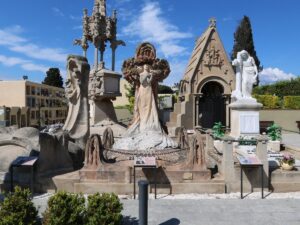
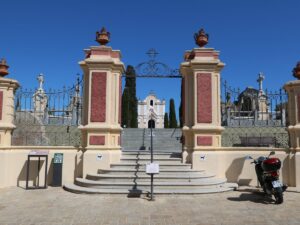
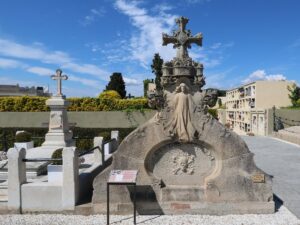
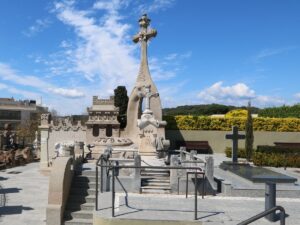
Modernist Cemetery in Lloret de Mar
41.7015510000, 2.8361730000