

All Sights
The sights, landmarks, points of interest, entertainment and dining on the Costa Brava. Filter by type and location to quickly find places to visit on the Costa Brava coast.

The menhir Pedra dreta Comanera II is one of the rest stops along the megalithic route of Capmany that forms part of the Itinerànnia hiking network.
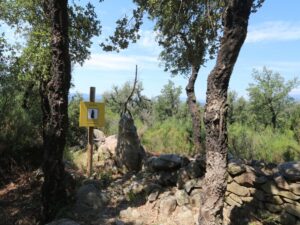
Pedra dreta Comanera II Menhir
42.3801740000, 2.8964470000
The dolmen Pedra Dreta de les Tres Finques was discovered in September 2011 by the land plot owner, and within a month, the archaeologists of Universitat Autònoma de Barcelona carried out excavations there. Scientists aren’t clear on the exact age of the monument. The dolmen Pedra Dreta de les Tres Finques stands on the megalithic route of Fitor.
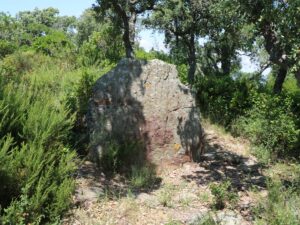
Pedra Dreta de les Tres Finques Stone
41.9191890000, 3.0847510000
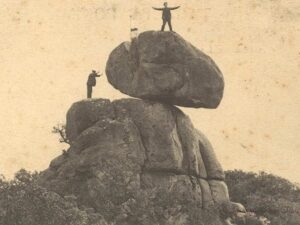
Pedralta, the main natural attraction of the Costa Brava resort Sant Feliu de Guíxols, weighs 101 tonnes and rests upon a 17-meter cliff. “Rests” is probably not the right word for it as the boulder barely touches the surface of its base, and is famous for precisely this reason.
For thousands of years, Pedralta had topped the cliff precariously, moving and tilting even from the lightest push of a hand, until in 1996 a strong storm finally toppled the stone to the ground. To determine whether it was worth paying government funds for the return of the phenomenon to its usual place, the municipality held a survey among residents and upon receiving a resounding “yes” paid for the hire of two cranes. In May 1999, Pedralta was hoisted back to its rock but put into place a bit more securely.
Naturally, such a wonder of nature has been a magnet for all sorts of visitors. In 1890, a citizen group from Sant Feliu de Guíxols felt determined to put up a cross on top of Pedralta. Saint John’s Eve was chosen for such an important affair. The cross was delivered, placed on top of the rock, a good lunch was had next to it, and the participants went on their merry ways.
It is unclear for how long the disappearance of the cross had gone unnoticed, but once the futility of the attempts at the betterment of Pedralta became apparent, the wonder was left to be—until 1960, that is, when the cross idea reappeared again. Another cross was put in place and an annual gathering one week before the second Easter (Domingo de Pentecostés) was established, which has since become a favourite local holiday named Aplec de Pedralta. To properly begin the holiday and to celebrate mass, an hermitage next to Pedralta was built, whose first stone was laid in 1961.
Visitor information
To visit Pedralta, type in Sant Feliu de Guíxols in your GPS navigator and add the street Carretera de Pedralta as the destination. Follow the signs to Pedralta that will at some point appear along the way. Pedralta is about a 15-minute drive away from the town centre.
Google Maps coordinates: 41.791735, 2.981819.
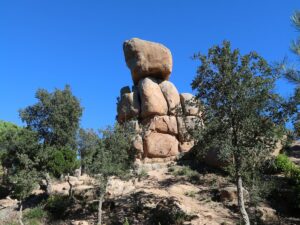
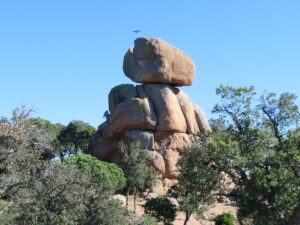
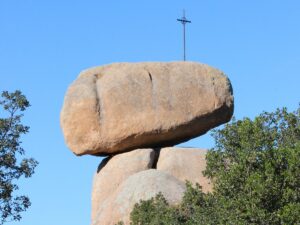
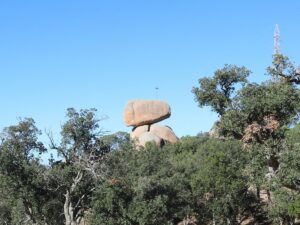
Pedralta
41.7917350000, 2.9818190000
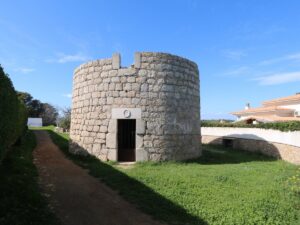
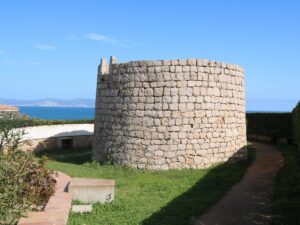

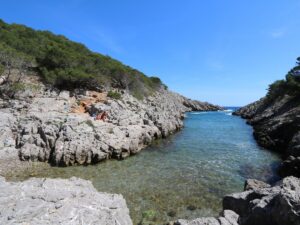
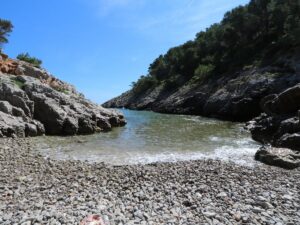
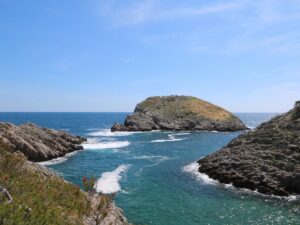
Cala Pedrosa is a tiny cove in the Costa Brava, located between the towns of Llafranc and Tamariu. Its dimensions are modest: 30 metres long and 10 metres wide, it’s almost entirely a pebble beach with no sand cover. The closest accommodation is no less than thirty minutes away. It’s a blessing for nature lovers, but don’t worry (or hope) about being all alone—Cala Pedrosa is a cozy yet popular spot!
Reaching the Pedrosa cove requires some ingenuity. The most straightforward way is sailing into the cove on a boat; most visitors looking for a calm spot to swim and sunbathe who have access to one do exactly that. People with a penchant for hiking and land excursions may choose to drive to the lighthouse Sant Sebastià and then hike for 45 minutes along Camino de Ronda.
Alternatively, the most effort-saving way is driving along the highway GIV-6542 towards the coordinates (41.907806,3.201733) and parking there, then walking about 5 minutes to the hiking route GR-92 and following it towards Paratge Ros Lluny for about 10 minutes to reach the cove.
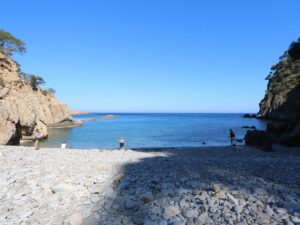
Pedrosa Cove (Llafranc)
41.9078320000, 3.2069100000
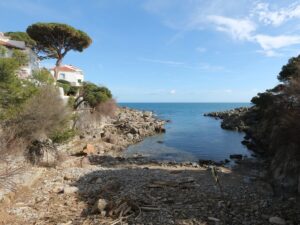
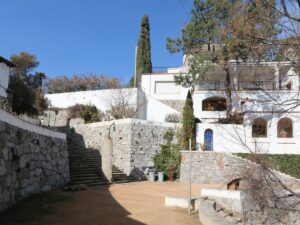


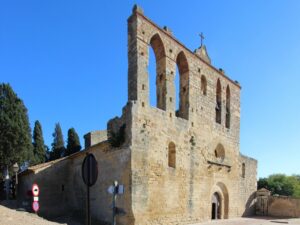
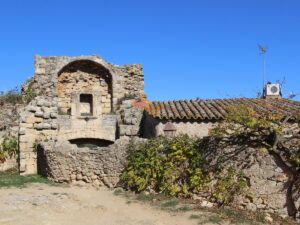
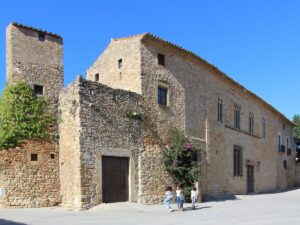
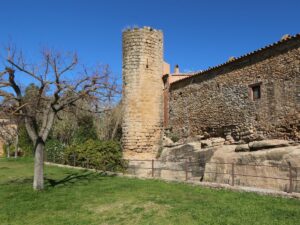
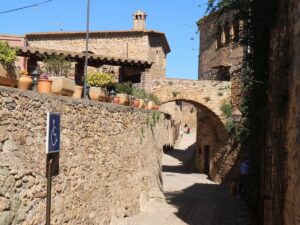
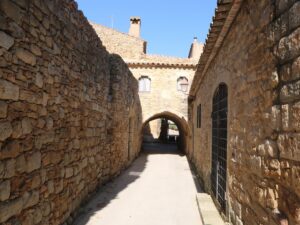
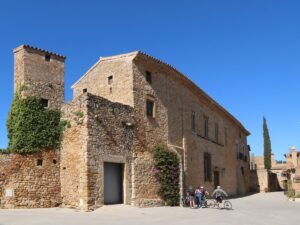
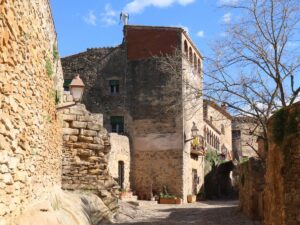
Quite the variety of towns and villages in Catalonia have survived till the modern age with their Medieval look and feel intact. These places typically really love tourists and welcome them year-round to show off the cultural and historical heritage that is lovingly and skillfully maintained. When describing a typical Medieval town of this sort, you will most likely use the adjective “charming”, and the town of Peratallada is perhaps the most charming of them all.
What sets Peratallada apart is the fact that it does not merely consist of an old town centre surrounded by newer neighbourhoods — everything you see within the town limits dates back to the Medieval times. Fewer than 500 inhabitants live in Peratallada today, but there has been life here since before the Roman times. The first written record of Peratallada dates back to the 11th century — in 1065, the archives made note of a local fortress, Castle of Peratallada (Castell de Peratallada).
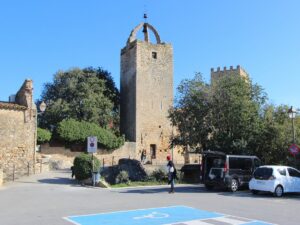
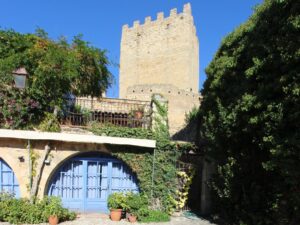
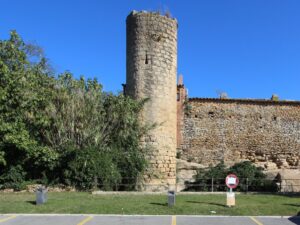
A quick visit makes it clear that the fortress has been built up and expanded in different times. For instance, the tower in its centre, Torre de l’Homenatge, is obviously older than the palace nearby that once served as an overnight residence of King Jaume I (in 1390). The pueblo has five towers in total: one with a clock (Torre de les Hores), one that pays homage (Torre de l’Homenatge), a westward tower (Torre Oest), a northern tower (Torre Nord) and a round tower (Torre de Planta Circular). Since Peratallada had grown outward from its fortress, not only the castle itself but the buildings next to it started needing protection, so another wall, surrounding the whole town perimeter, had been built, with a moat by the side of the Portal de la Verge to boot.
Another significant sight in Peratallada is the church of Sant Esteve (Església de Sant Esteve de Peratallada), built in the Romanesque style with two naves and a bell tower forming part of the facade of the church. Baron Gilabert de Cruïlles, the original owner of the lands on which Peratallada stands, is buried inside.
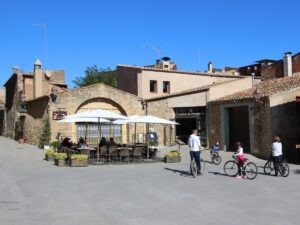
The best time to visit during low season is on Saturday or Sunday morning to early afternoon, which gives you a good two hours for sightseeing and an amazing choice of 17 (!) restaurants open for an unhurried lunch. (Other days of the week, their opening hours are far from guaranteed.) During high season, any day is a good day; furthermore, Peratallada is only 12 km away from the Costa Brava beaches, and staying in one of its 9 hotels is more economical than in Begur or Pals.
It is a real pleasure to discover small gems like Peratallada. There is plenty of time to study maps and booklets at the tourism office, pause at every sight and attraction, take a photo or two with each… you can’t NOT have enough time for so few of them, so savouring every moment becomes all the sweeter. Local holidays are a particularly good time to pay the town a visit:
- Festival of Herbs (Feria de las Hierbas) — the last weekend of April
- Habanero singing — July 27
- Fiesta Mayor (the town festival) — August 6-7
- The Medieval Market — the first weekend of October.
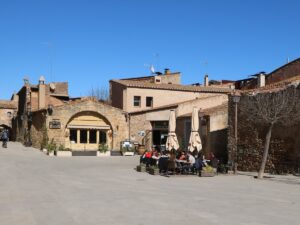
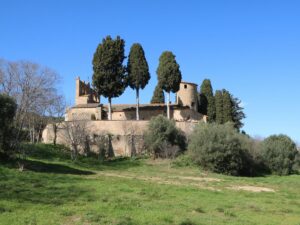
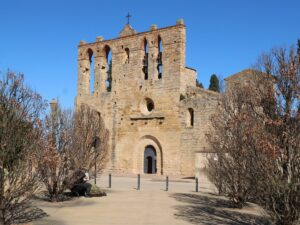
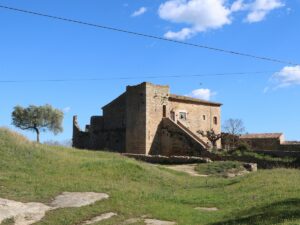
Peratallada
41.9790950000, 3.0895770000
Visitor information
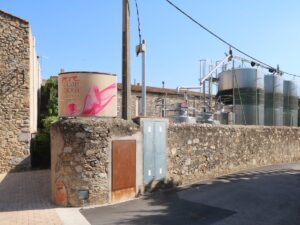
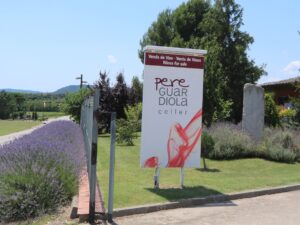
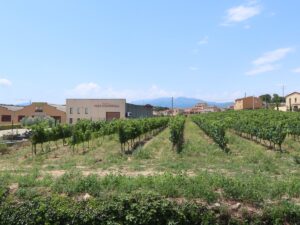
Address: Carretera GI-602, km 2.9 | 17750 Capmany, Girona
Phone: + 34 972 54 90 96
E-mail: vins@pereguardiola.com
Contact person: Jordi Pairó
Winery tour duration: 1 hour 30 min
Min group size: 4
Max group size: 12
Languages spoken: Catalan, Spanish, English, French
Pere Guardiola
42.3734910000, 2.9230970000
When you visit the charming Medieval town of Peralada, there is no getting around its picturesque centrepiece — the castle and the surrounding beautiful gardens that belong to the casino now occupying this prime real estate. The castle is a symbol not only of the town but also of the namesake homegrown brand of wines and cavas produced in the Costa Brava.
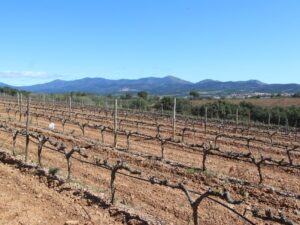
The Perelada winery owns five vineyards (fincas) in Alt Empordà: Pont de Molins, Malaveïna, La Garriga, Gorbet, and La Espolla. The grape varieties grown here include the noble grapes that are emblematic of the region and also those less common to the warm coastal profile of the Costa Brava. Perelada viticultors craft a range of still and sparkling wines that have enjoyed success not only domestically in Catalonia, but across Spain and internationally as well.
The winery is an enterprise-size operation that has been producing wine across three generations of winemakers beginning with Miguel Mateu Pla in 1923. The Perelada brand also owns wineries in other wine regions of Catalonia and Spain, most notably Casa Gran del Siurana (DOQ Priorat), Viña Salceda and Fin de Siglo (DOQ Rioja), Cava Privat (DO Cava), Gran Feudo (DO Navarra, DO Ribera del Duero, DO Rueda) and several more.
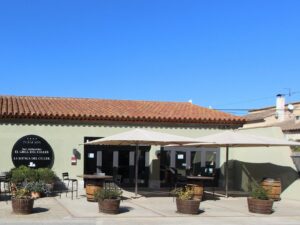
Back in Peralada proper, you are invited to taste all that the winery has to offer locally, including its bestselling Cigonyes (the white, the rosé, and the red), the delightful 3 Finques and 5 Finques reds, the white and red Només wines crafted from Garnatxa and Garnatxa blanca, the dessert wine Garnatxa de l’Empordà, not to mention the so-called Vinos de La Finca that are produced uniquely from grapes grown on each of the winery’s five vineyards.
It is not a small line of products by any means — the scale of the operation is such as to be able to accommodate a wide variety of tastes and please a wide range of wine consumers, from casual wine drinkers to picky spenders with deep pockets. Where a small winery with razor-thin margins would likely not be able to pop open a rare bottle for you to have a sip, the Perelada tasting room has no qualms about letting you taste even the most expensive wines before you buy.
Perelada being a town that loves visitors and welcomes tourism year-round, you will be able to have an enjoyable wine tasting experience and even a vineyard tour on a very short notice. The staff at the Perelada winery speak English and will be happy to guide you through the process and the product. Calling ahead is always recommended.
Visitor information
Address: Sant Joan, 9 | 17491 Peralada, Girona
Phone: + 34 972 53 80 11
Web: www.perelada.com
Opening hours: Monday to Saturday 9 am to 6 pm
Tours: Yes
Tastings: Yes
Perelada
42.3076220000, 3.0109270000