


All Sights
The sights, landmarks, points of interest, entertainment and dining on the Costa Brava. Filter by type and location to quickly find places to visit on the Costa Brava coast.

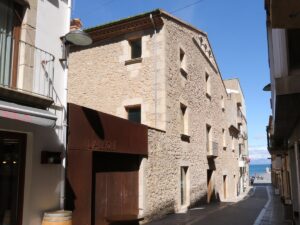
The Salt Warehouses (Alfolí de la Sal) in L’Escala were built in 1697 and, besides storing salt, also housed a customs office and a fishing association headquarters. By the decree of King Philip II, this location had a monopoly on storing salt in Empordà—from here, salt was transported to other villages and towns of the Costa Brava.
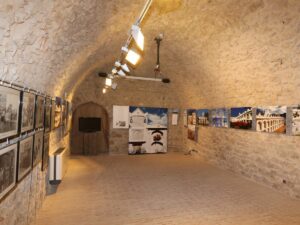
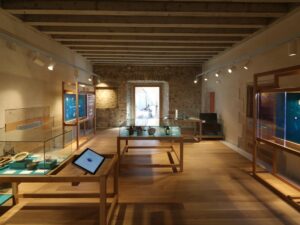
The Salt Warehouses today are a cultural centre with a small museum and an event space for exhibitions and concerts.
Phone number: 972 059 823
Opening hours (16th October – 14th March): Monday-Sunday 10:00 am to 1:00 pm, Friday-Saturday 5:00 pm to 8:00 pm.
Opening hours (15th March – 15th October): Monday-Satuday 10:00 am to 1:00 pm and 5:00 pm to 8:00 pm, Sundays 10:00 am to 1:00 pm.
Closed on 24th, 25th, 26th and 31st December, 1st and 6th January.
Salt Warehouses
42.1259050000, 3.1338550000



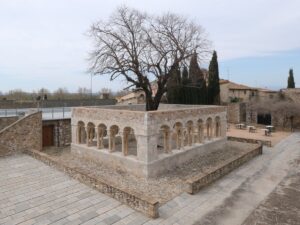
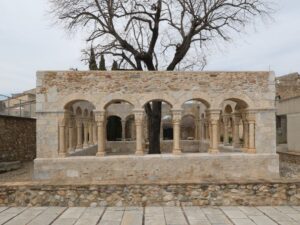
Sant Domènec Monastery
42.3072300000, 3.0083600000
The hermitage of Sant Elm (Ermita de Sant Elm), a patron saint of all seafarers, appeared in Sant Feliu de Guíxols in 1452 next to the fortress that had been built two and a half centuries earlier, in 1203.
Both structures were completely destroyed during the war with France at the end of the 17th century. In 1723, a new chapel was erected in place of the ruins, dedicated both to Saint Elm and the Virgin Mary in her role as the protectress of travellers (Nostra Senyora de Bon Viatge). This historic and cultural monument acquired its present look during the restoration completed in 1993.
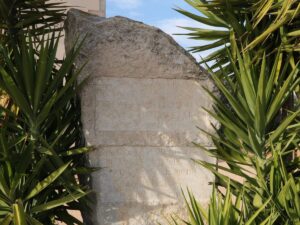
Ferran Agulló i Vidal, poet and publicist, is regarded as the first to have ever used the adjective brava (from Catalan and Spanish: brave, courageous, wild) in describing the local coast. The story goes that the idea occurred to him while he was standing next to the hermitage of Sant Elm, admiring the panoramic views. On September 29, 1963, the municipality installed a memorial stone next to the hermitage to commemorate the author of the Costa Brava brand.
Address: Avinguda Sant Elm, 12 | 17220 Sant Feliu de Guíxols, Girona
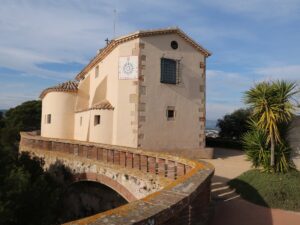
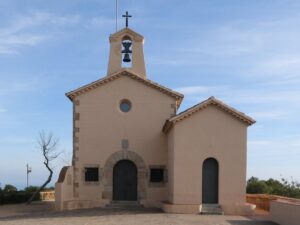
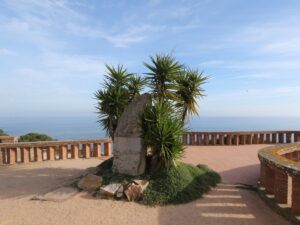
Sant Elm Hermitage
41.7746260000, 3.0274070000
Phone: 972 176 861
Opening hours: Monday-Saturday 10:00 am to 6:00 pm, Sundays 1:00 pm to 6:00 pm
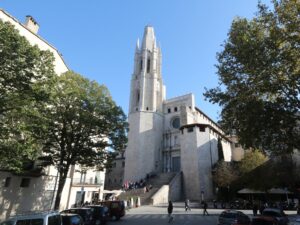
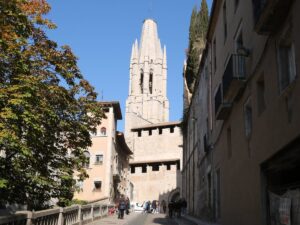
Sant Feliu Church
41.9880120000, 2.8246720000
Phone: 972 506 094
Opening hours:
Last Sunday of October – last Saturday of March 10:30 am to 3:00 pm,
Holy Week (Tuesday-Sunday) 10:00 am to 8:00 pm,
1st July – 15th September 10:00 am to 8:00 pm, the rest of the year 10:30 am to 6:00 pm
Closed 1st and 6th January, 25th and 26th December
Ticket sales stop 1 hour before closing
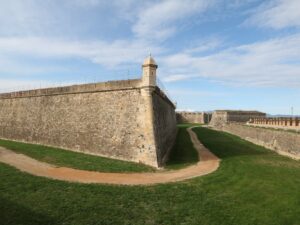
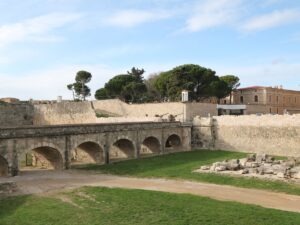
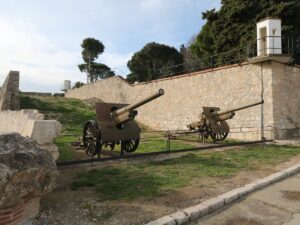
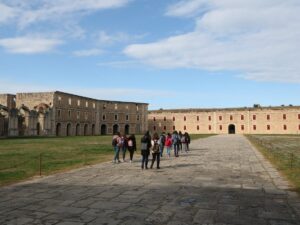
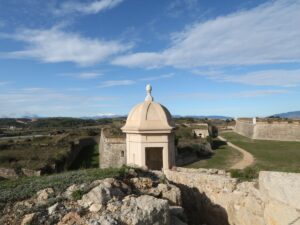
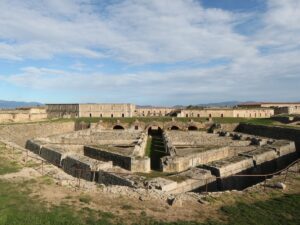
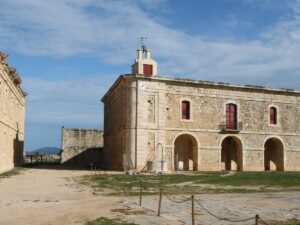
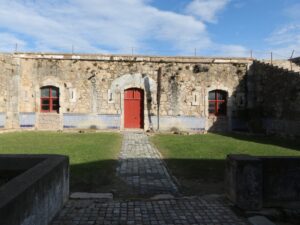
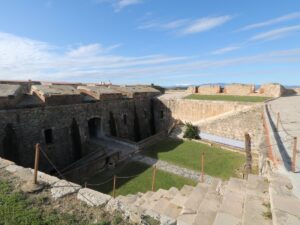
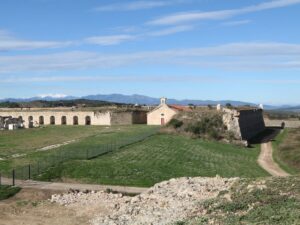
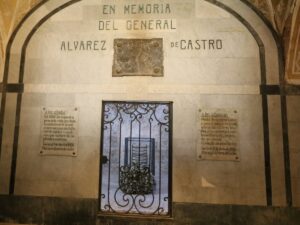
Sant Ferran Castle
42.2726050000, 2.9476300000
Phone: 972 365 788
Opening hours:
Noverber-March Saturdays, Sundays and holidays 10:00 am to 2:00 pm,
April-October every day 10:00 am to 1:00 pm and 5:00 pm to 7:00 pm
Closed on 1st and 6th January, 25th and 26th December
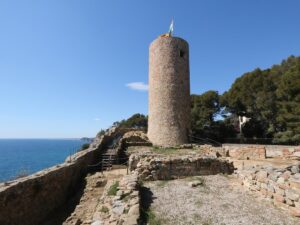

Sant Joan de Lloret Castle
41.6938790000, 2.8393680000
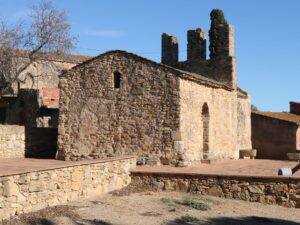
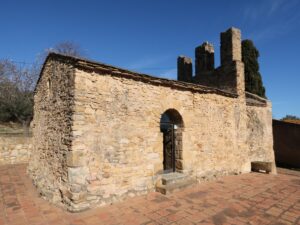
The church in the township of Santa Julià de Boada, located in the municipality of Palau-sator, was built between the 9th and 10th century A.D. and is a rare example of pre-Romanesque architecture in Catalonia.
The building consists of a modestly sized nave and a trapezoidal apse. The nave is divided into two halves by a horseshoe-like arch whose shape is repeated for the arch towering above the clergy entrance. The stark way these precisely, very technically executed arches stand out in the compact space is a defining characteristic of the building.
In 1734, the Santa Julià de Boada church lost its parish status due to the catastrophic state of disrepair. After the adoption of Mendizábal decrees of 1836 that called for the confiscation of ineffectively used lands from the Catholic Church, the church building was used as a stable and a warehouse. In 1982, the building underwent restorations.
Address: Carrer Major, 4 | 17256 Sant Julià de Boada, Girona
Sant Julià de Boada Church
41.9853830000, 3.1219330000