

All Sights
The sights, landmarks, points of interest, entertainment and dining on the Costa Brava. Filter by type and location to quickly find places to visit on the Costa Brava coast.

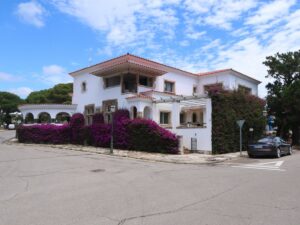
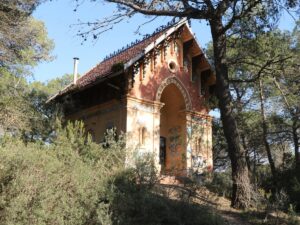
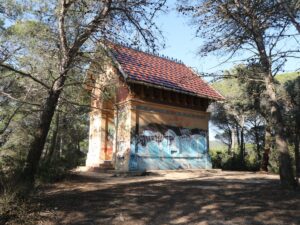
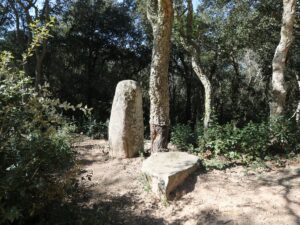
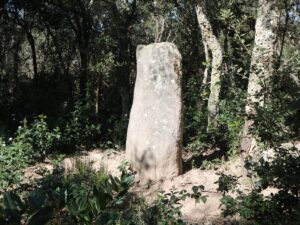
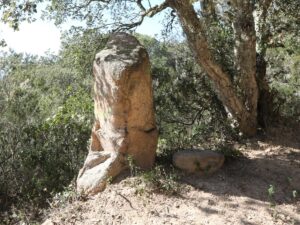
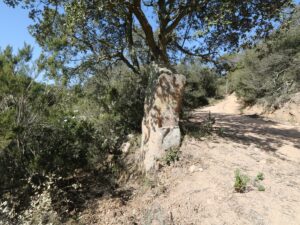
Directions: From the parking lot, at the coordinates (41.737228, 2.778008) start walking up and to the left, then follow the signs.
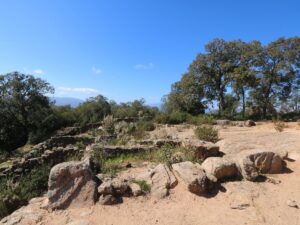
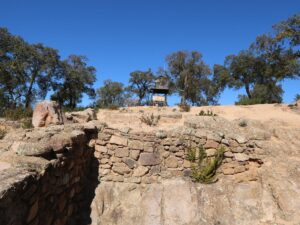
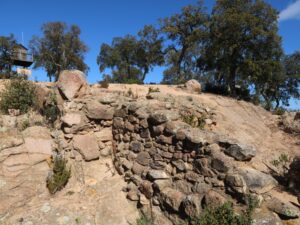
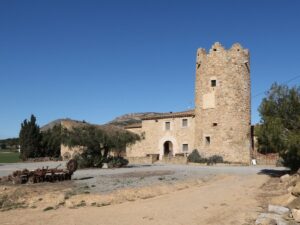
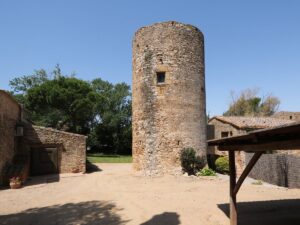
The Iberian Village of Montbarbat
41.7352250000, 2.7767570000

Out of all eight bridges that Gustave Eiffel had engineered for the Girona railway company, the Iron Bridge (Pont de Ferro), also known as the Bridge of Red Beams (Pont de las Palanques Vermelles) and the Bridge of Old Fishmongers (Pont de les Pescateries Velles) has the quietest history to date.
The bridge connected the banks of the Onyar river in 1877, creating a link between the old town and the town market. Since then, the bridge has undergone several repairs but hasn’t been moved from its original location.
The Iron Bridge today is one of the beloved tourist spots in Girona, ideal for taking photos and selfies.
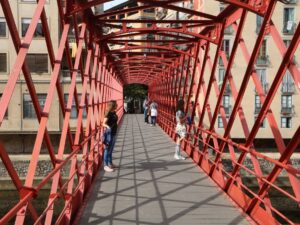
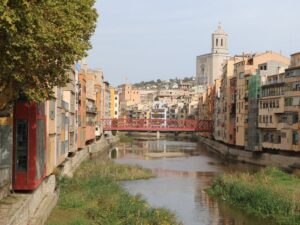
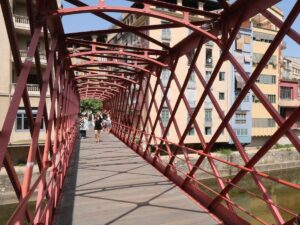
The Iron Bridge (Pont de les Peixateries Velles)
41.9845640000, 2.8238700000
Every self-respecting city or town has, or at least should, come up with a colourful ritual, the performance of which would allow the happy visitor to return to said city one day. These rituals around the world, for the most part, aren’t very original. Throwing a coin into a fountain or rubbing a part of a sculpture that acquires an alluring shine after years of human touch is often as far as it goes. Meanwhile, the Catalan town of Girona has approached the task more creatively.
The beast climbing a Romanesque column on the Plaça de Sant Feliu square is referred to as the Lioness (lleona), even though the sculptor conceived of it as a lion. It might simply be a boring stereotype at play, as the king of the animals does not run away from danger or climb a tree with fear written all over its face—panic only befits the fairer sex, or so the stereotype goes. In practice, every child knows that lionesses are the real warriors and bacon-bringing leaders in the lion pride!
The lioness monument in Girona has been known to historians since the 11th century, when it stood close to the inn Hostal de la Lleona (whichever came first, the sculpture or the inn’s name, is a typical chicken and egg problem). The ritual of kissing the most accessible (lowest) part of the animal, known as cul (“ass”) in Catalan, has at some point become a rite of passage both for locals and travellers passing through. Checking in for the night? Pay a visit to the Lioness. Getting ready for a long trip and worried about never coming back? Make assurances by kissing the Lioness.
There is a sign next to the popular spot that was put up by the municipal government, informing visitors that people have been kissing the Lioness’s ass for 800 years and no one has ever complained of the ritual not working. Of course, unsurprisingly enough, the statue standing on the square currently is a replica: the original sculpture was nearly kissed to death and was placed in the safety of a museum a good 30 years ago. Tourists have to contend with a copy, but it’s a nice one that also comes with a pair of steps for easier reach.
The saying el cul de la lleona (“the lioness’s ass”) has become an integral part of the city folklore with no particularly bad connotations. Don’t be surprised to encounter the phrase on a restaurant sign or in a dessert menu in Girona; order without worry!
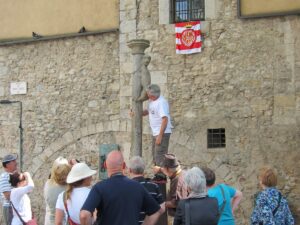
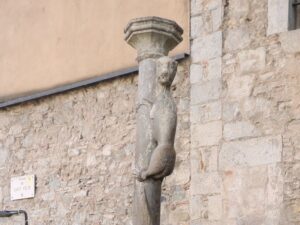
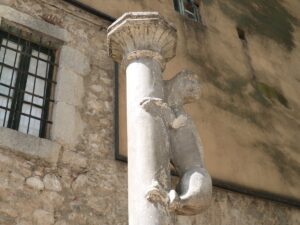
The Lioness of Girona
41.9879330000, 2.8241030000
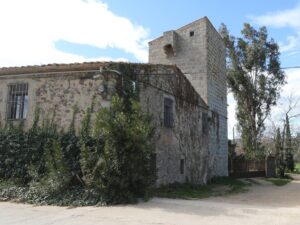
Phone number: 972 758 057
Opening hours: Mondays, Sundays and holidays 11:00 am to 1:30 pm, Fridays 4:30 pm to 8:00 pm, Saturdays 11:00 am to 1:30 pm and 4:30 pm to 8:00 pm.
The Mascort Foundation
42.0414770000, 3.1259950000
The Medes Islands (Illes Medes) is an archipelago of seven islands with the total area of 21.5 hectares. It is the main attraction of the L’Estartit resort towering over the sea a kilometre away from the beach. Not all islands of the archipelago are “real” islands — five out of seven are rocks sticking out of the water with no flat surfaces to step on or any plants to grow, but they still have names: Carall Bernat, Tascons Grossos, Tascons Petits, Medellot, Ferranelles. The other two are called Meda Gran and Meda Xica.
Since time immemorial the Medes islands have been a headache for the local villages. Since the archipelago is located so close to the shore, it provided easy cover for pirates and facilitated lightning-bolt attacks, all the while preventing the effective building of defensive structures. Martin the Humane founded a monastery on the islands in the 14th century, opining that the monks would defend it better, but there was no money to build a complete fortress. So in 1442, when the Genoese attacked the islands, all the meager fortifications that had been already erected were burned to the ground, along with the church. An unhurried restoration followed, interrupted in 1522 by a partial flooding of the western side of the island where all the fortifications stood.
In the 18th and 19th centuries, the Medes Islands played a role in armed conflicts between Spain and France. After the Napoleonic wars, a garrison had been stationed there, whose numbers had stably decreased over time until 1890, when the last soldier sailed to mainland leaving behind only a lighthouse keeper. Thanks to the lighthouse, there had been intelligent life on the Medes islands until the 1930s. After the technological advances allowed for the automation of the lighthouse operations, the keeper has gone too.
Biologists rave about the unique conditions for the flora and fauna of the Medes archipelago, mainly talking about the life underwater. A heterogeneous seabed in this marine zone has given rise to endless combinations of life-supporting factors of temperature, depth, light, currents speed, and soil composition. All of these combinations, in turn, created numerous unique biotopes that are home to so many sea creatures. Some examples you may encounter while diving in the Medes Islands: sea bream, sea bass, grouper, tuna, sea sponge colonies, red corals, meadows of Posidonia, mollusks of the noble pen shell and date shell, and so many more.
Since 1983, the government has adopted a whole host of measures and by-laws to protect the Medes archipelago from human influence, turning the islands into a conservation area where the only allowed activity is scuba or free diving. There are additional regulations in place: any diving session requires a license whose quantities are subject to an annual quota — 73000 for diving schools (there are about 20 in the area) and 4000 for independent divers. Up until 2015, the quota was daily and the number of dives hovered above 60000 a year, raising fears about their environmental impact.
These fears are not unfounded. The Medes Islands is one of the top diving spots in the Mediterranean that attracts divers of all levels with its diverse marine life, numerous sea caves and even a 120-metre long sunken ferry! Fishing around the islands has been prohibited since 1983, but fines and arrests are made from time to time regardless. The stats collected by the administration of the natural park of Montgrí (Parc Natural del Montgrí, les illes Medes i el Baix Ter), of which the Medes Islands have been a part of since 2010, tell the story of vanishing species and depleting fish numbers. Illegal fishing may be to blame: in September 2016 divers found an abandoned fishing net that was so long (200 meters!) that it took the firefighters two days to lift it from the sea bottom.
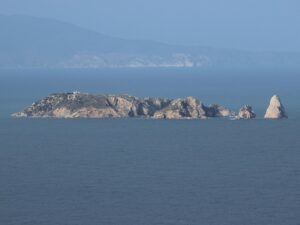
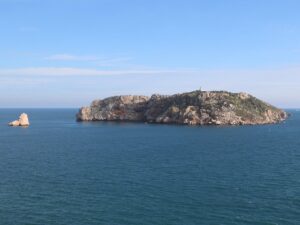
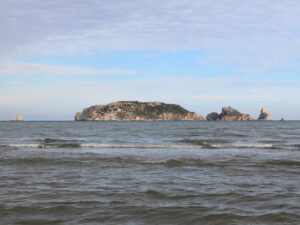
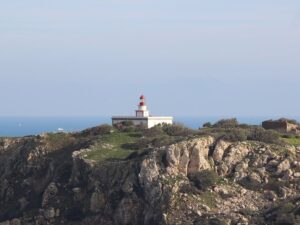
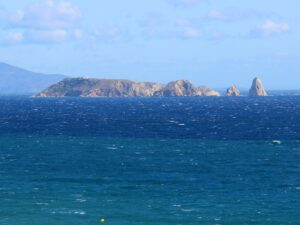
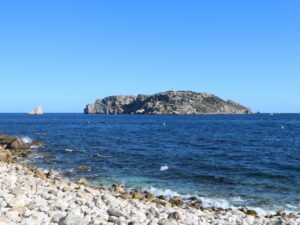
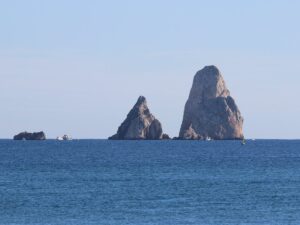
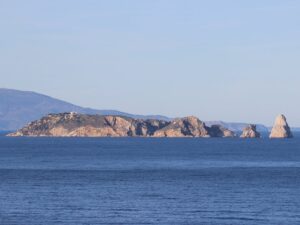
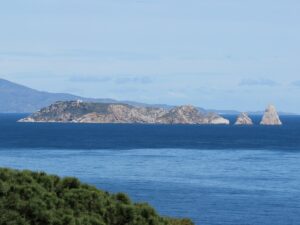
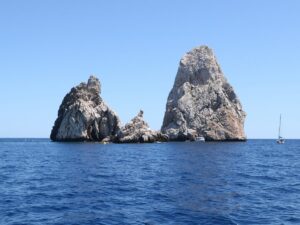
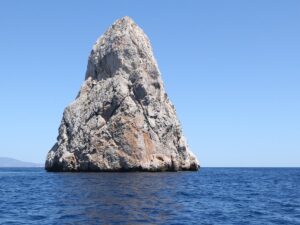
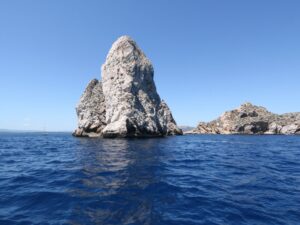
The Medes Islands
42.0479350000, 3.2216030000