

All Sights
The sights, landmarks, points of interest, entertainment and dining on the Costa Brava. Filter by type and location to quickly find places to visit on the Costa Brava coast.

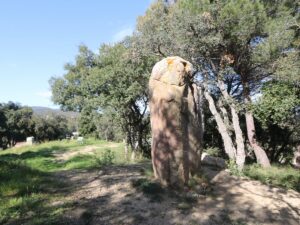
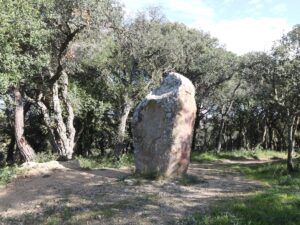
Count Ramon d’Empúries received authorization to build a castle in Gualta from King Jaume II in 1313 and, as evidenced by historical archives, the castle was already finished by the mid-14th century. A watchtower and fragments of the facade, easily recognized by their stonework colour, are all that’s left from the castle today.
The mill appeared here at the end of the Middle Ages; in the 17th century, it was reconstructed with an addition of a three-storey stone box with a bow arch at the entrance. According to a document dating back to 1725, the mill was owned by a count from Perelada and was used for rice and wheat milling.
At the beginning of the 20th century, the stream originating at the Daro river was tasked with producing electricity in addition to milling grain, making Molí de Gualta a champion in the variety of uses it had over the centuries. In the 1950s, the key historic sight of Gualta has finally retired for good.
Address: Carrer Major, 33 | 17257 Gualta, Girona
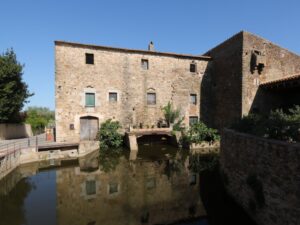
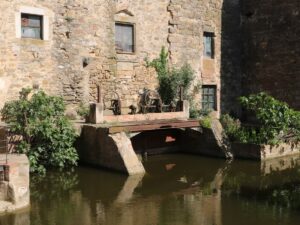
The Mill of Gualta
42.0276950000, 3.1040170000
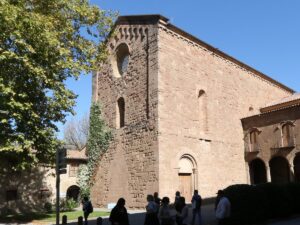
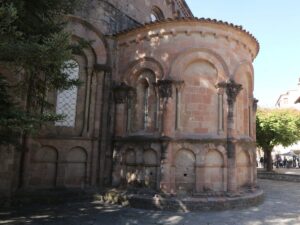
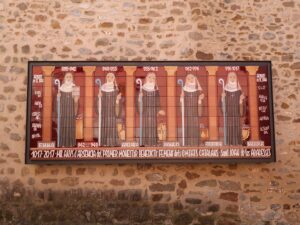
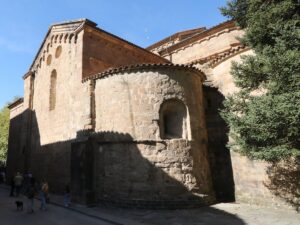
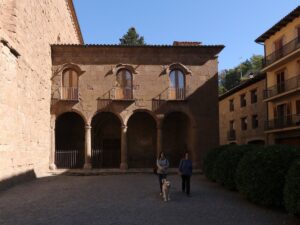
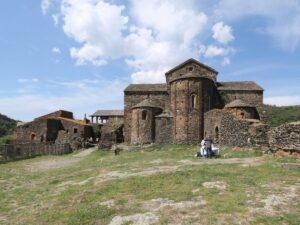


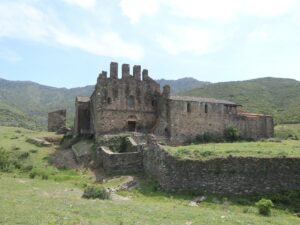

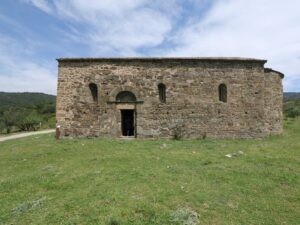
The Monastery of Sant Quirze de Colera
42.4162780000, 3.0588970000
Phone: 972 525 184
The Monastery of Santa Maria de Lladó
42.2480690000, 2.8134200000
The cove of Montgó (Cala Montgó) stretches between two massive cliffs to the south of L’Escala. It is the only cove in the region fully covered from the cold winds of Tramuntana and is thus much beloved by weekend visitors in the off-season. The beach of Montgó is covered in fine white sand, a natural by-product of the hill erosion of the natural park of Montgrí.
Cala Montgó is an excellent starting point for two short trips: to the northeast towards the Montgó tower and a Civil War bunker or to the southeast towards the capes Punta del Milà and Punta Ventosa.
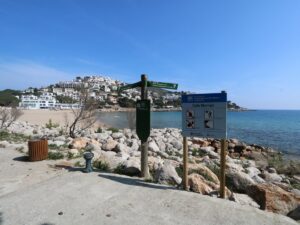
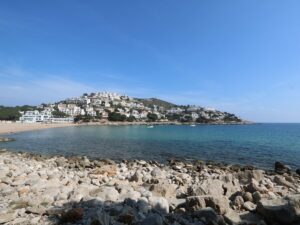
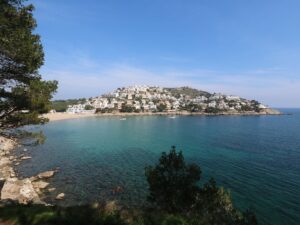
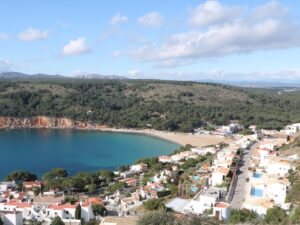
The Montgó Bay
42.1077740000, 3.1691700000
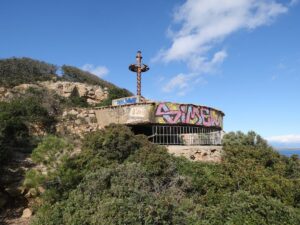
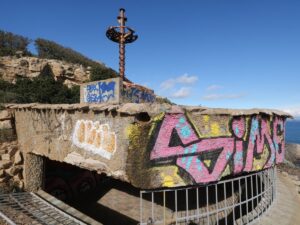
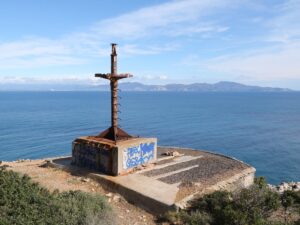
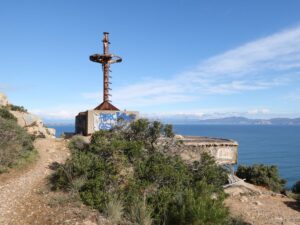
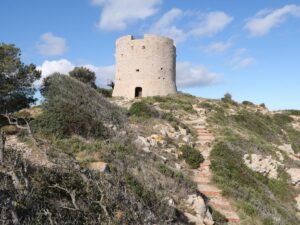
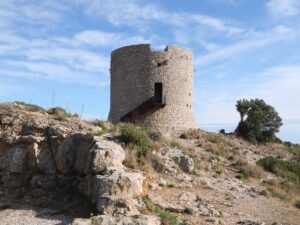
Torre d’en Montgó is an observation tower built in 1598 by the royal decree of Felipe I to protect the fishermen of L’Escala from pirates. The tower has been well preserved and is now included on the list of the national cultural heritage objects. Its prime location on a mountaintop that used to guarantee clear views of approaching enemy is still high in demand — the Montgó tower has an excellent scenic lookout with amazing vistas.
The Montgó Tower
42.1107770000, 3.1741470000
Phone number: 972 340 709
Opening hours (October-May): Tuesday-Friday 10:00 am to 1:30 pm and 3:00 pm to 5:00 pm, Saturdays 10:00 am to 2:00 pm and 4:00 pm to 6:00 pm, Sundays 10:00 am to 2:00 pm.
Opening hours (June-September): Monday-Sunday 10:00 am to 8:00 pm.
The Municipal Museum of Tossa de Mar
41.7162710000, 2.9328060000
Phone number: 972 36 62 66
Opening hours: Monday-Saturday 10:00 am to 1:30 pm and 5:00 pm to 8:00 pm.
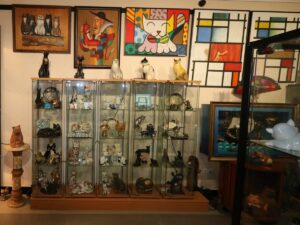
The Museum of Cats
41.6991380000, 2.8486260000
Museums dedicated to a single object or thing are curious creatures. To attend them, you either have to be very, very interested in the object or thing, be it how the thing works, how it’s made or how it has evolved over the years; this thing may be pleasing to the humanity in general (a museum of chocolate sounds pretty neat), or you are just… bored. Boredom during a vacation sounds antithetical to the spirit of having a good time, but it may lead you to truly interesting places, sometimes just as effectively as a recommendation by a friend can.
So to decide to visit the museum of cork in Palafrugell, you need to know the most important fact about it first: its souvenir shop is open to the public and doesn’t require a museum ticket to come in. Wine corks aren’t the only use for the cork tree bark; cork is light, easily compressible, has low thermal conductivity, is largely liquid-proof and thus has many applications outside of the wine bottle. You won’t find cork tiles, building blocks, lifebuoys or insulation material at the museum gift shop, but kitchen accessories, coin purses, bags, stationery, toys, jewelry, and even neckties are aplenty! Most items are handmade and make great souvenirs.
Cork trees in the Costa Brava are common, and their bark has been used in crafts and trades for generations. The opening of the cork factory known as Can Mario in 1900 marked the end of the hand-produced era and took the cork production to industrial heights. After twenty years of stable growth, the number of factory workers reached a thousand, branches were opened in other Spanish towns, and international offices appeared in London and New York.
In the post-war years, Can Mario started losing its market share — the factory was subsequently sold to the American company Armstrong Cork Co. In the 1970s the cork production came to a complete halt due to continuous financial losses, and a museum was opened on the factory grounds instead. Naturally, a big part of the exposition is dedicated to the history of the factory and the town whose everyday life was largely dependent on it.
The other part focuses on the manufacturing process of bottle corks — each stage of production, from bark harvesting to cork shaping, is explained in detail. The machinery that gradually lessened the impact of hard manual labour on factory workers is on display as well.
The museum occupies over 36,000 square feet with 6200 objects in the collection. It is the largest museum dedicated to cork in the world. One of its most fun displays is the exhibition of famous works of art replicated in cork. You are hard-pressed to not be amazed at the talent and perseverance of the artists whose craft allowed them to recreate Da Vinci’s “Last Supper” with this pliable material!
Visitor information
Address: Carrer de Begur, 14 | Palafrugell
Phone: +34 972 307 825
Opening hours
July and August: Monday to Saturday 10:00 am — 2:00 pm and 5:00 pm — 8:30 pm, Sunday 10:00 am — 2:00 pm.
Other months: Tuesday to Friday 10:00 am — 1:00 pm and 4:00 pm — 7:00 pm, Saturday 10:00 am — 2:00 pm and 5:00 pm — 8:00 pm, Sunday and holidays 10:00 am — 2:00 pm, Mondays closed.
Open on December 24 and 31, January 5 from 10:00 am — 2:00 pm.
Closed on December 25 and 26, January 1 and 6, May 1.
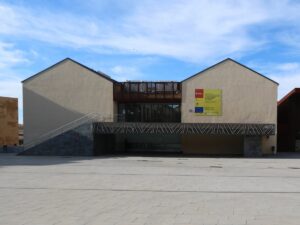
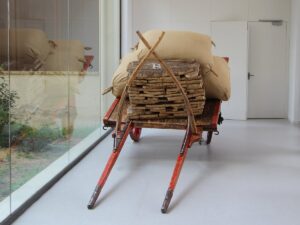
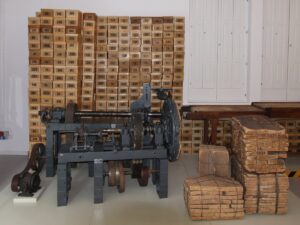
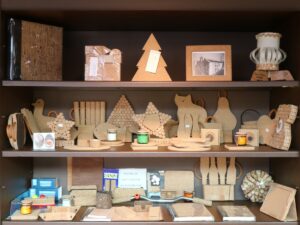
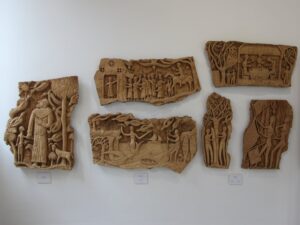
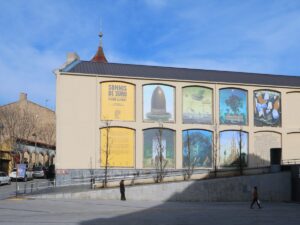
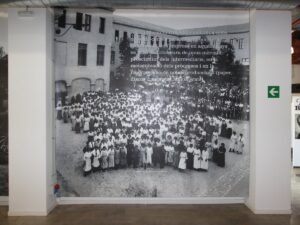
The Museum of Cork of Palafrugell
41.9183560000, 3.1653310000
Phone: +33 4 68 87 27 76
The Museum of Modern Art of Ceret
42.4858780000, 2.7484920000