


All Sights
The sights, landmarks, points of interest, entertainment and dining on the Costa Brava. Filter by type and location to quickly find places to visit on the Costa Brava coast.

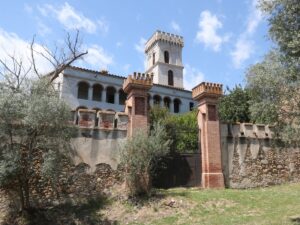
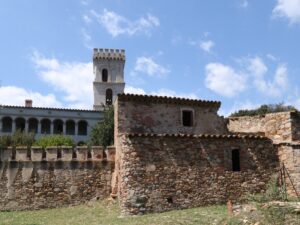
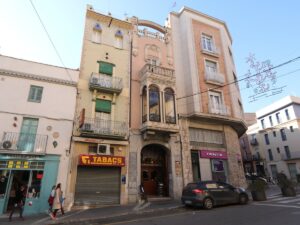
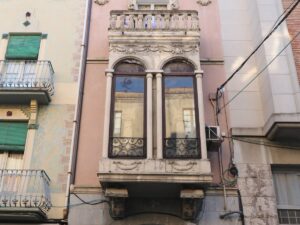
The word “casino” is common in Spain, especially on plaques of historic mansions, which likely confuses many a tourist. These buildings have no roulette tables, no slot machines, no bouncers and no bill-counting rooms. Gambling casinos frequently robbed in Hollywood movies have only been legalized in Spain since 1977 whereas the so-called “cultural casinos” (casino cultural) can be traced back to the mid-19th century.
A sort of a hybrid between an English gentlemen’s club and a community centre, a Spanish casino may cater to either side of the spectrum depending on the social status and income of the people who frequent it. Come closer to a casino’s doors and read the upcoming event announcements—you will likely see flamenco, yoga, chorus singing, children’s drawing competitions and the like. The “classic” activities at the Spanish casino are concerts, dances, public readings, discussion groups, billiards, chess, dominoes and cards (the members who gamble definitely have an outlet there too).
Casino La Constància was founded in Sant Feliu de Guíxols in 1851, uniting craftsmen, entrepreneurs and blue-collar workers keen on self-improvement. Up until 1888, the club members moved from rental to rental across town, accumulating the funds to acquire their own building. The new headquarters were inaugurated in 1889. The author of the project was Art Nouveau architect General Guitart i Lostaló, whose other works in Sant Feliu de Guíxols include the shelter for orphans and dispossessed seniors called Asil Suris.
Balls and concerts held at the casino attracted large crowds, especially in summer and during the Christmas holidays. There was a café with a terrace on the ground floor; the casino also had its own library. In the minds of several generations of Sant Feliu de Guíxols locals, up until the 1960s, the casino was associated with entertainment, diversion and self-education. The town denizens nicknamed it Casino dels Nois (“Casino of the Young”), noting the roaring energy of the club members thanks to whom life was always bustling in Sant Feliu de Guíxols.
The tourist boom that enveloped Costa Brava in the 1960s left its mark on the town, offering new ways for the young people to entertain themselves, and the attendance of the casino events declined sharply.
Under financial pressure due to dwindling membership fees, in 1975, the administration of Casino La Constància reached a swap agreement with one of the construction companies of Sant Feliu de Guíxols. This change of ownership would inevitably lead to the demolition of this Art Nouveau monument—its proximity to the beach was too close and too precious. The developers made no secret of their plans to build an apartment building in its place. The information about the upcoming deal surfaced to the public and caused a big stir, resulting in large protests that forced an administration change among the casino management. The deal fell through. In 1978, La Constància received the status of a cultural heritage object of Spain, guaranteeing its inviolability for life.
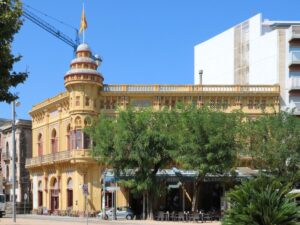
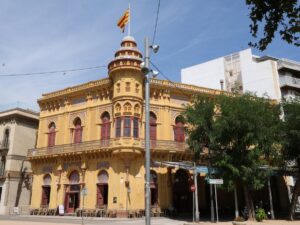
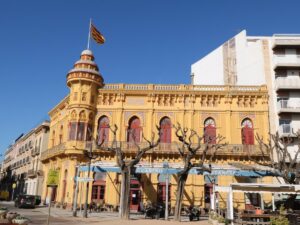
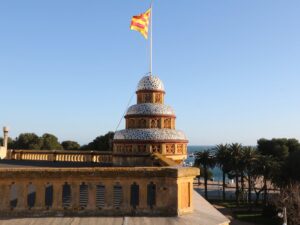
Casino La Constància
41.7817280000, 3.0321790000
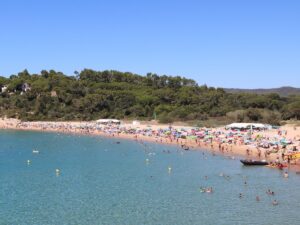
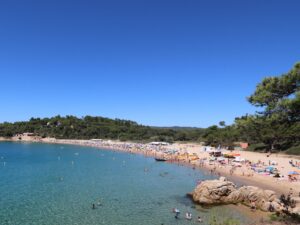
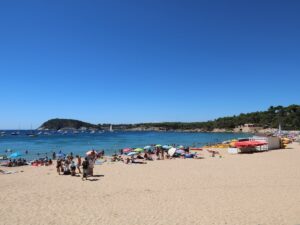
The Castell Beach (Platja del Castell) is a large sandy beach that lies to the north of Palamós, in a relative distance from residential areas. You can reach it by car (the nearby parking is paid in summer) or walk along Cami de Ronda from La Fosca beach for about 20 minutes. This spot is so popular in the Costa Brava that in 1994, in a referendum, the locals successfully rejected a proposal to build a golf course here.
In the near vicinity of the Castell beach, you can find several notable sights of the Costa Brava region: the Mas Juny estate, inseparable from several celebrity names of the 20th century, the Hut of Salvador Dalí that he, nonetheless, never used for painting, and the Iberian ruins of Castell (Poblat ibèric de Castell) that were located here from the 6th century B.C. to the 1st century A.D.
Castell Beach
41.8625080000, 3.1561620000
Coordinates: 42.330267, 2.969910
Phone: 972 55 63 15, 665 66 47 93
E-mail: marinafiguerascarrero@gmail.com
Contact person: Marina Figueras Carreró
Opening hours: 9:00 am to 1:00 pm and 3:00 pm to 6:00 pm
Min group size: 10
Max group size: 60
Languages spoken: Catalan, Spanish
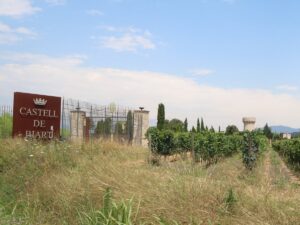
Castell de Biart
42.3302670000, 2.9699100000
Address: Carrer Sant Natzari, 20 | 17251 Calonge, Girona
Phone: 972 60 14 02, 658 97 35 58
E-mail: castellcalonge@eresmas.com
Contact person: Lluís Puig
Winery tour duration: 30 min
Min group size: 5
Max group size: 10
Languages spoken: Catalan, Spanish, French
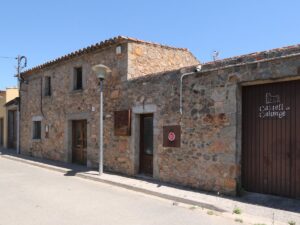
Castell de Calonge
41.8682370000, 3.0736570000
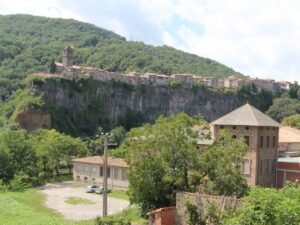
Mother Nature took her time creating this particular masterpiece. 217 000 years ago, a volcano eruption brought a wave of basalt lava from the south to the region, while 25 000 years ago, another wave rolled from the north. The rivers Fluvià and Turonell suddenly had masses of volcanic matter between them, which they have been dutifully filing down ever since. The result: a kilometre-long narrow rock with a vertical drop of 50 meters. When the time came for people to inhabit the area, the location was found to be perfect due to being easily defendable. A village called Castellfollit de la Roca has appeared on the world map.
Today, Castellfollit de la Roca is tiny, but it’s not even the smallest town in Catalonia — according to the 2016 census, it has a population of 970 people. Most of the employed residents have jobs elsewhere as opportunities for growth and industrial expansion within the town borders are limited. Those who are not employed pass the time in the gardens at the foot of the rock or gaze into the distance at its top.
Castellfollit de la Roca is found right in the middle of the Garrotxa natural park (Parc Natural de la Zona Volcànica de la Garrotxa) so it gets its fair share of visitors touring the picturesque surroundings of the area. Most tourists begin exploring Castellfollit de la Roca from its eastern part, the square Plaça de Josep Pla, a fantastic vantage point with beautiful panoramic views of the surrounding forests and the mountains.
A church standing nearby is Iglesia de Sant Salvador dating back to the 13th century. Not much has changed since then: the church looks fairly modern and acts not only as a place of worship but as a cultural centre with a local history museum and a photo gallery as well. Also here, the cardboard giants Roc (380 cm tall, 35 kg) and Barbara (362 cm tall, 33 kg) patiently await their next appearance at the festa mayor of the village. They have been “living” in Castellfollit de la Roca since 1966.
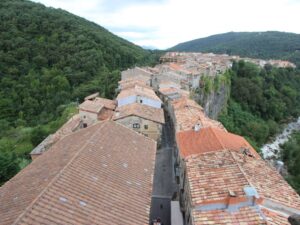
Climbing to the top of the church belltower will allow you to add another stunning view to the ones already seen from the square below — two rows of houses huddled together tightly, as if afraid to fall into the abyss. Castellfollit de la Roca has two bars and two restaurants, one of which – Can Llorenç – stands right on the edge, so terrace lunches are a thrill. Indulge in meat dishes, especially charcoal-grilled, but don’t expect too much variety (or freshness) from the fish offerings on the menu.
An unhurried walk around town takes about an hour and a half. Getting lost is a challenge but the route is well-marked nonetheless. The rock has nothing to offer to lovers of museums unless you come across the deli shop Museu de l’Embotit, which is well worth a stop for fantastic cured meats produced in the Garrotxa region.
Castellfollit de la Roca is 120 km away from Barcelona and makes a wonderful day trip for when you have already explored Monserrat, Reus, Girona and Colonia Güell.
Castellfollit de la Roca
42.2191890000, 2.5499130000
Phone: 972 549 043
Castillo de Capmany Winery
42.3725690000, 2.9211970000
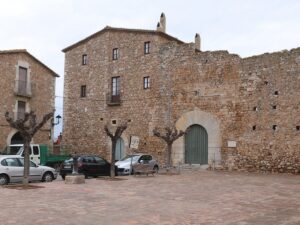
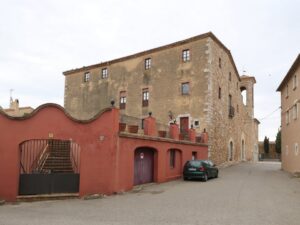
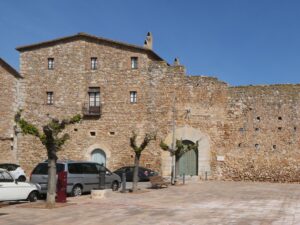
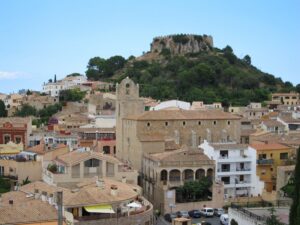
The main sight of Begur — the Begur castle, Castell de Begur — is perfectly visible from every observation point in town. It pops up here and there on photos and videos that often mean to capture completely different things!
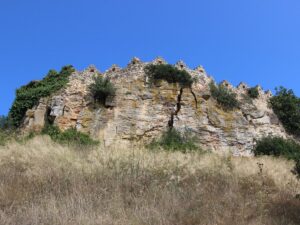
The castle was built in the 11th century by the feudal lord who wanted to protect his property from bloodthirsty pirates and jealous neighbours. Strategically speaking, the castle was ideally located to be easily defensible and thus, from that moment on, participated and suffered greatly in each armed conflict that befell the town, until it was destroyed completely in 1810 by the army of Napoleon Bonaparte.
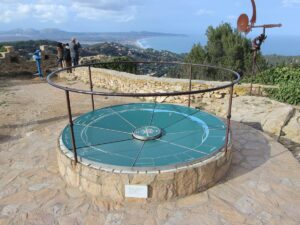
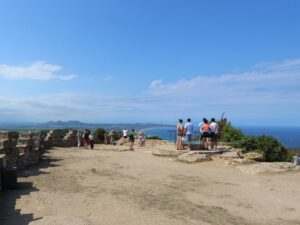
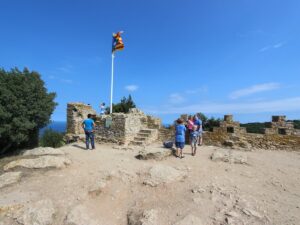
The extensive restorations of the 20th century only concerned the outer walls of the Begur castle, which was enough for the town to get its symbol back. Restoring the interiors was deemed unnecessary, as its most prized possession — the beautiful panoramic views of the mountains and the sea — couldn’t be taken away by even the most powerful enemy. Instead, the municipality outfitted the castle with a convenient observation deck for the visitors and tourists.
The visitors’ surprise and disappointment — where is the actual castle, pray tell? — quickly gives way to wonder and awe at the views. A circular ceramic map on a cylindrical pedestal introduces visitors to the local geography and helps pinpoint the beautiful elements of the landscape you see below: the islands Illes Medes, the Pyrenean peak El Canigó, the easternmost border of the Iberian peninsula Cap de Creus, the resort towns of the Costa Brava like Palamós and L’Estartit, the coves Sa Riera and Sa Tuna…
Castle of Begur (Castell de Begur)
41.9564400000, 3.2084670000
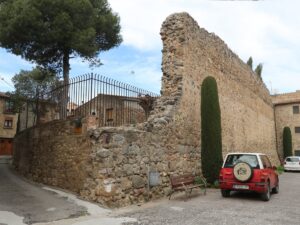
A dilapidated wall in the historic centre of Corçà is all that’s left from a 13th-century castle that first belonged to the episcopate of Girona and became the property of the Royal Court in 1442.
In 1475, the castle witnessed the most remarkable occurrence in its history—it was conquered by serfs in revolt. After three weeks of futile attempts to snuff out the uprising locally, an appeal to the higher power was made and, according to archives, the king sent two thousand men and artillery forces to assist in the subsequently successful liberation of the castle.
We must, however, call into question the claim of such significant reinforcement numbers. Even today, the population of Corçà barely exceeds a thousand habitants and it is hard to imagine the king being so intimidated by a fairly mundane incident to exercise such extravagance.
Castle of Corçà
41.9898440000, 3.0178260000
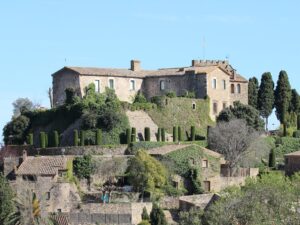
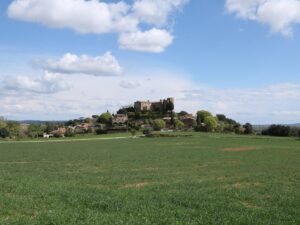
Opening hours: Please consult the website or call 972 011 960 for moe information.
Directions: The ascent to the castle begins at the point (41.781345, 2.536103). The hike takes 35-40 minutes.
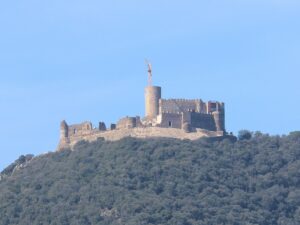
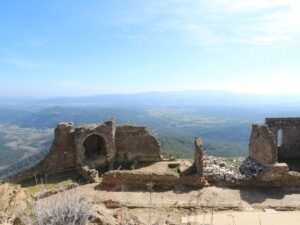
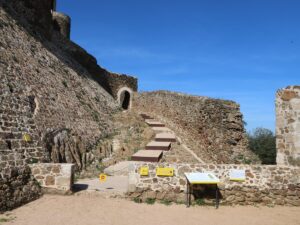
Castle of Montsoriu
41.7831910000, 2.5405580000
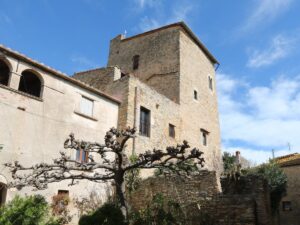
The Peralta castle (Castell de Peralta) was supposedly built in the 12-13th centuries, while the first mentions of it date back to the 14th century. Based on that, the local historians assume that the castle had originally belonged to feudal lords from Cruīïlles and Peratallada.
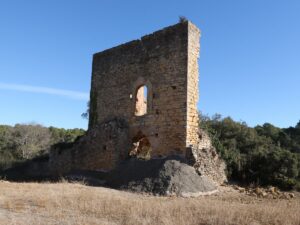
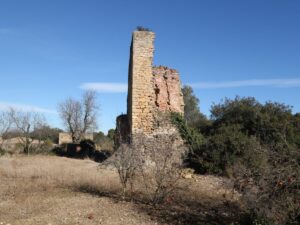
Nowadays, the castle has fallen into a state of disrepair — the Forallac municipality has been dragging its heels on restoration. The facade with a second-floor semicircular arch, a part of the main tower, an external staircase and bits and pieces of the fortification walls are all that remains from the original structure.
To visit the ruins of the castle of Peralta, take the highway C-66 towards La Bisbal d’Empordà and take the exit towards Santa Susanna de Peralta. Just before reaching the old parish church, to your right, you will see a grouping of stone houses with an arch portal. Beyond the portal lie the ruins of the Peralta castle.
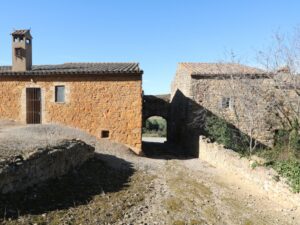
Castle of Peralta
41.9547650000, 3.0912340000