


Interesting places

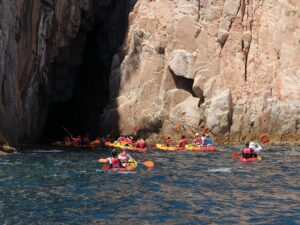
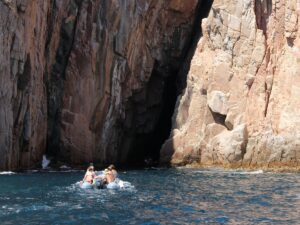
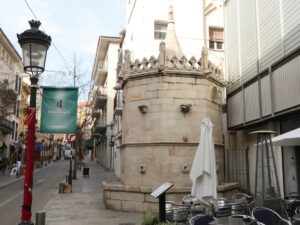
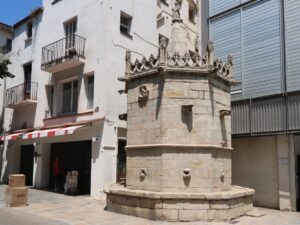
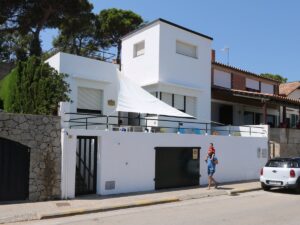
A quaint hut that you may find while strolling around the beach Es Castell has appeared here in the mid-20th century when the grounds belonged to the art patron Alberto Puig Palau. A friend of Salvador Dalí, Palau dreamed of Dalí spending more time at his estate, so he ordered a studio to be built for the artist, adding his own two cents to the project — the door frame of the studio is slanted at 35-40°.
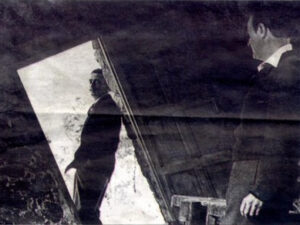
After appreciating the originality and generosity of his friend, Dalí hadn’t bought new paints or canvas for the studio. There are photos of the artist posing next to the studio that was named in his honour, la barraca d’en Dalí (the Dalí’s hut), but no records indicate that he had ever painted anything inside.
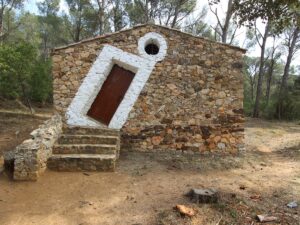
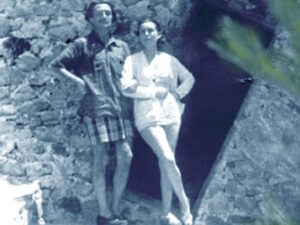
Hut of Salvador Dalí
41.8643460000, 3.1623390000
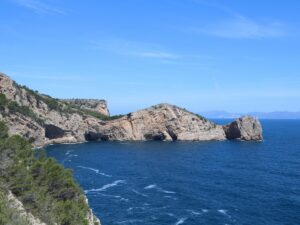
The word punta, among other things, means an endpoint of something both in Catalan and Spanish. In the Costa Brava, whose coastline contains hundreds of coves and cliffs, this may refer to a good thousand places yet add a definitive article to the word and la punta becomes something unique and universally recognizable. In L’Escala, the spot that deserves such designation is the cape hugging the central city beach Platja de les Barques on the west side.
An evenly paved area between the coastal line and the town streets is a usual spot for concerts and performance shows, especially during the Mediterranean music and art festival PortalBlau.
In 1979, the monument A la Gent del Mar was erected on La Punta, created by a L’Escala native, sculptor Josep Simón.
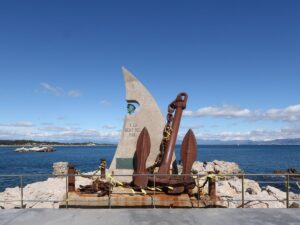
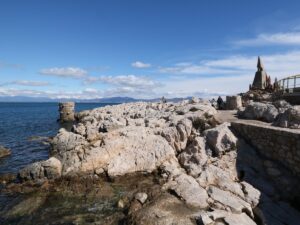
La Punta
42.1277540000, 3.1339170000
After a winter storm assaulted the port of Llança on December 26, 2008, doing significant damage, the municipal government found the money to build a dam to protect the port from future disasters. In a few years, the new, 116 meters-long structure went up, safely covering not only the town but its pretty landscape too. The Costa Brava pairs well with white sails and fishing boats, not enormous utility planks of concrete.
In 2012, the Catalan artist and sculptor Carles Bros proposed using the dam as a giant canvas for a no less giant mural. The project was accepted and funded, and in three months the dam got turned into Banc de Peix (The Fish School), covering 3162 square meters of space. In the process of painting it, the artist had to use not only brushes and paint, but climbing equipment and safety harnesses too. On June 22, 2013, the dam makeover was officially revealed to the world. Today, Banc de Peix is the largest wall mural on the planet.
The concept behind it is genius in its simplicity — the subject matter of the mural does not depend on the length of the canvas, but it definitely nails the essence of marine life!
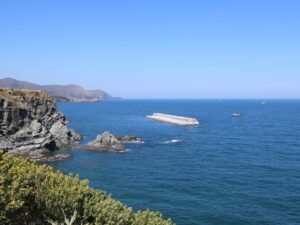
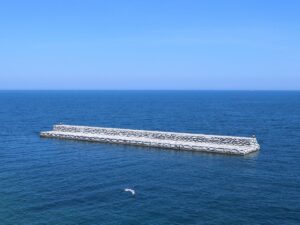
Mural 'Banc de Peix'
42.3739710000, 3.1663380000