

Interesting places

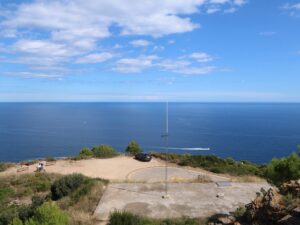
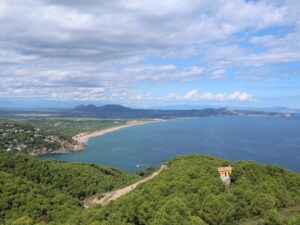

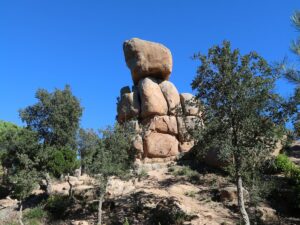
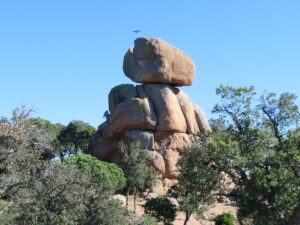
Pedralta, the main natural attraction of the Costa Brava resort Sant Feliu de Guíxols, weighs 101 tonnes and rests upon a 17-meter cliff. “Rests” is probably not the right word for it as the boulder barely touches the surface of its base, and is famous for precisely this reason.
For thousands of years, Pedralta had topped the cliff precariously, moving and tilting even from the lightest push of a hand, until in 1996 a strong storm finally toppled the stone to the ground. To determine whether it was worth paying government funds for the return of the phenomenon to its usual place, the municipality held a survey among residents and upon receiving a resounding “yes” paid for the hire of two cranes. In May 1999, Pedralta was hoisted back to its rock but put into place a bit more securely.
Naturally, such a wonder of nature has been a magnet for all sorts of visitors. In 1890, a citizen group from Sant Feliu de Guíxols felt determined to put up a cross on top of Pedralta. Saint John’s Eve was chosen for such an important affair. The cross was delivered, placed on top of the rock, a good lunch was had next to it, and the participants went on their merry ways.
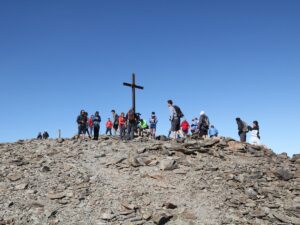
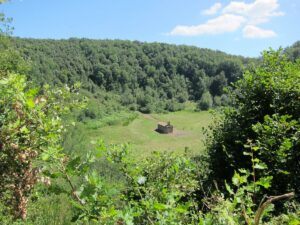
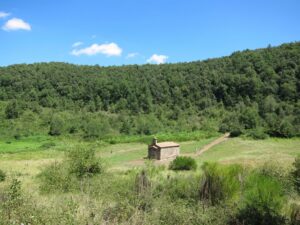
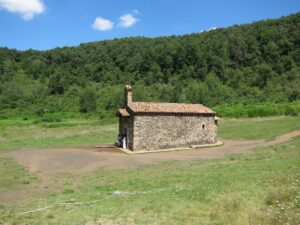
It is unclear for how long the disappearance of the cross had gone unnoticed, but once the futility of the attempts at the betterment of Pedralta became apparent, the wonder was left to be—until 1960, that is, when the cross idea reappeared again. Another cross was put in place and an annual gathering one week before the second Easter (Domingo de Pentecostés) was established, which has since become a favourite local holiday named Aplec de Pedralta. To properly begin the holiday and to celebrate mass, an hermitage next to Pedralta was built, whose first stone was laid in 1961.
Visitor information
To visit Pedralta, type in Sant Feliu de Guíxols in your GPS navigator and add the street Carretera de Pedralta as the destination. Follow the signs to Pedralta that will at some point appear along the way. Pedralta is about a 15-minute drive away from the town centre.
Google Maps coordinates: 41.791735, 2.981819.
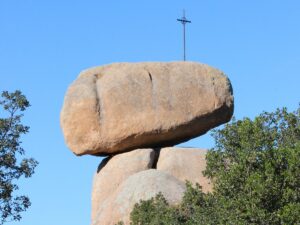
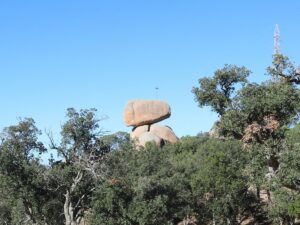
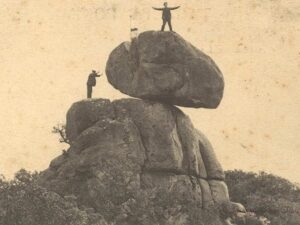
Pedralta
41.7917350000, 2.9818190000
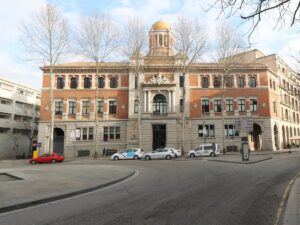

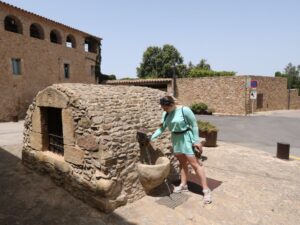
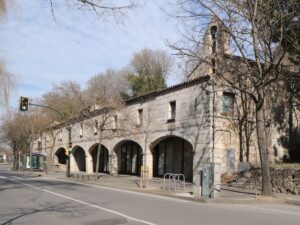
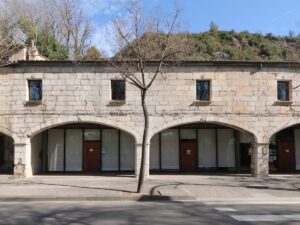
The 17th-century church of Sant Pere in Begur is notable for its long stone bench running along the side wall of the structure. “No skin off my back, but they would love it” — the church architect, probably. People-watching with a cup of coffee, a glass of wine or beer is one of Spaniards’ favourite pastimes, and the outdoor church bench offers plentiful room to do so.
The Begur bench is called Es Pedrís Llarg, “the long stone” in Catalan, and it is now among the most notable points of interest in town. In a few hours, you will encounter all the locals and town visitors — the church is located dead in the middle of Begur, on the square that connects the streets leading to the town hall, the fortress, the Indianos houses, restaurants and shops.
Thanks to the unknown architect, seniors in Begur (plus, in winter, half of the employment-age folk waiting for the summer season to start) do not need to look for a place to meet, discuss politics, football or local gossip. If you feel the pressure of existential questions weighing down on you, the house of God is right around the corner.
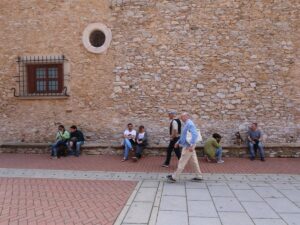
Stone Bench (Es Pedrís Llarg)
41.9544050000, 3.2074230000