

Sights of Begur

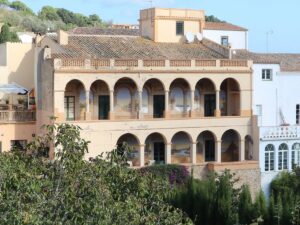
This indiano house was purchased by Pere Roger i Puig from another indiano Josep Carreras Frigola in 1859, when Pere Roger returned from Cuba, a rich tobacco manufacturer.
The house interiors have preserved the colonial style paintings and frescoes, while the courtyard verandah has nautical decorative elements.
House Casa Pere Roger
41.9544480000, 3.2090920000

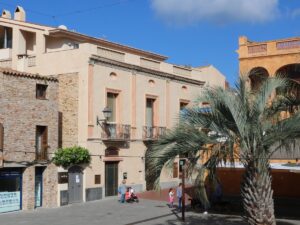
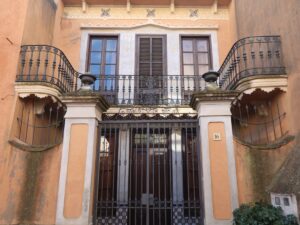
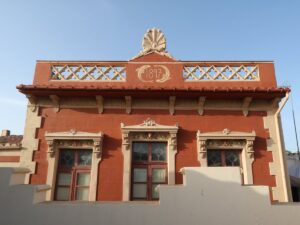
The house Casa Térmens was built in 1869, commissioned by an indiano Santiago Mauri Carreras, who returned to Begur after emigrating to Cuba, having made his fortune exporting fabrics for the Spanish army.
The notable exterior elements of Casa Térmens are the moldings on the ground floor, ruffled pilasters on the second and forged iron banisters on the balconies.
House Casa Térmens
41.9540860000, 3.2071420000
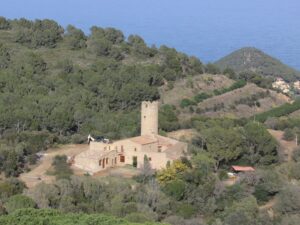
The Mas Pinc estate located on the outskirts of Begur is famous for one of its tenants, the great flamenco dancer Carmen Amaya (1918-1963), who spent her last years here.
Mas Pinc is currently owned by the municipality of Begur and houses the department of natural resources and natural riches of the region.
Mas Pinc Estate
41.9587060000, 3.2122220000
The 17th-century church of Sant Pere in Begur is notable for its long stone bench running along the side wall of the structure. “No skin off my back, but they would love it” — the church architect, probably. People-watching with a cup of coffee, a glass of wine or beer is one of Spaniards’ favourite pastimes, and the outdoor church bench offers plentiful room to do so.
The Begur bench is called Es Pedrís Llarg, “the long stone” in Catalan, and it is now among the most notable points of interest in town. In a few hours, you will encounter all the locals and town visitors — the church is located dead in the middle of Begur, on the square that connects the streets leading to the town hall, the fortress, the Indianos houses, restaurants and shops.
Thanks to the unknown architect, seniors in Begur (plus, in winter, half of the employment-age folk waiting for the summer season to start) do not need to look for a place to meet, discuss politics, football or local gossip. If you feel the pressure of existential questions weighing down on you, the house of God is right around the corner.
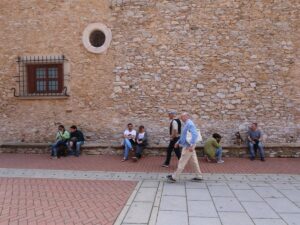
Stone Bench (Es Pedrís Llarg)
41.9544050000, 3.2074230000
The grand opening of the navigation and meteorology station Semáfor de Begur on the cape of Begur (Cap de Begur) took place on December 10, 1891. After the mayor of Begur Josep Font cut the red ribbon, the local elite moved to the local casino to continue the festivities.
The opening of a vital nautical navigation station was only one of the causes of celebration. The other, no less important, victory was the fact that Semáfor de Begur was snatched away from the neighbouring municipality of Palafrugell that proposed to house the new station on the same spot as the lighthouse Far de Sant Sebastià.
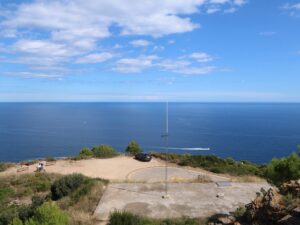
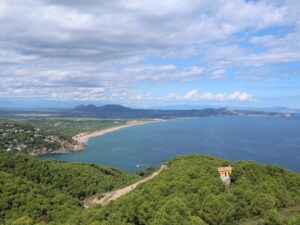
The station had served mariners until the 1970s. It is currently unused and closed to visitors, but there is a convenient lookout point right by its side with excellent views of the coast. You can reach the Begur Semaphore from the town centre along the streets Camí del Mar and Camí del Semáfor.
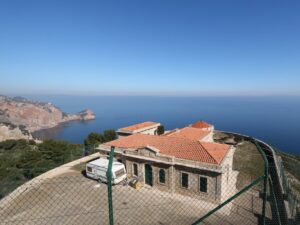
The Semaphore of Begur
41.9501630000, 3.2318190000
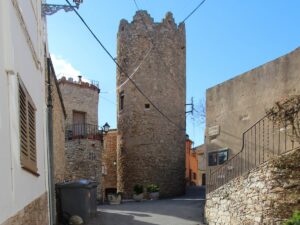
The observation tower on the square Plaça de Pella i Forgas in Begur was built in the 16th century to defend the town against pirates.
The house that the tower is attached to is named after the Catalan politician, historian and publicist Jose Pella y Forgas (1852-1918), born in Begur, who previously owned the estate.
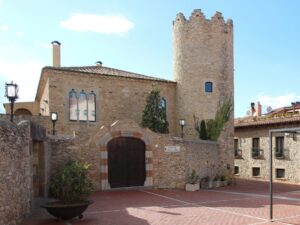
Tower of Can Pella i Forgas
41.9547090000, 3.2061390000