


Sights of Girona

Phone number: 972 216 761
Opening hours (September-June): Tuesday-Saturday 10:00 am to 6:00 pm; Mondays, Sundays and holidays 10:00 am to 2:00 pm.
Opening hours (July-August): Monday-Saturday 10:00 am to 8:00 pm, Sundays and holidays 10:00 am to 2:00 pm.
Open 24th and 31st December 10:00 am to 2:00 am.
Closed on 25th and 26th December, 1st and 6th January.
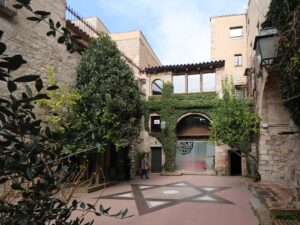
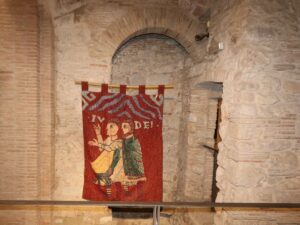
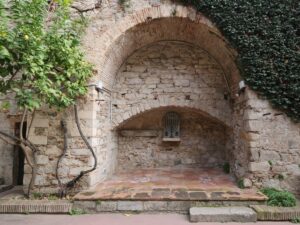
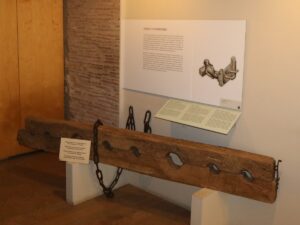
Museum of Jewish History
41.9859910000, 2.8252720000
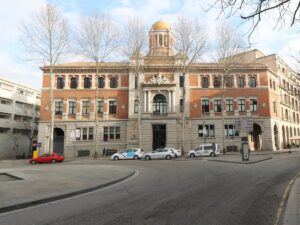
Address: Carrer de l’Albereda, 7, 17004 Girona
Phone: 872 08 02 18
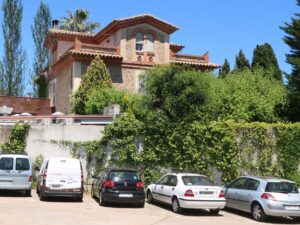
Restaurant Divinum ☼
41.9821940000, 2.8240990000
Address: Carrer de Can Sunyer, 48 | 17007 Girona
Phone: 972 22 21 57
Restaurant El Celler de Can Roca ***
41.9933810000, 2.8080150000

Address: Carrer Bonastruc de Porta, 10 | 17006 Girona
Phone: 972 21 38 20
Restaurant Massana *
41.9848730000, 2.8193770000
Phone: 972 176 861
Opening hours: Monday-Saturday 10:00 am to 6:00 pm, Sundays 1:00 pm to 6:00 pm
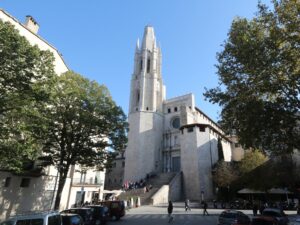
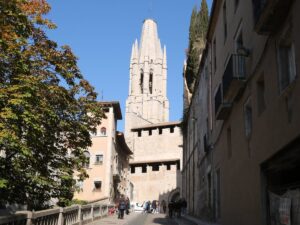
Sant Feliu Church
41.9880120000, 2.8246720000
Out of four artworks by the Catalan sculptor Rosa Serra that stand today in Girona, three are dedicated to the subject of female beauty. Without a doubt, ever since Girona received her fantastic statue Tors de dona (The torso of a woman) in 1982, madam Serra has been scrupulous in inspecting her works from every possible angle.
If the sculpture in question was put up in a park, surrounded by hedges and planters somewhat restricting access from undesired angles, the public would likely not notice anything out of the ordinary. However, The Torso of a Woman now stands at the busy intersection of Bonastruc de Porta, Artillers and Figuerola streets, and the passersby walking along the latter would encounter a more unexpected, far from female, form.
Every guidebook for Girona that covers modern art these days makes a note of this, attaching photos that depict the statue from both angles — the obvious and the controversial one. To the credit of the artist herself, she neither denied the resemblance nor claimed that that was the artistic intent all along. A simple coincidence, that’s all.
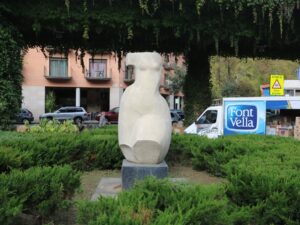
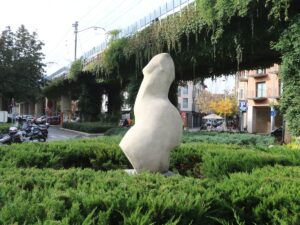
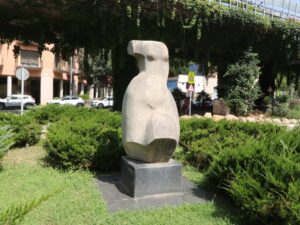
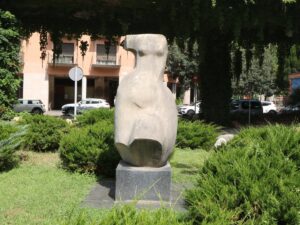
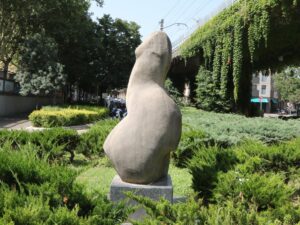
Sculpture 'Tors de dona'
41.9855890000, 2.8205520000
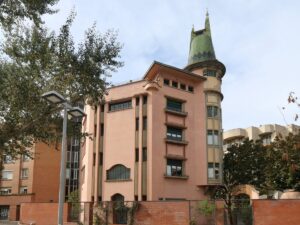
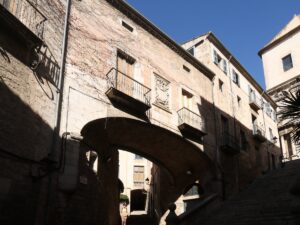
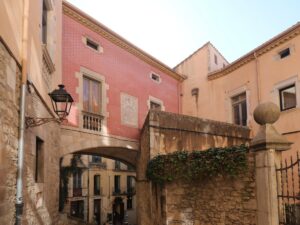
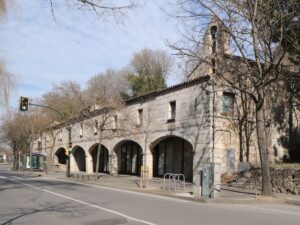
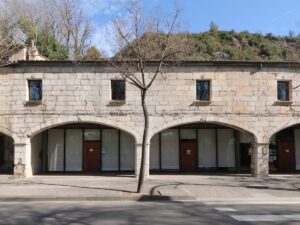
The Ancient Hospital of Sant Llàtzer (Hospital of the lepers)
41.9971100000, 2.8247600000
Phone number: 972 190 969
Opening hours (November-February): Monday-Saturday 10:00 am to 6:00 pm, Sundays and holidays 10:00 am to 2:00 pm.
Opening hours (March-October): Monday-Saturday 10:00 am to 7:00 pm, Sundays and holidays 10:00 am to 2:00 pm.
Closed on 25th and 26th December, 1st and 6th January.
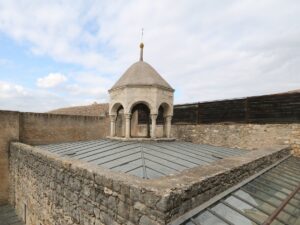
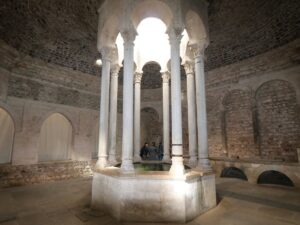
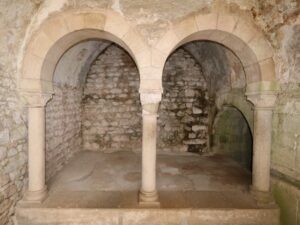
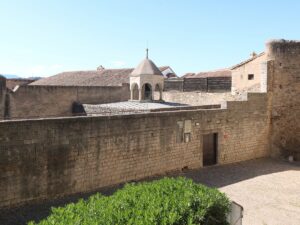
The Arab Baths
41.9880770000, 2.8257410000
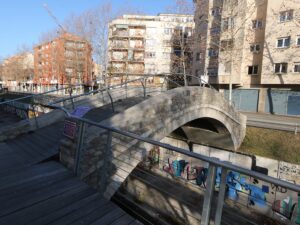
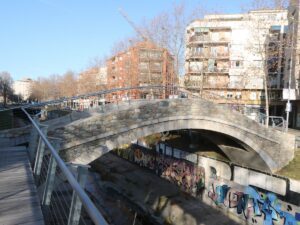
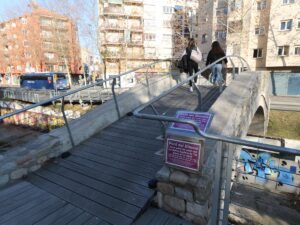
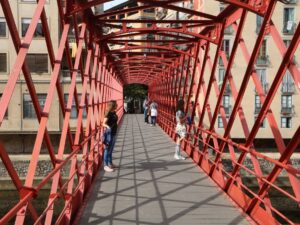
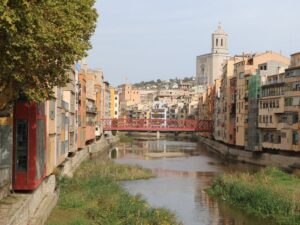
Out of all eight bridges that Gustave Eiffel had engineered for the Girona railway company, the Iron Bridge (Pont de Ferro), also known as the Bridge of Red Beams (Pont de las Palanques Vermelles) and the Bridge of Old Fishmongers (Pont de les Pescateries Velles) has the quietest history to date.
The bridge connected the banks of the Onyar river in 1877, creating a link between the old town and the town market. Since then, the bridge has undergone several repairs but hasn’t been moved from its original location.
The Iron Bridge today is one of the beloved tourist spots in Girona, ideal for taking photos and selfies.
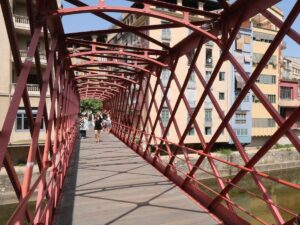
The Iron Bridge (Pont de les Peixateries Velles)
41.9845640000, 2.8238700000
Every self-respecting city or town has, or at least should, come up with a colourful ritual, the performance of which would allow the happy visitor to return to said city one day. These rituals around the world, for the most part, aren’t very original. Throwing a coin into a fountain or rubbing a part of a sculpture that acquires an alluring shine after years of human touch is often as far as it goes. Meanwhile, the Catalan town of Girona has approached the task more creatively.
The beast climbing a Romanesque column on the Plaça de Sant Feliu square is referred to as the Lioness (lleona), even though the sculptor conceived of it as a lion. It might simply be a boring stereotype at play, as the king of the animals does not run away from danger or climb a tree with fear written all over its face—panic only befits the fairer sex, or so the stereotype goes. In practice, every child knows that lionesses are the real warriors and bacon-bringing leaders in the lion pride!
The lioness monument in Girona has been known to historians since the 11th century, when it stood close to the inn Hostal de la Lleona (whichever came first, the sculpture or the inn’s name, is a typical chicken and egg problem). The ritual of kissing the most accessible (lowest) part of the animal, known as cul (“ass”) in Catalan, has at some point become a rite of passage both for locals and travellers passing through. Checking in for the night? Pay a visit to the Lioness. Getting ready for a long trip and worried about never coming back? Make assurances by kissing the Lioness.
There is a sign next to the popular spot that was put up by the municipal government, informing visitors that people have been kissing the Lioness’s ass for 800 years and no one has ever complained of the ritual not working. Of course, unsurprisingly enough, the statue standing on the square currently is a replica: the original sculpture was nearly kissed to death and was placed in the safety of a museum a good 30 years ago. Tourists have to contend with a copy, but it’s a nice one that also comes with a pair of steps for easier reach.
The saying el cul de la lleona (“the lioness’s ass”) has become an integral part of the city folklore with no particularly bad connotations. Don’t be surprised to encounter the phrase on a restaurant sign or in a dessert menu in Girona; order without worry!
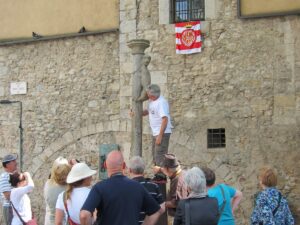
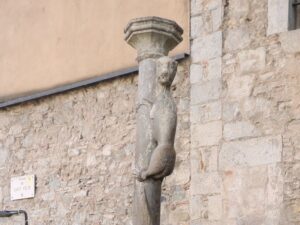
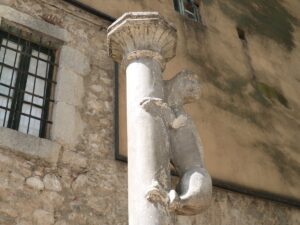
The Lioness of Girona
41.9879330000, 2.8241030000