

Castles

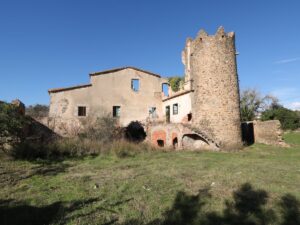
A modern tourist is not easily surprised. Every interesting place, quirky site or unknown object can be easily googled, looked up on Wikipedia and reviewed for all to see within seconds. While convenient, its puts your imagination to rest, unlike in the pre-internet times, when the only way to interpret the outside world was to use your own wits and (often limited) knowledge. So many then-unexplained phenomena were shrouded in mystery and became legends, each more detailed and colourful than the last.
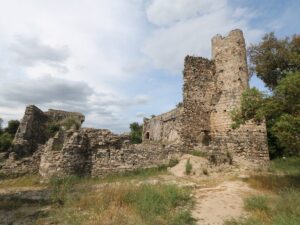
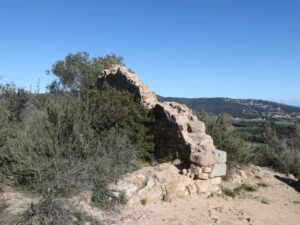
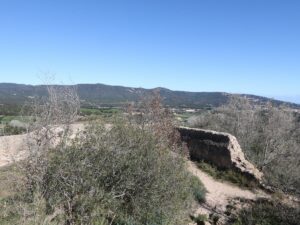
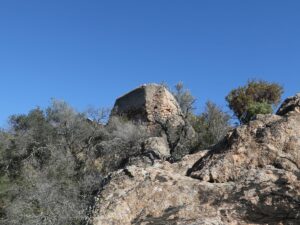
Sadly, because the Medieval world was a harsh and unforgiving place, being scared of the unknown resulted in very sad stories. A handful had happy endings, whereas a select few, like the legend of the Castell Mont Roig that stands in ruins by the hamlet of Darnius, shaped out to be truly horrific.
The legend goes that there once lived a marquis with a really bad temper, who suspected his wife of infidelity and murdered her in a bout of rage. Predictably not feeling better after this, he then decided to go after the suspected lover of his murdered spouse. Preparing for revenge, the marquis skinned her body and cut her heart out, and sent a dinner invitation to her beloved. The unsuspecting guest was enjoying the meal and the interior design of the castle, up until he found out the ingredients of his supper and the nature of the “upholstery” of his chair. Delighted with the reaction of horror of his guest, the marquis then killed the man, mixed his blood with the blood of his wife and started painting the walls with it, blind with the rage that wouldn’t subside… and neither would the blood.
All the rooms were painted, all bedrooms and corridors, the sitting room and the parlour, but the blood still wasn’t running out. The mad marquis took to painting the rock on which his castle stood, covering its grey surface with bright scarlet. There still was blood, so much blood, and he would have covered all of the province of Girona red if it wasn’t for the heavens that intervened, striking the castle with lightning and burying its mad owner under the castle’s ruins…
The official history tells a less dramatic story.
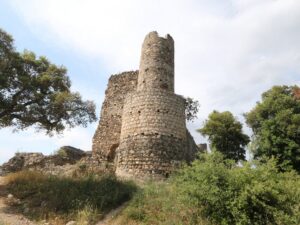
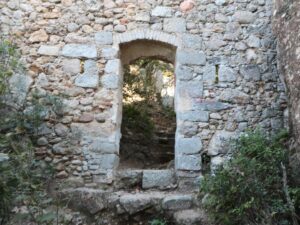
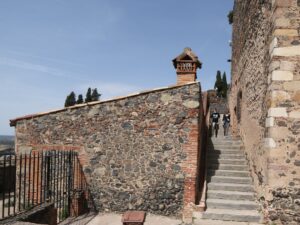
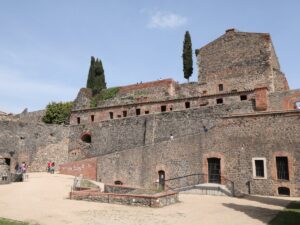
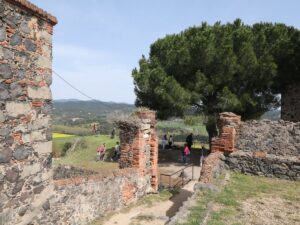
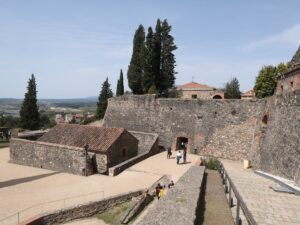
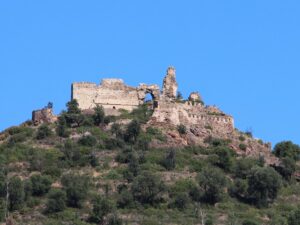
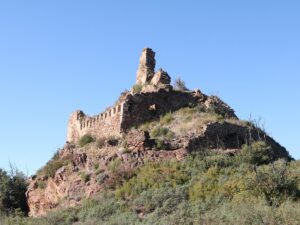
The archives mention Castell Mont Roig for the first time in 1070, noting the ownership of a Besalu count. Many centuries later, in 1359, the local census makes a note of eight families living there. After that, radio silence, not counting sieges and battle damages, unsurprising considering the castle’s location. The largest battle around Mont Roig Castle took place in the fall of 1794, when the French army crossed the border and executed a fast attack, gaining control over the castle’s surrounding territories. The attempts of the Spanish army to recapture the castle were futile, resulting in deaths of generals on both sides. In the end, the exhausted Spanish regimens had retreated towards Girona, giving up Figueres to the French as well.
The combat went down in history as the battle of Darnius. It became the straw that broke the camel’s back — after the bloodshed, the remaining locals abandoned the now-uninhabitable spot. The ruins of the castle have survived to this day, however; in November 1988, it was added to the list of the cultural heritage objects of Spain.
And the reddish undertones of the rock that gave the castle its name (mont roig, from Catalan red mountain) and inspired the terrifying legend? The colour is simply due to the high iron concentration in the soil.
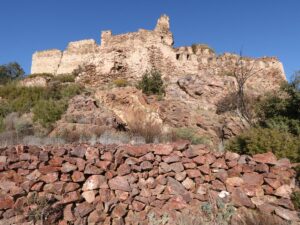
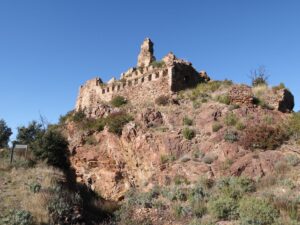
Mont Roig Castle
42.3521070000, 2.8755870000
The fortress Castell del Montgrí sprung up at the top of the Montgrí mountain at the end of the 13th century, as a watchtower over the unruly Count of Ampurias Pons V who refused to recognize the royal reign of King of Aragon Jaume II. To monitor the likely movements of Pons’s army, the king had decreed his generals to find a convenient spot in the lands nearby, and such a spot was found in 1294, with construction starting immediately.
Usually, the fortifications of this sort take a long time to build and then to improve on over the centuries, but the Montgrí castle is an exception. The walls, the turrets, and the moat had barely gone up when the obstinate Count suddenly bent the knee — the construction of the fortress, now unnecessary, was frozen, as it turned out, forever.
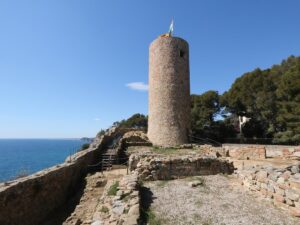
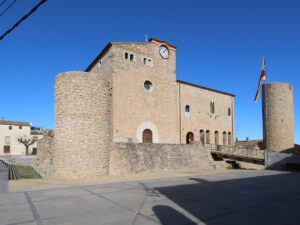
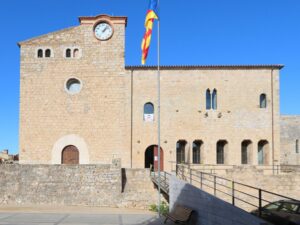
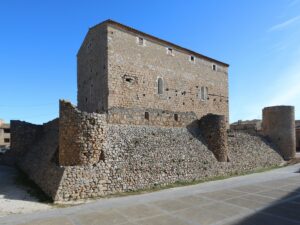
The foundation of the Montgrí castle is a 31-meter square with walls rising to 13 meters. Each corner of the fortification hosts a cylindrical tower. A half-arc looking south hints at the location of the main entrance into the fortress. From an architectural point of view, the Montgrí castle isn’t anything special or unseen before, but it is a landmark spot in the Costa Brava nonetheless. The Montgrí mountain, despite its modest height (315 meters), has a pleasant round shape that is accentuated by the fortress at the top and can be spotted from afar. More importantly, the spot for the fortress has been chosen specifically for its views, and today it is the best observation point of the whole coast.
A modest hike is required to see the Montgrí castle up close. The beginner-friendly hiking route from the town centre of Torroella de Montgrí to the mountain summit will take most visitors about 40-50 minutes.
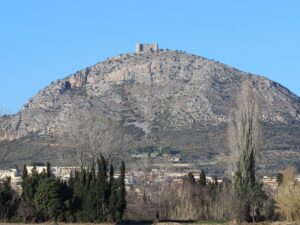
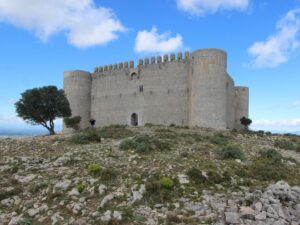
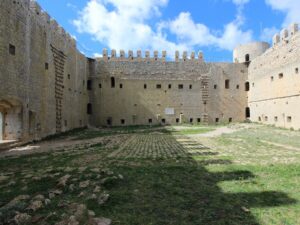
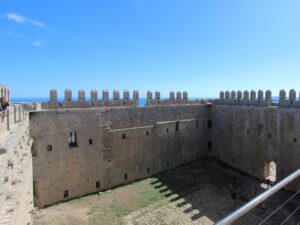
Montgrí Castle
42.0521270000, 3.1316660000
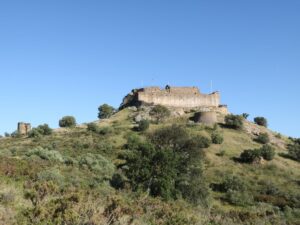
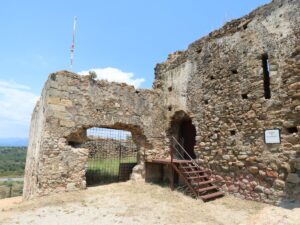
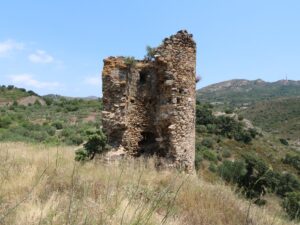
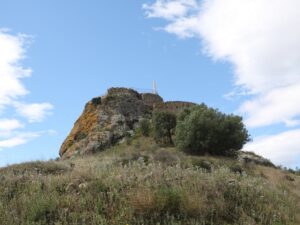
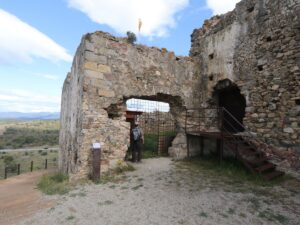
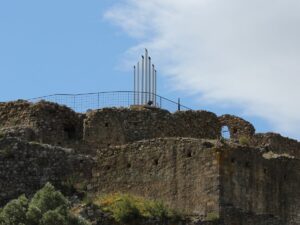
Directions: The castle is the finish point of the hiking route beginning in Portbou.
Querroig Castle
42.4377390000, 3.1200960000
Opening hours: Please verify on the website or call 646 179 509 for more information.
Directions: The distance between the castle and the closest town (Cantallops) is about 7 km. It can be covered on foot or by car.
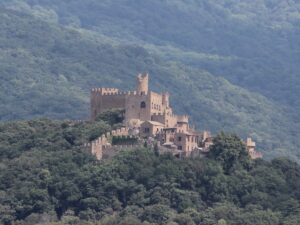
Requesens Castle
42.4466470000, 2.9443920000
Phone: 972 506 094
Opening hours:
Last Sunday of October – last Saturday of March 10:30 am to 3:00 pm,
Holy Week (Tuesday-Sunday) 10:00 am to 8:00 pm,
1st July – 15th September 10:00 am to 8:00 pm, the rest of the year 10:30 am to 6:00 pm
Closed 1st and 6th January, 25th and 26th December
Ticket sales stop 1 hour before closing
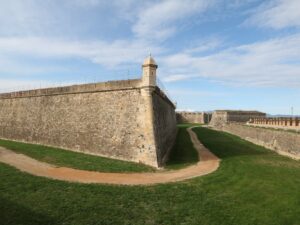
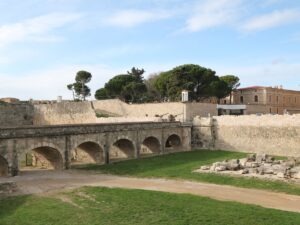
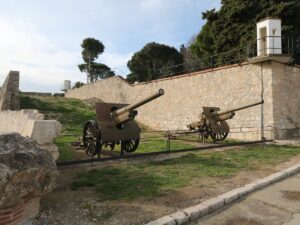
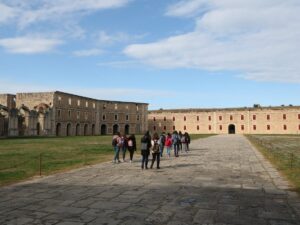
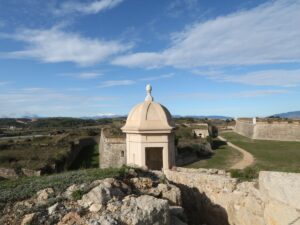
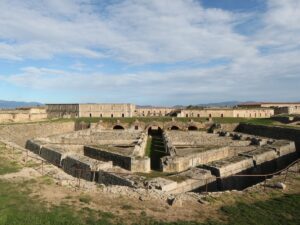
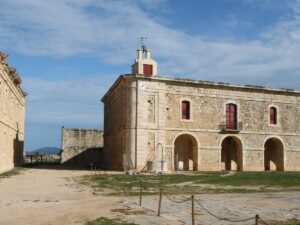
Sant Ferran Castle
42.2726050000, 2.9476300000