

Hotels

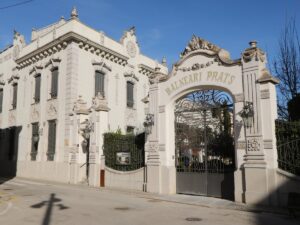
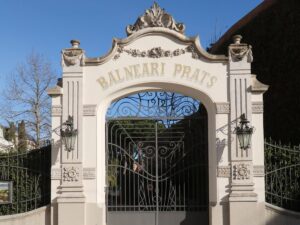
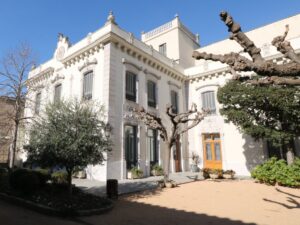
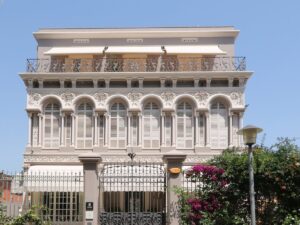
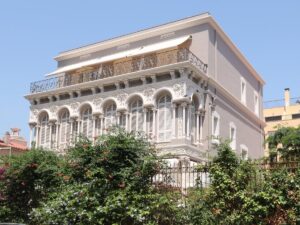
The healing properties of the water from the hill of Puig de les Ànimes in Caldes de Malavella have been known since ancient Roman times, evidenced by one of the main landmarks of the city, the Roman Baths. In the 1870s, Dr. Modest Furest i Roca, an adherent of hydrotherapy, analyzed the chemical components of the water and discovered that it was rich in salts and minerals. In 1881, inspired by his findings, the good doctor bought the land that contained the water source and, having received all the necessary licenses, began making money off the water within two years.
The mineral water that was soon to be known as Vichy Catalán received awards at the International Expositions of 1888 and 1889, in Barcelona and Paris. The trademark was registered in 1890, borrowing its name from a well-known French company, provoking a long litigation process with the same. On June 12, 1898, a balneological health resort opened right next to the water bottling factory, drawing the healing waters from the same mineral source.
The hotel building and the park surrounding it were completed by architect Gaietà Buïgas i Monravà, also known for his work on the monument to Columbus in Barcelona. The architect’s son Carles followed in his father’s footsteps and designed Fonta Màgica de Montjuïc, the famous “singing” fountain of Montjuïc.
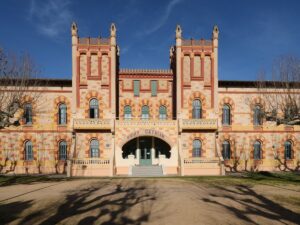
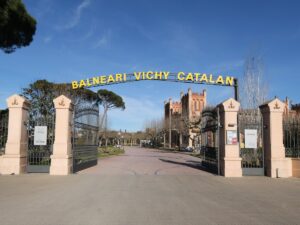
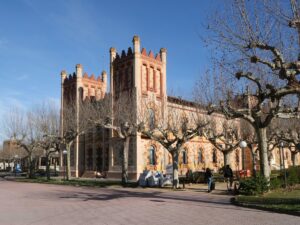
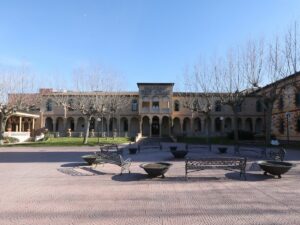
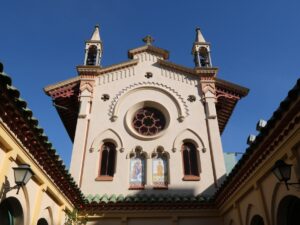
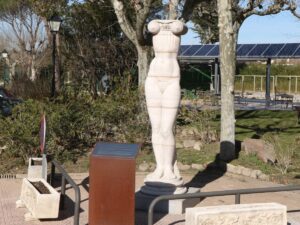
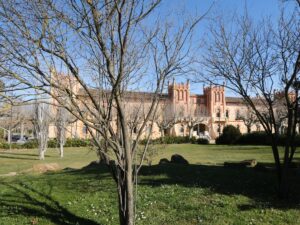
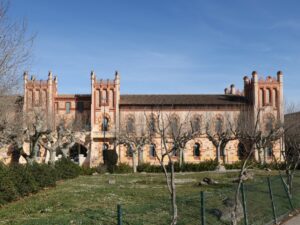
Hotel Balneari Vichy Catalan
41.8388450000, 2.8045570000
It is quite common, in Spain especially, to see former monasteries converted into hotels. These are usually the structures occupying elevated spots with beautiful views over lakes or the sea — not only was it easier to defend those places but also serving God seemed to come more naturally there as well.
But aesthetics and military tactics alone do not explain all such scenic location choices. Take Sa Riera, for example, a lush and green urbanization in the Costa Brava whose residents may check out the water conditions on the Mediterranean by simply walking out onto their terraces — and, after a ten-minute walk, verify its temperature too.
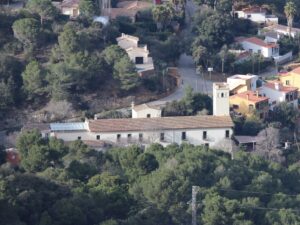
Sa Riera is one of the most desirable locations on the Catalan coast. Back in the 18th century, a group of Minims, hermits of the religious order of friars of Saint Francis of Paola, made camp here. As the legend goes, the monks’ arrival in Sa Riera was from an accident.
Once, when a group of Italian sailors was transporting the holy relics of Saint Reparata (where from and where to is unknown), their ship got into a strong storm that threatened to sink it. Praying to be saved, the travellers swore that if they survived the storm they would build an altar on the first piece of dry land they find. The storm calmed down and the ship anchored in the cove of Sa Riera. The spared sailors promptly forgot their oath and resumed their mission after a short rest, only to encounter the same wild storm again. Taking the hint, the group returned to Sa Riera.
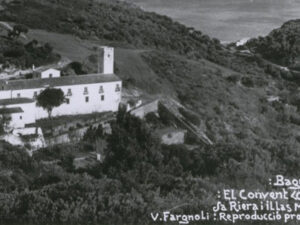
They attempted to carry the relics into the parish church of Begur, the holy place closest to Sa Riera, but halfway there the relics became so heavy and weighed down on the men so much they could not carry them any longer. That exact spot is where the Minims had made camp to build the monastery of Saint Reparata (Convent Santa Reparada).
In 1836, the lands belonging to the Catholic Church and the monastic orders were confiscated by the state, and the abandoned premises had gotten occupied by the bottle cork makers’ workshop. During the Franco years, the former monastery served as a summer camp for the “ideologically correct” youth overseen by the Nazis. However, years of activity within the monastery’s walls gave place to decades of total quiet.
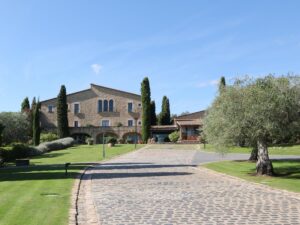
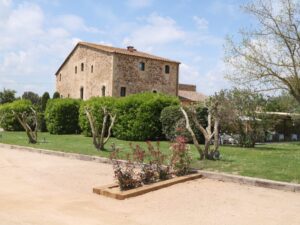
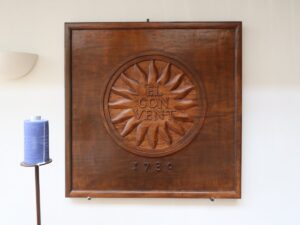
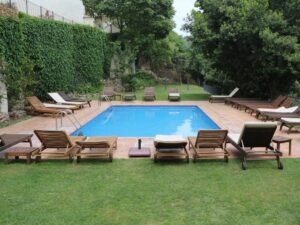
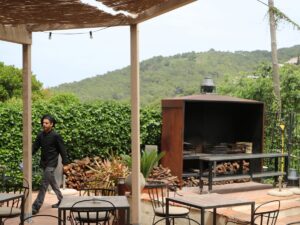
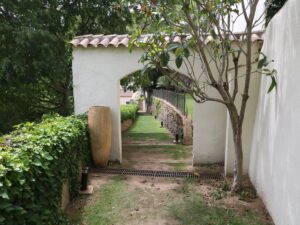
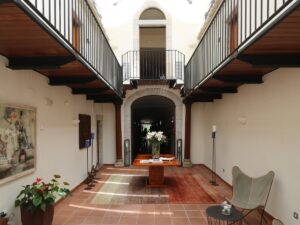
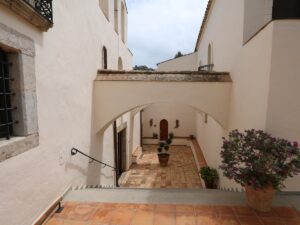
With the development of the tourism and travel sector in Sa Riera, summer residences belonging to wealthy Spaniards and Frenchmen started springing up like mushrooms in the area — the predecessors to luxury villas meant for summer holiday rentals. Once the region becomes focused on tourism, vacant buildings do not stay vacant for long, especially those on sizeable land, with gorgeous views of the cove and the sea. Today, the former monastery is a very nice hotel called El Convent (“the monastery” in Catalan), that attracts guests with all the aforementioned qualities, in addition to a garden with a swimming pool, a great restaurant, not to mention an old chapel that has survived from the times of the Minims.
Address: Carretera de la Platja del Racó, 2, 17255 Begur
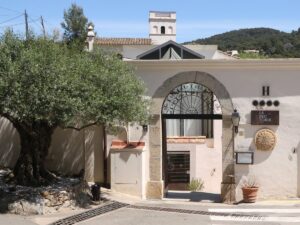
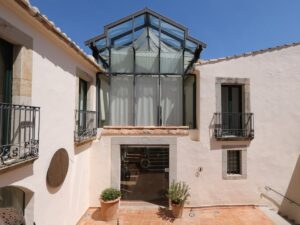
Hotel El Convent
41.9653620000, 3.2062960000
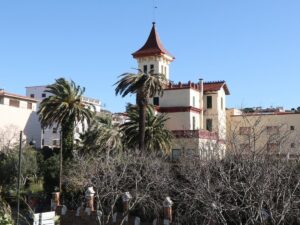
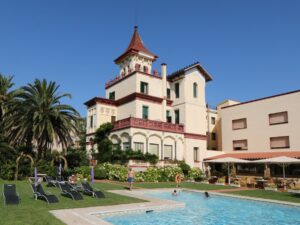
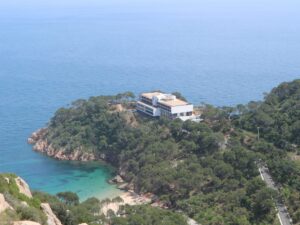
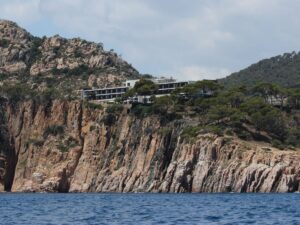
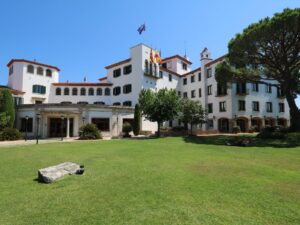
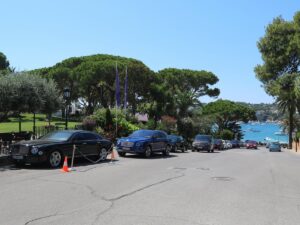
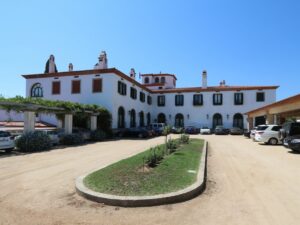
The most famous hotel in the Costa Brava is located in S’Agaro. Its name, Hostal La Gavina1, can be deceptively confusing for those new to its splendor, as the Spanish word “hostal” sounds very much like the English word “hostel”, with all the attendant associations of bunk beds and sharing bathrooms with strangers. That’s mistake number one: hostal with a silent “h” is simply an inexpensive hotel that offers private rooms. Mistake number two is using the information in the previous sentence to try and save a little on the accommodation in the Costa Brava — one night in Hostal La Gavina costs about 300€ in the low season and about 1000€ in the high season (advanced bookings are very much recommended).
The modest name of the hotel is simply a relic of the simpler times when it first opened its doors in 1932 as a newly renovated chalet with two buildings and a turret between them. 11 guest rooms were added almost as an afterthought. Even back then, spending a cheap night there wasn’t really possible, as S’Agaro had been building up its reputation as a garden town for the upper class and the bourgeoisie, so its first hotel had to fit the bill. Its modest outward appearance was the only reason for the simple name.
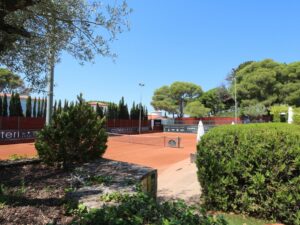
The hotel outgrew its eleven rooms quite quickly, and for years after the grand opening Hostal La Gavina had been in the state of permanent expansion. The Spanish Civil War put a pause on the construction work, but once it had ended the hotel continued changing, this time drastically. The way Hostal La Gavina looks today is the result of an ambitious project led by the architect Francesc Folguera. Only the tennis courts and one hallway remain from the original buildings.
The list of celebrity guests of La Gavina is enormously long and keeps growing. The cream of the crop among famous politicians, royalty, actors, and musicians visiting the Costa Brava make it a point to spend the night at Hostal La Gavina. So if stargazing is your thing, perhaps paying 1000€ a night for the possibility of sharing the breakfast buffet with Lady Gaga or Robert de Niro is not such a high price?
1)Gavina means “seagull” in Catalan.
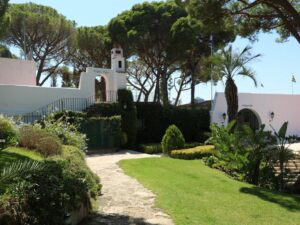
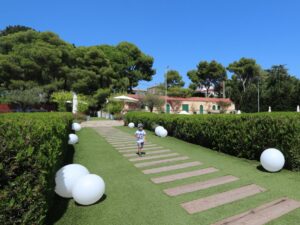
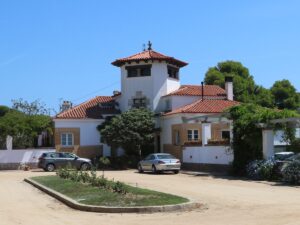
Hotel La Gavina
41.7905480000, 3.0558070000