

Mansions

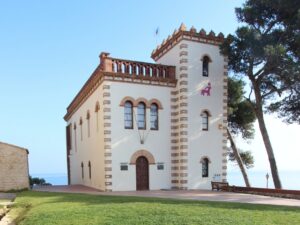
Asil Surís, the residence for homeless children and dispossessed seniors, was built in Sant Feliu de Guíxols between 1904 and 1906, financed by the charitable foundation started in 1845 by Joan Surís i Llorens. The author of the project is Art Nouveau architect General Guitart i Lostaló.
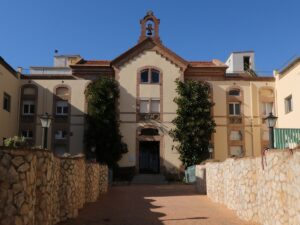
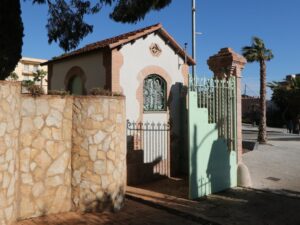
Asil Surís Mansion
41.7867810000, 3.0279920000
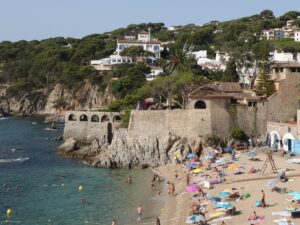
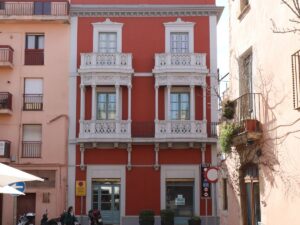
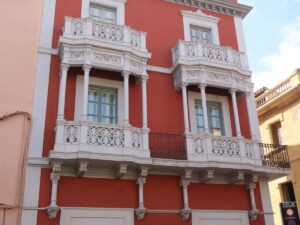

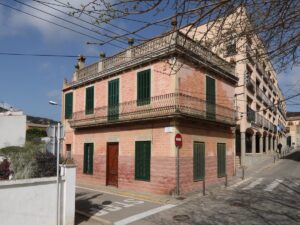
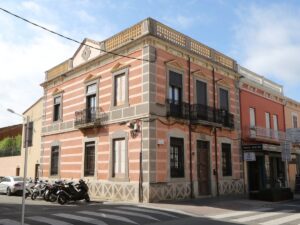
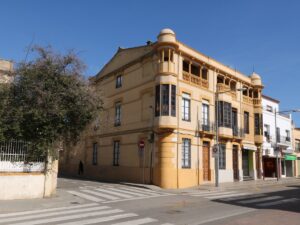
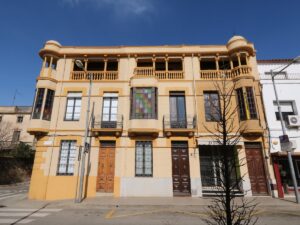
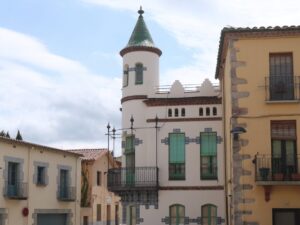
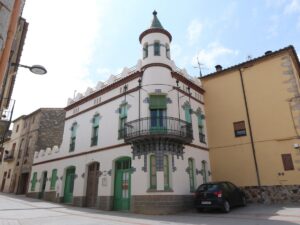
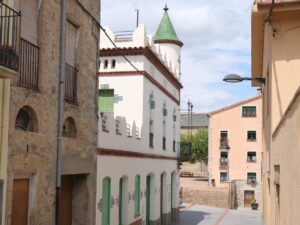
The estate Casa Forestal in Sant Martí d’Empúries is a three-storey house standing at the edge of the village, built in 1910 to house the technical staff of Servei Hidrològic i Forestal, a government agency overseeing the protection and development of water and forest resources.
Casa Forestal combines elements of Art Nouveau on its front facade and Art Deco on the side and back. It is the work of L’Escala architect Miquel Torres i Brugés, owned at the time by one of the engineers from Servei Hidrològic i Forestal, Josep Reig i Palau, whose initials can be seen in the ornaments decorating the back gallery.
Today, the construction of this or any other building in this specific spot, in Sant Martí d’Empúries, would be impossible as this is where precious evidence of ancient life is found underground. The Forestal estate, for example, stands atop the ruins of a fortification wall of a Greco-Roman settlement.
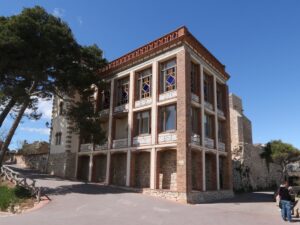
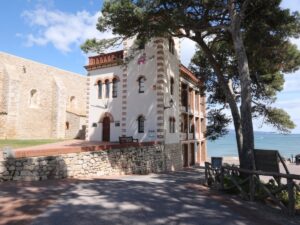
Casa Forestal
42.1398260000, 3.1185730000
Casa Serinyana, also known as “The Blue House” (Casa Blaua), is an Art Nouveau house built in Cadaqués at the beginning of the 20th century by the architect Salvador Sellés for the wealthy Serinyana family.
The Serinyana house has three floors and an attic. A unique feature of the house is the connection of the main building to a small warehouse located on the other side of the alleyway by the town quay. To unite these two very different buildings, the architect put a terrace on top of the storage unit and connected it to the second floor of the living quarters by throwing a small bridge over the alleyway.
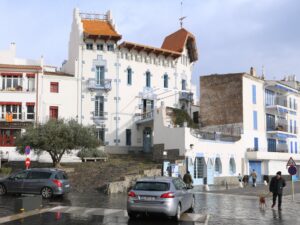
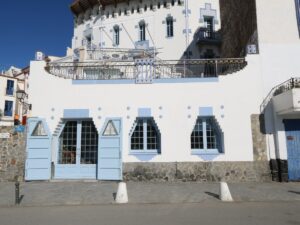
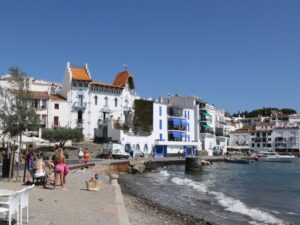
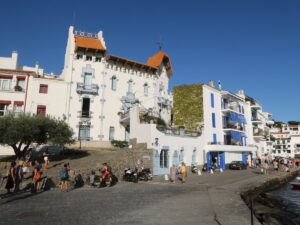
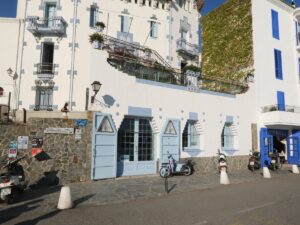
Casa Serinyana Mansion
42.2890020000, 3.2797410000
The house for Francesc Vilahur Forners was built in 1917 by the Girona architect Isidre Bosch i Batallé. In the 1950s and 1960s, the original structure was rebuilt slightly—the portico columns were doubled, while the entrance staircase was moved into the garden.
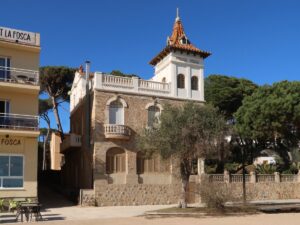
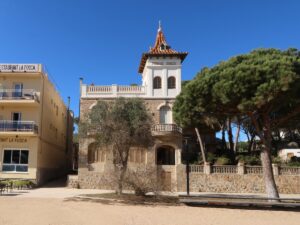
Casa Vilahur Mansion
41.8577200000, 3.1428060000
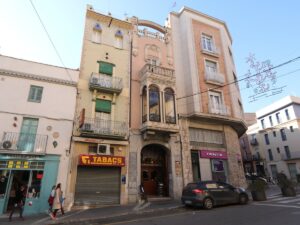
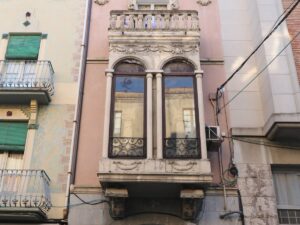
The word “casino” is common in Spain, especially on plaques of historic mansions, which likely confuses many a tourist. These buildings have no roulette tables, no slot machines, no bouncers and no bill-counting rooms. Gambling casinos frequently robbed in Hollywood movies have only been legalized in Spain since 1977 whereas the so-called “cultural casinos” (casino cultural) can be traced back to the mid-19th century.
A sort of a hybrid between an English gentlemen’s club and a community centre, a Spanish casino may cater to either side of the spectrum depending on the social status and income of the people who frequent it. Come closer to a casino’s doors and read the upcoming event announcements—you will likely see flamenco, yoga, chorus singing, children’s drawing competitions and the like. The “classic” activities at the Spanish casino are concerts, dances, public readings, discussion groups, billiards, chess, dominoes and cards (the members who gamble definitely have an outlet there too).
Casino La Constància was founded in Sant Feliu de Guíxols in 1851, uniting craftsmen, entrepreneurs and blue-collar workers keen on self-improvement. Up until 1888, the club members moved from rental to rental across town, accumulating the funds to acquire their own building. The new headquarters were inaugurated in 1889. The author of the project was Art Nouveau architect General Guitart i Lostaló, whose other works in Sant Feliu de Guíxols include the shelter for orphans and dispossessed seniors called Asil Suris.
Balls and concerts held at the casino attracted large crowds, especially in summer and during the Christmas holidays. There was a café with a terrace on the ground floor; the casino also had its own library. In the minds of several generations of Sant Feliu de Guíxols locals, up until the 1960s, the casino was associated with entertainment, diversion and self-education. The town denizens nicknamed it Casino dels Nois (“Casino of the Young”), noting the roaring energy of the club members thanks to whom life was always bustling in Sant Feliu de Guíxols.
The tourist boom that enveloped Costa Brava in the 1960s left its mark on the town, offering new ways for the young people to entertain themselves, and the attendance of the casino events declined sharply.
Under financial pressure due to dwindling membership fees, in 1975, the administration of Casino La Constància reached a swap agreement with one of the construction companies of Sant Feliu de Guíxols. This change of ownership would inevitably lead to the demolition of this Art Nouveau monument—its proximity to the beach was too close and too precious. The developers made no secret of their plans to build an apartment building in its place. The information about the upcoming deal surfaced to the public and caused a big stir, resulting in large protests that forced an administration change among the casino management. The deal fell through. In 1978, La Constància received the status of a cultural heritage object of Spain, guaranteeing its inviolability for life.
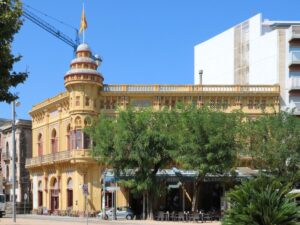
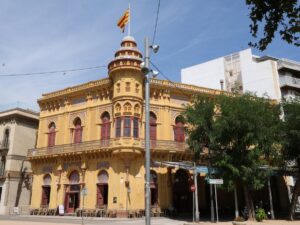
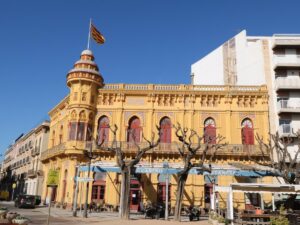
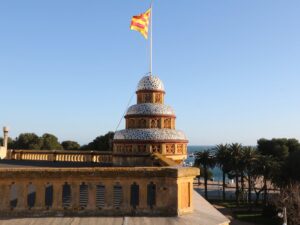
Casino La Constància
41.7817280000, 3.0321790000