


The Beaches and The Bays of Vies Braves

The main beach of Platja d’Aro, simply known as Platja Gran, stretches for more than two kilometres along the coast, which makes it the second largest beach on the Costa Brava, second only to the beach shared by Sant Antoni de Calonge and Palamós.
At first glance, its size is the only remarkable thing about Platja Gran. To discover its full potential one should walk along its entire length because the most exciting findings await you on either end of the long beach.
The southernmost point of Platja Gran is where the mouth of the river Ridaura is found, as well as the yacht club of Platja d’Aro, and the park Pineda de Riuet whose mighty pine trees offer welcome shade in the height of summer. The northernmost point is remarkable for Cavall Bernat, a phallic-shaped natural monument that gave the neighbouring promenade its name.

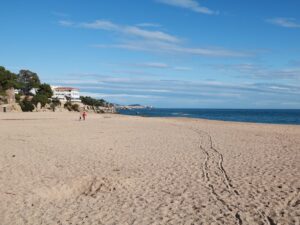

Platja Gran Beach of Platja d'Aro
41.8133450000, 3.0678420000
The city beach of Portbou (Platja Gran de Portbou) is the northernmost beach on the Costa Brava coast that is fully equipped for the pleasure of its visitors: it has restaurants, bars, shops, showers, bathrooms and parking. The beach is long and narrow, measuring 270 m long and 15 m across, with dark grainy sand coverage. A small marina can be found to the right.
Despite the impressive list of amenities in Portbou, its beach enjoys moderate crowds even at the peak of the high season in July and August. Most of the tourists vacationing here are Catalans and their neighbours from France (the French-Spanish border is only a kilometre away from Portbou)—vacationers from other countries rarely venture north of Roses or Cadaqués, preferring to stay closer to Barcelona.


Portbou Beach
42.4271840000, 3.1609110000


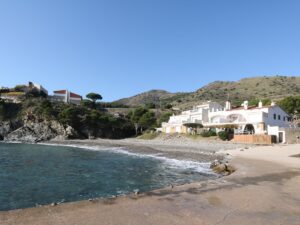
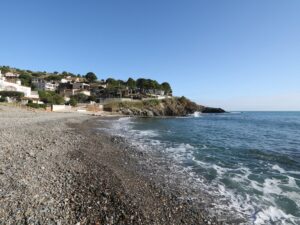
The beach of Sa Conca (Platja de Sa Conca) is the home beach for residents and guests of S’Agaro. It is a sandy strip that’s 400 m long and 40 m wide with all the attributes of a well-equipped beach. Plenty of space, shallow water entrance and parking nearby make it a favourite among families vacationing in the central Costa Brava, especially families with kids.
Sa Conca is a starting point for the longest swimming route on the coast that’s part of the Vies Braves network: from here, you can swim 2 km to reach the beach of Sant Pol.
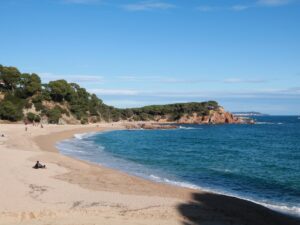
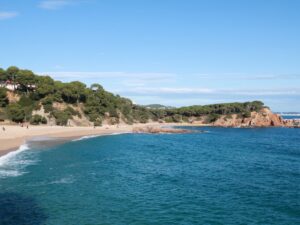
Sa Conca Beach
41.7974410000, 3.0605990000
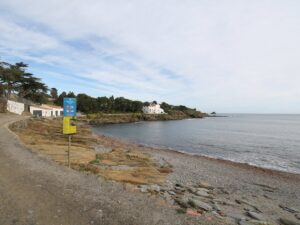
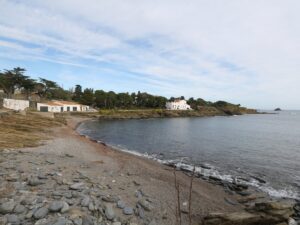


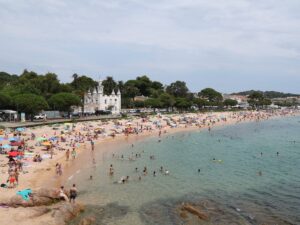
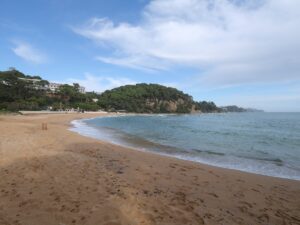
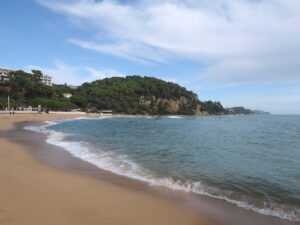
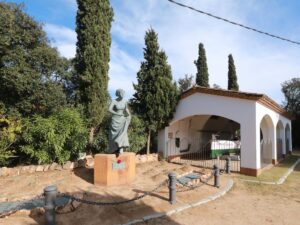
Santa Cristina Beach
41.6883030000, 2.8184390000
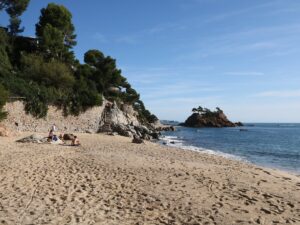
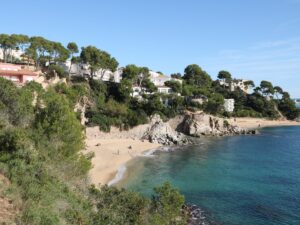
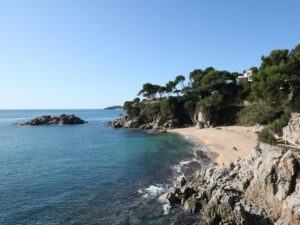
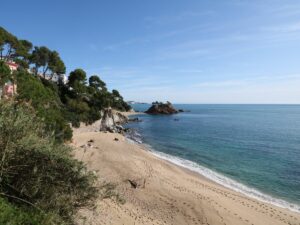
Cala Belladona is located right in the middle of the stretch between Platja d’Aro and Sant Antoni de Calonge. It’s a small cove measuring only 150 metres in length and 30 metres in width, covered with natural large-grain sand. It’s a fairly “wild” beach with no summer amenities, with the exception of a seasonal beach café (chiringuito).
The main attraction of the cove lies on its southern side. A tiny isle Belladona Grossa is home to a seagull colony, so do approach with caution—seagulls lay eggs there and may be aggressive to unexpected visitors threatening to disrupt their offspring.
The Belladona Cove
41.8254370000, 3.0809820000
Cala Vigatà is a cove on the southern border of Sant Feliu de Guíxols measuring about 150 metres long and only 15 metres wide. To reach it, simply follow the street Camí de les Penyes until the coordinates (41.775814, 3.025768), where you can park and walk towards the sea—in about 50 metres you will see stone steps on your right that will lead you right into the Vigata cove.
The cliffs surrounding Vigatà are so close to the sea that its pine trees can literally touch the water. The soil cover of the cove is a mix of sand and pebbles, with no beach amenities to speak of. Despite that, the cove is wildly popular thanks to the natural treasures it hides underwater—Posidonia meadows, starfish, and colourful fish schools attract snorkelling and diving lovers alike.
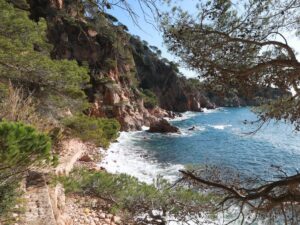
The Vigatà Cove
41.7740260000, 3.0257930000