


Sights of Palafrugell

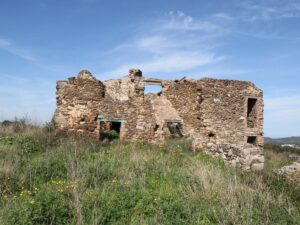
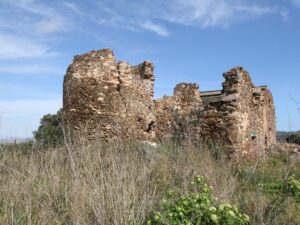
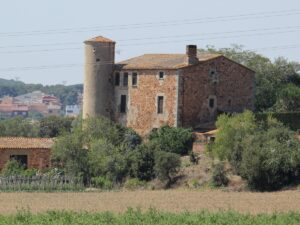
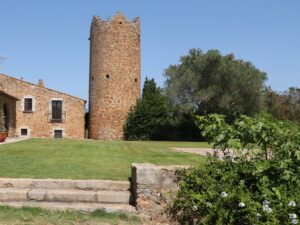
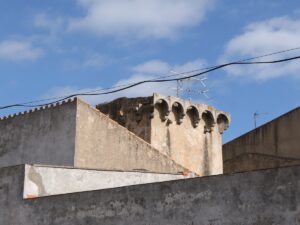
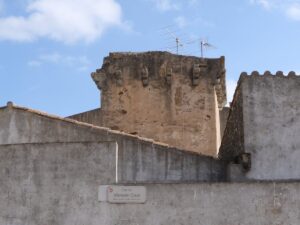
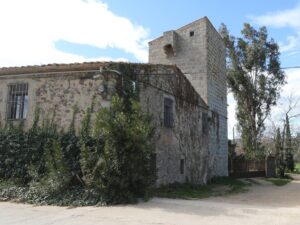
The estate and stronghold Can Borrull in the township of Santa Margarida in Palafrugell stands out from other structures of its kind by having two watchtowers instead of one and containing an integrated chapel, known as Santa Margarida or Sant Ponç de la Vilarnau. The chapel is significantly older than the house itself—it dates back to the 10th century, while the estate appeared in the township a whopping six centuries after.
The Borrull family had no land, no money and no power up until the 15th century when one of the family members distinguished himself during the Catalan Civil War of 1462-1472 by showing uncommon leadership and courage. He assembled a squad of volunteers to march to Girona, to the rescue of the crown prince Ferdinand and his mother Queen Juana Enríquez, trapped in the besieged Força Vella fortress. Upon becoming king, Ferdinand II of Aragon bestowed a military rank onto Borrull, laying the foundation of the family’s good fortunes. Soon after, the Borrulls controlled a significant part of the lands between Palafrugell and the coast.
Coordinates: 41.907360, 3.172205
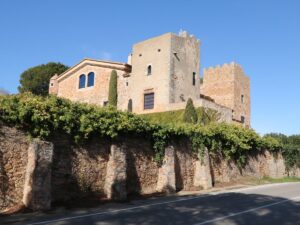
Can Borrull Fortress
41.9073600000, 3.1722050000
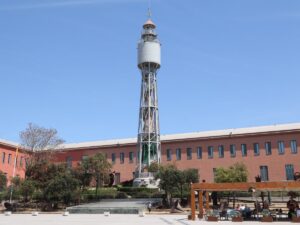
The tower crowning the factory of Can Mario is one of the most recognizable structures in Palafrugell and its undeniable landmark. It was built in 1904 by architect General Guitart i Lostaló who also contributed significantly to the advancement of Art Nouveau on the Costa Brava coast—Casino La Constància in Sant Feliu de Guíxols is another one of his works. In 2000, Torre Can Mario was designated a heritage object of national interest.
The tower is a metal structure on a stone base with a door to access the spiral staircase that leads to the top. There, two cylindrical blocks with forged railing sit atop one another—the lower is a water reservoir while the upper, smaller one, is an observation deck. The Can Mario tower is crowned by a cone-shaped tip with a vane and the antique factory’s coat of arms. Torre Can Mario is a remarkable example of industrial Art Nouveau.
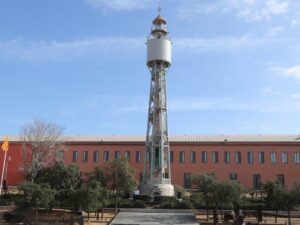
Can Mario Tower
41.9185140000, 3.1660010000
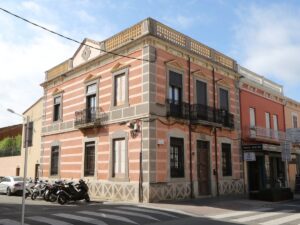
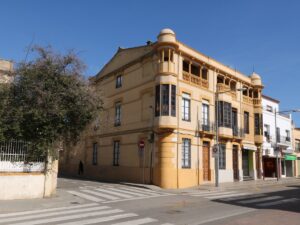
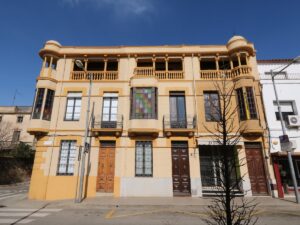
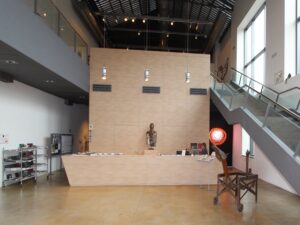
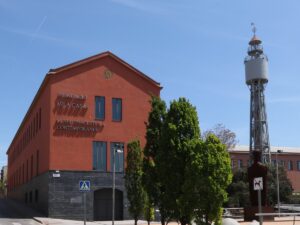
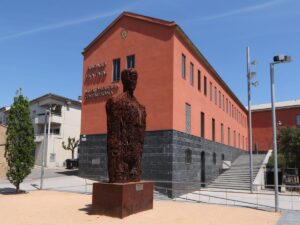
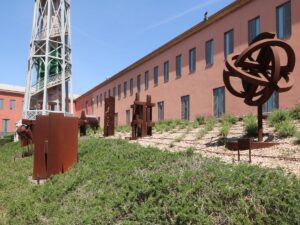
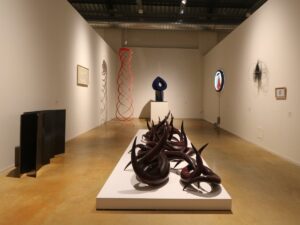
The Can Mario Museum in the Costa Brava was opened in 2004 by Fundació Vila Casas, a non-profit organization founded in 1986 to support modern arts and medical research led by Antoni Vila Casas, a pharmacist and a philanthropist.
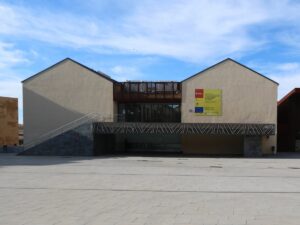
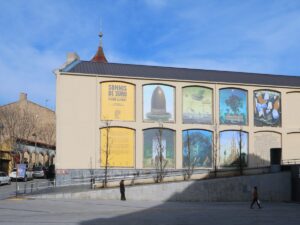
The museum occupies an old factory, built in 1901, that once had been the world leader in cork production. The factory was known as Can Mario.
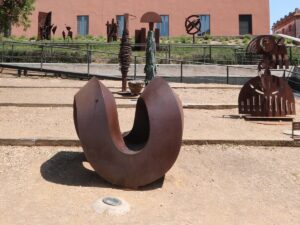
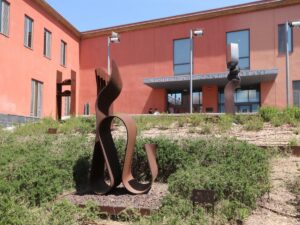
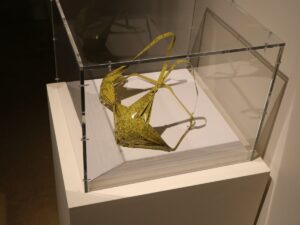
The Can Mario Museum houses more than 200 artworks of sculptors who had lived and worked in Catalonia. One part of the permanent collection is located outdoors, in the garden Jardí de Can Mario right next to the museum entrance.
For the museum opening hours, visit the official website of Can Mario.
Phone: 972 306 246


Museum of Can Mario
41.9186860000, 3.1661270000

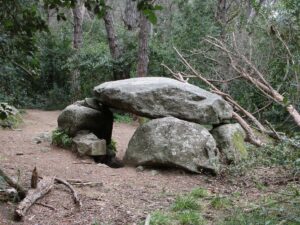
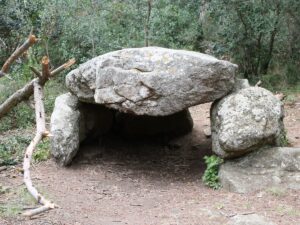
The dolmen Can Mina dels Torrents is a chamber of an irregular shape, 2.1 m long and 1.6 meters wide, covered by a large boulder for a roof. An artificial mound and a hallway leading to the chamber, structures typical for this type of archaeological object, have not survived.
The dolmen is located in a pine forest close to Palafrugell, in the pueblo of Torrents not far from the Can Mina estates (hence the dolmen’s name).
The Dolmen of Can Mina dels Torrents
41.9033436000, 3.1907341000
Museums dedicated to a single object or thing are curious creatures. To attend them, you either have to be very, very interested in the object or thing, be it how the thing works, how it’s made or how it has evolved over the years; this thing may be pleasing to the humanity in general (a museum of chocolate sounds pretty neat), or you are just… bored. Boredom during a vacation sounds antithetical to the spirit of having a good time, but it may lead you to truly interesting places, sometimes just as effectively as a recommendation by a friend can.
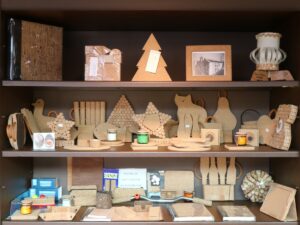
So to decide to visit the museum of cork in Palafrugell, you need to know the most important fact about it first: its souvenir shop is open to the public and doesn’t require a museum ticket to come in. Wine corks aren’t the only use for the cork tree bark; cork is light, easily compressible, has low thermal conductivity, is largely liquid-proof and thus has many applications outside of the wine bottle. You won’t find cork tiles, building blocks, lifebuoys or insulation material at the museum gift shop, but kitchen accessories, coin purses, bags, stationery, toys, jewelry, and even neckties are aplenty! Most items are handmade and make great souvenirs.
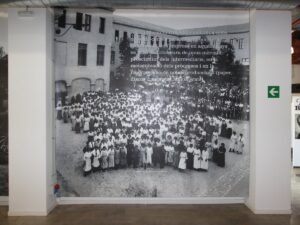
Cork trees in the Costa Brava are common, and their bark has been used in crafts and trades for generations. The opening of the cork factory known as Can Mario in 1900 marked the end of the hand-produced era and took the cork production to industrial heights. After twenty years of stable growth, the number of factory workers reached a thousand, branches were opened in other Spanish towns, and international offices appeared in London and New York.
In the post-war years, Can Mario started losing its market share — the factory was subsequently sold to the American company Armstrong Cork Co. In the 1970s the cork production came to a complete halt due to continuous financial losses, and a museum was opened on the factory grounds instead. Naturally, a big part of the exposition is dedicated to the history of the factory and the town whose everyday life was largely dependent on it.
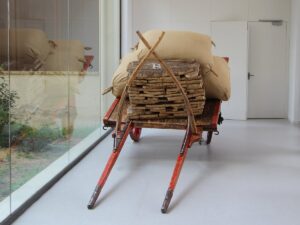
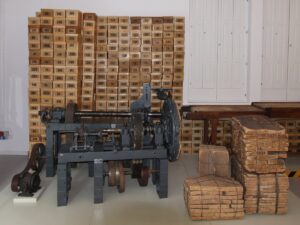
The other part focuses on the manufacturing process of bottle corks — each stage of production, from bark harvesting to cork shaping, is explained in detail. The machinery that gradually lessened the impact of hard manual labour on factory workers is on display as well.
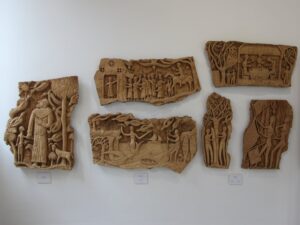
The museum occupies over 36,000 square feet with 6200 objects in the collection. It is the largest museum dedicated to cork in the world. One of its most fun displays is the exhibition of famous works of art replicated in cork. You are hard-pressed to not be amazed at the talent and perseverance of the artists whose craft allowed them to recreate Da Vinci’s “Last Supper” with this pliable material!
Visitor information
Address: Carrer de Begur, 14 | Palafrugell
Phone: +34 972 307 825
Opening hours
July and August: Monday to Saturday 10:00 am — 2:00 pm and 5:00 pm — 8:30 pm, Sunday 10:00 am — 2:00 pm.
Other months: Tuesday to Friday 10:00 am — 1:00 pm and 4:00 pm — 7:00 pm, Saturday 10:00 am — 2:00 pm and 5:00 pm — 8:00 pm, Sunday and holidays 10:00 am — 2:00 pm, Mondays closed.
Open on December 24 and 31, January 5 from 10:00 am — 2:00 pm.
Closed on December 25 and 26, January 1 and 6, May 1.
The Museum of Cork of Palafrugell
41.9183560000, 3.1653310000