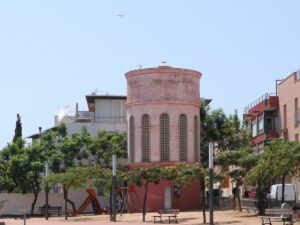


Sights of Palamós

Phone number: 972 600 424
Opening hours (October-April): Tuesday-Friday 10:00 am to 1:30 pm and 3:00 pm to 7:00 pm; Saturdays, Sundays and holidays 10:00 am to 2:00 pm and 4:00 pm to 7:00 pm.
Opening hours (May, June, September): Monday-Friday 10:00 am to 1:30 pm and 3:00 pm to 7:00 pm; Saturdays, Sundays and holidays 10:00 am to 2:00 pm and 4:00 pm to 7:00 pm.
Opening hours (July-August): every day 10:00 am to 8:00 pm.
Closed on 1st and 6th January, 25th and 26th December; 5th January closes at 6:00 pm.


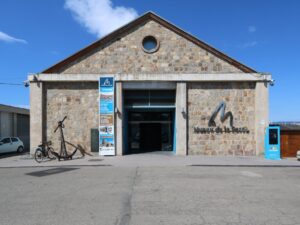
Museum of Fishing
41.8449550000, 3.1273310000
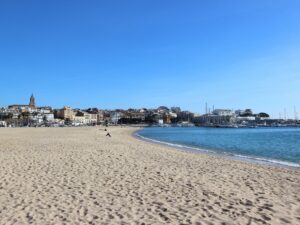
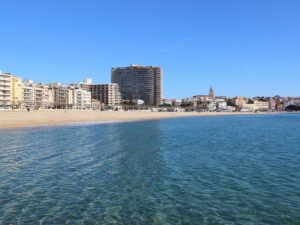
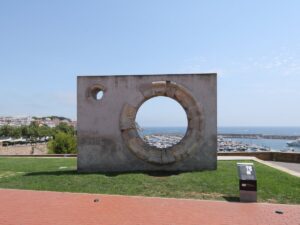
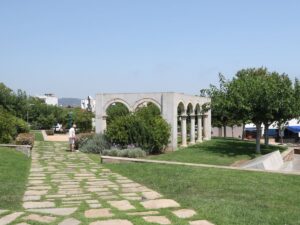
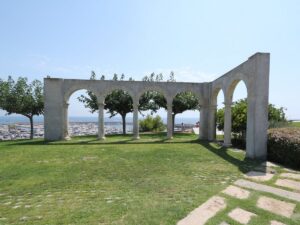
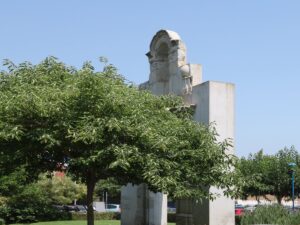
Directions: Locate a small path that begins at the eastern side of the Castell beach.
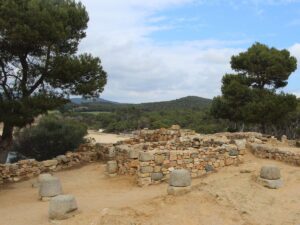
Ruins of Poblat ibèric de Castell
41.8607270000, 3.1584020000
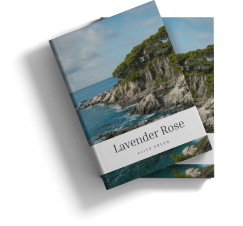
Les Illes Formigues (The Formigues Islands) is an archipelago in the Palamós and Calella de Palafrugell region of the Costa Brava that got its name thanks to its shape, size and the placement of all 16 islands that form it. The Formigues Islands are uninhabited, void of plant life, visited only by seagulls and cormorants keen to sunbathe on their shores less than 1 km away from the mainland. The only human presence is that of a lighthouse whose lights flash every 9 seconds, capable of reaching ships within the 6-nautical-miles radius.
Below the sea level, however, it is much livelier. Steep water depth differences (9 to 45 meters) and numerous underwater caves have played a part in the formation of a variety of biotopes (a land or a water area with uniform environmental conditions well suited for living organisms). The presence of biotopes drove the municipal government to unsuccessfully look for funding to transform the Formigues Islands into a natural reserve in 2011.
Throughout their long existence, the islands have witnessed many shipwrecks and even sea battles, one of which is written into the glory chapter of Catalonia’s history. It was here that on August 28, 1285, the 40-galley fleet under the command of Admiral Roger of Lauria sank 30 French and Genoese boats, disrupting the supply chain of the French army and altering the course of the war between the Crown of Aragon and France.
History is silent on the fact that much bloodshed, both literal and figurative, occurred for the control of the islands, possibly because of their small size — the archipelago occupies just over 0.3 hectares of land in total — and a highly advantageous strategical position. This is why the story of “the war” between the municipalities of Palamós and Palafrugell to call the islands theirs reads more like an anecdote than a fact.
The heated dispute between the towns had reached the High Tribunal of Spain. Each party had different reasons to litigate: one has fished around the island for centuries, while the other has had the islands as a backdrop since time immemorial… In the end, any verdict would have changed very little in the lives of locals and the tourists who come to enjoy the Costa Brava every season. The court ruled in favour of the 1717 agreement stipulating that one half of the archipelago belonged to Palamós and the other one to Palafrugell, ending the feud for good.
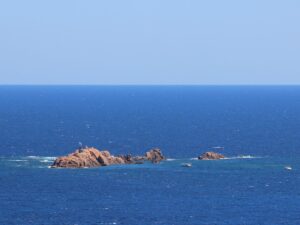
The Formigues Islands
41.8626450000, 3.1857840000
Directions: The castle is one of the stops along the PR®-C 105 route beginning in Palamós.
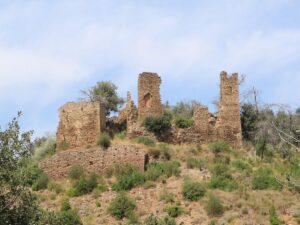
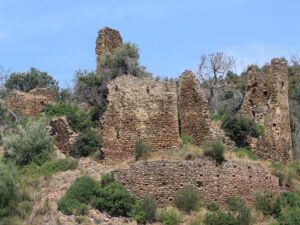
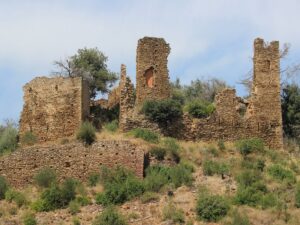
Vila-romà Castle
41.8820620000, 3.1077920000