

Sights of Sant Feliu de Guíxols

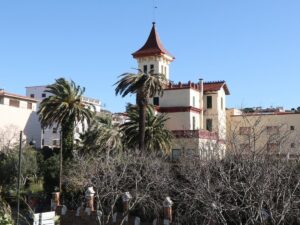
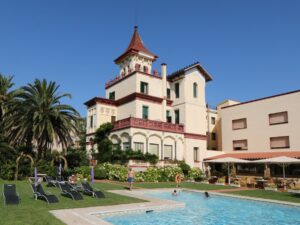
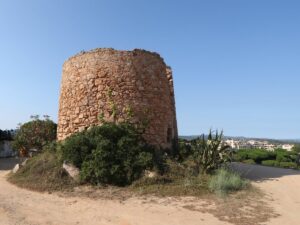
Asil Surís, the residence for homeless children and dispossessed seniors, was built in Sant Feliu de Guíxols between 1904 and 1906, financed by the charitable foundation started in 1845 by Joan Surís i Llorens. The author of the project is Art Nouveau architect General Guitart i Lostaló.
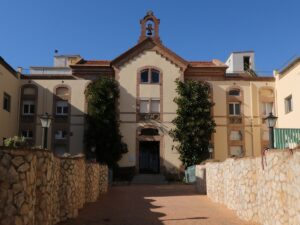
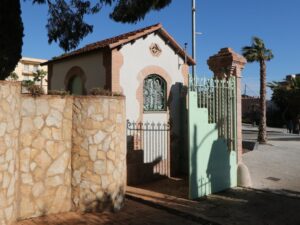
Asil Surís Mansion
41.7867810000, 3.0279920000

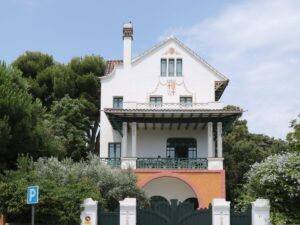
Casa Estrada, known colloquially as Xalet de les Punxes (“House of Spikes”), is one of the most conspicuous mansions lining up the promenade along Sant Pol beach. Unlike its neighbours, it boldly faces the street, not hiding behind garden greenery, and thus can be easily seen from any point on the beach. Its nine turrets—eight along the perimeter and one in the centre—inevitably attract the gaze and attention of the passersby who also can’t help but notice the unkempt and shoddy appearance of the house as a whole.
Until 1890, when the construction of Casa Estrada began, this spot had been occupied by barracks where Pere Màrtir Estrada Cama (1841-1911), the local industrialist made wealthy by cork production, stored his boat and tools. Building the mansion took over 20 years and finished in 1912, after its commissioner’s death.
Local historians have always wondered whether there was any connection between the nine turrets of the estate and the nine children of the owner, born between 1871 and 1883. The rumour goes that Pere Estrada dedicated each of the turrets to each one of his children but ostensibly some neighbours may have heard that the father himself denied it…
The Estrada family line is well-respected in Sant Feliu de Guíxols, whose history can be traced back to the 18th century. After Casa Estrada, in the short period between 1910 and 1915, the family managed to erect four more mansions on the boulevard Passeig de Sant Pol.
Casa Estrada was built in the heyday of the Catalan modernisme and its influence is easy to spot in the usage of the trencadís mosaic technique and decorations using nature motifs and ornaments.
In 2006, the structure received a spot on the list of cultural heritage objects of local interest. This status implies that the owner follows specific norms to maintain the appearance of the historic object.
In 2013, the municipality of Sant Feliu de Guíxols allowed the usage of mansions along Passeig de Sant Pol as tourist accommodation. The hustle and bustle around Casa Estrada was almost instant—its new owner conceived an idea of opening a luxurious hotel here.
However, the construction came to a halt barely a year after it started. Ever since then the locals and the visitors of Sant Feliu de Guíxols may witness the sorry state of the historic mansion that sits unoccupied and uncared for. At the same time, its shabby appearance is in no way threatening to the passersby so the municipality can’t do much to compel the owners to keep it neater.
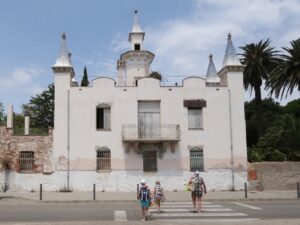
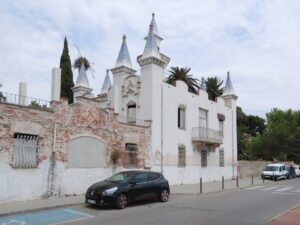
Casa Estrada (Tower of Spikes)
41.7890240000, 3.0455790000
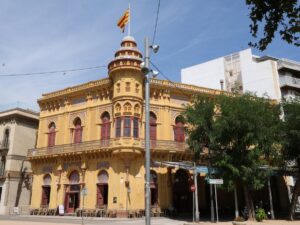
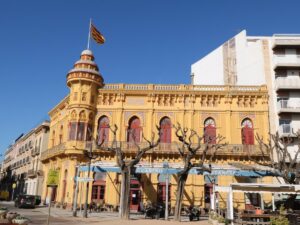
The word “casino” is common in Spain, especially on plaques of historic mansions, which likely confuses many a tourist. These buildings have no roulette tables, no slot machines, no bouncers and no bill-counting rooms. Gambling casinos frequently robbed in Hollywood movies have only been legalized in Spain since 1977 whereas the so-called “cultural casinos” (casino cultural) can be traced back to the mid-19th century.
A sort of a hybrid between an English gentlemen’s club and a community centre, a Spanish casino may cater to either side of the spectrum depending on the social status and income of the people who frequent it. Come closer to a casino’s doors and read the upcoming event announcements—you will likely see flamenco, yoga, chorus singing, children’s drawing competitions and the like. The “classic” activities at the Spanish casino are concerts, dances, public readings, discussion groups, billiards, chess, dominoes and cards (the members who gamble definitely have an outlet there too).
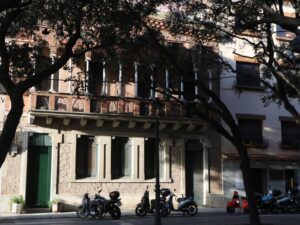
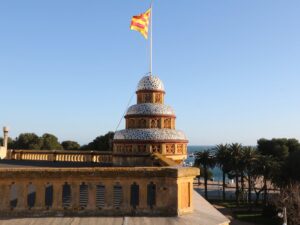
Casino La Constància was founded in Sant Feliu de Guíxols in 1851, uniting craftsmen, entrepreneurs and blue-collar workers keen on self-improvement. Up until 1888, the club members moved from rental to rental across town, accumulating the funds to acquire their own building. The new headquarters were inaugurated in 1889. The author of the project was Art Nouveau architect General Guitart i Lostaló, whose other works in Sant Feliu de Guíxols include the shelter for orphans and dispossessed seniors called Asil Suris.
Balls and concerts held at the casino attracted large crowds, especially in summer and during the Christmas holidays. There was a café with a terrace on the ground floor; the casino also had its own library. In the minds of several generations of Sant Feliu de Guíxols locals, up until the 1960s, the casino was associated with entertainment, diversion and self-education. The town denizens nicknamed it Casino dels Nois (“Casino of the Young”), noting the roaring energy of the club members thanks to whom life was always bustling in Sant Feliu de Guíxols.
The tourist boom that enveloped Costa Brava in the 1960s left its mark on the town, offering new ways for the young people to entertain themselves, and the attendance of the casino events declined sharply.
Under financial pressure due to dwindling membership fees, in 1975, the administration of Casino La Constància reached a swap agreement with one of the construction companies of Sant Feliu de Guíxols. This change of ownership would inevitably lead to the demolition of this Art Nouveau monument—its proximity to the beach was too close and too precious. The developers made no secret of their plans to build an apartment building in its place. The information about the upcoming deal surfaced to the public and caused a big stir, resulting in large protests that forced an administration change among the casino management. The deal fell through. In 1978, La Constància received the status of a cultural heritage object of Spain, guaranteeing its inviolability for life.
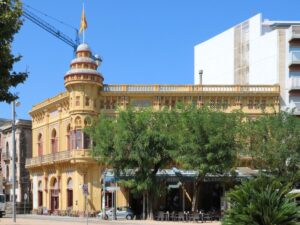
Casino La Constància
41.7817280000, 3.0321790000
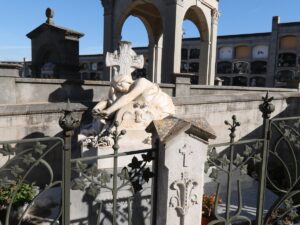
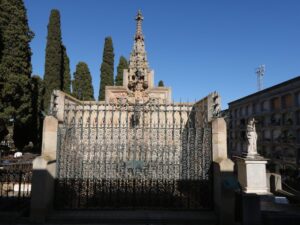
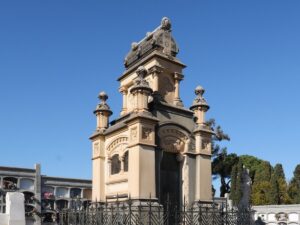
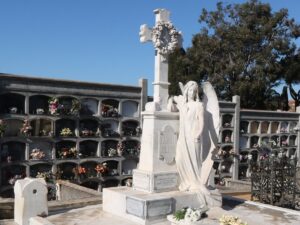
The cemetery of Sant Feliu de Guíxols is on the list of the cultural heritage objects of Spain thanks to the works of renowned Catalan architects and sculptors displayed there. For instance, the crypt of the Casas family was designed by the outstanding Art Nouveau architect Josep Puig i Cadafalch. The sculptures on the crypt of the Sibils family were completed by Rafael Atché who authored the statue crowning the monument to Columbus in Barcelona. Last but not least, Josep Campeny i Santamaria who designed the angel for the graves of the Vilaret family also built three memorable fountains in the Barcelona’s Eixample: Font de la Granota (Carrer de Còrsega – Avinguda Diagonal), Font del Noi dels cantirs (Plaça Urquinaona) and Font del Trinxa (Ronda Universitat – Carrer del Pelai).
Cemetery of Sant Feliu de Guíxols
41.7802170000, 3.0197650000
Phone number: 640 688 966
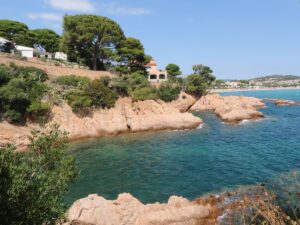
Climbing Track Via Ferrata Cala del Moli
41.7791520000, 3.0435790000
Phone number: 972 820 051
Opening hours (30th June to 14th July): Monday-Friday 10:00 am to 1:00 pm and 4:00 pm to 7:00 pm; Saturdays, Sundays and holidays 10:00 am to 8:00 pm.
Opening hours (15th July to 8th September): every day 11:00 am to 9:00 pm
Opening hours (9th September to 13th October): Monday-Friday 10:00 am to 1:00 pm and 3:00 pm to 6:00 pm, Saturdays and Sundays 10:00 am to 8:00 pm.
Espai Carmen Thyssen
41.7800380000, 3.0263950000
Phone number: 972 821 575
Opening hours: Monday-Friday 10:00 am to 2:30 pm, Saturdays 10:00 am to 2:00 pm and 4:00 pm to 6:00 pm, Sundays and holidays 10:00 am to 2:00 pm.
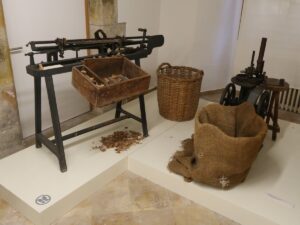
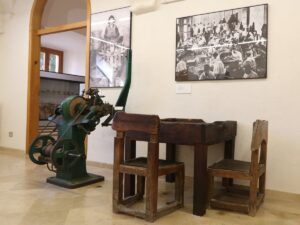
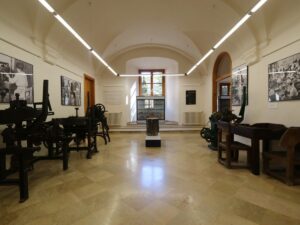
History Museum of Sant Feliu de Guíxols
41.7801080000, 3.0262300000