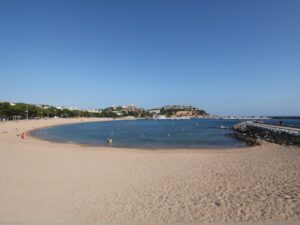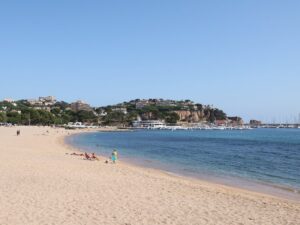


Sights of Sant Feliu de Guíxols

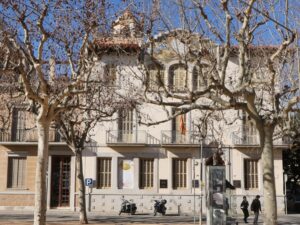
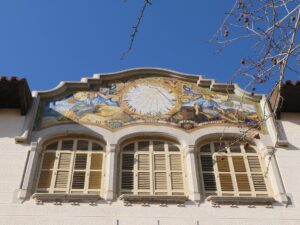
Directions: From the yacht club Club Nàutic Sant Feliu de Guíxols in Sant Feliu de Guíxols, walk 2 minutes along Camí de Ronda.
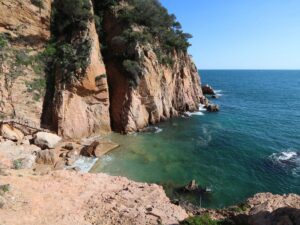
Jonca Bay
41.7787400000, 3.0399560000
Phone number: 972 821 575
Please call ahead to confirm the date and time of visit.
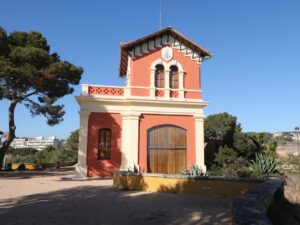
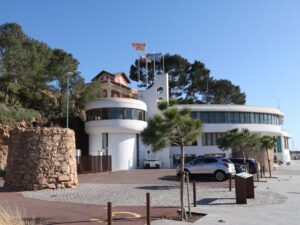
Maritime Rescue Museum
41.7799650000, 3.0354120000

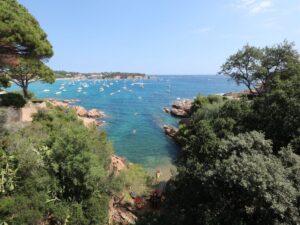
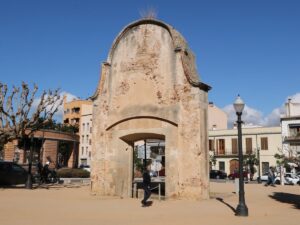
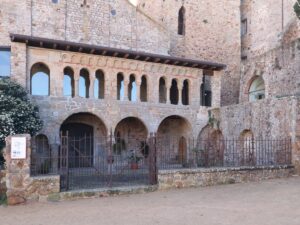
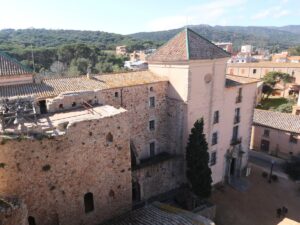
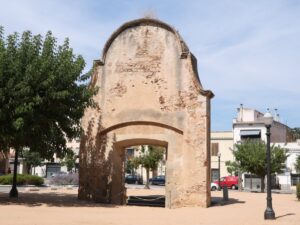
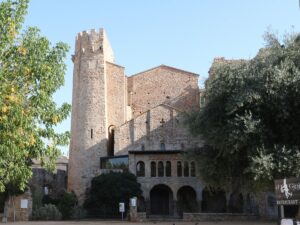
Monastery of Sant Feliu de Guíxols
41.7802360000, 3.0267670000
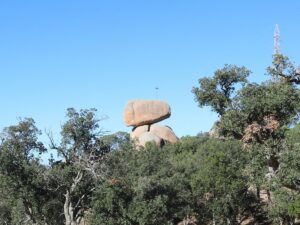
Pedralta, the main natural attraction of the Costa Brava resort Sant Feliu de Guíxols, weighs 101 tonnes and rests upon a 17-meter cliff. “Rests” is probably not the right word for it as the boulder barely touches the surface of its base, and is famous for precisely this reason.
For thousands of years, Pedralta had topped the cliff precariously, moving and tilting even from the lightest push of a hand, until in 1996 a strong storm finally toppled the stone to the ground. To determine whether it was worth paying government funds for the return of the phenomenon to its usual place, the municipality held a survey among residents and upon receiving a resounding “yes” paid for the hire of two cranes. In May 1999, Pedralta was hoisted back to its rock but put into place a bit more securely.
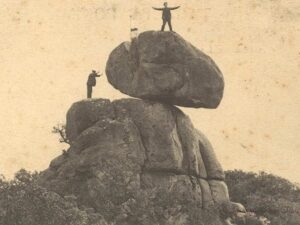
Naturally, such a wonder of nature has been a magnet for all sorts of visitors. In 1890, a citizen group from Sant Feliu de Guíxols felt determined to put up a cross on top of Pedralta. Saint John’s Eve was chosen for such an important affair. The cross was delivered, placed on top of the rock, a good lunch was had next to it, and the participants went on their merry ways.
It is unclear for how long the disappearance of the cross had gone unnoticed, but once the futility of the attempts at the betterment of Pedralta became apparent, the wonder was left to be—until 1960, that is, when the cross idea reappeared again. Another cross was put in place and an annual gathering one week before the second Easter (Domingo de Pentecostés) was established, which has since become a favourite local holiday named Aplec de Pedralta. To properly begin the holiday and to celebrate mass, an hermitage next to Pedralta was built, whose first stone was laid in 1961.
Visitor information
To visit Pedralta, type in Sant Feliu de Guíxols in your GPS navigator and add the street Carretera de Pedralta as the destination. Follow the signs to Pedralta that will at some point appear along the way. Pedralta is about a 15-minute drive away from the town centre.
Google Maps coordinates: 41.791735, 2.981819.
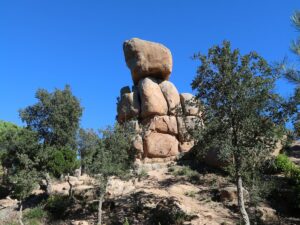
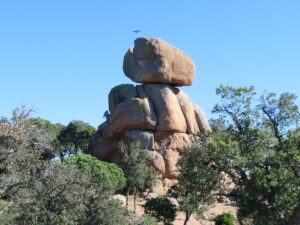
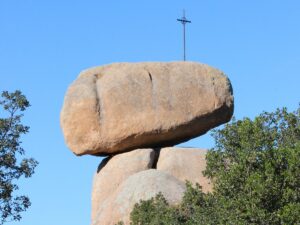
Pedralta
41.7917350000, 2.9818190000


Phone: 665 422 830
Please call ahead to confirm the date and time of visit.
Rat Penat de Mascanada Museum
41.7824400000, 3.0142310000
The hermitage of Sant Elm (Ermita de Sant Elm), a patron saint of all seafarers, appeared in Sant Feliu de Guíxols in 1452 next to the fortress that had been built two and a half centuries earlier, in 1203.
Both structures were completely destroyed during the war with France at the end of the 17th century. In 1723, a new chapel was erected in place of the ruins, dedicated both to Saint Elm and the Virgin Mary in her role as the protectress of travellers (Nostra Senyora de Bon Viatge). This historic and cultural monument acquired its present look during the restoration completed in 1993.
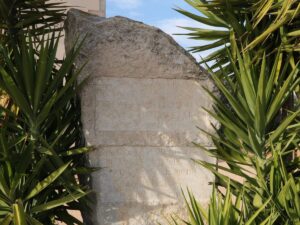
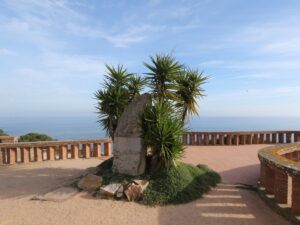
Ferran Agulló i Vidal, poet and publicist, is regarded as the first to have ever used the adjective brava (from Catalan and Spanish: brave, courageous, wild) in describing the local coast. The story goes that the idea occurred to him while he was standing next to the hermitage of Sant Elm, admiring the panoramic views. On September 29, 1963, the municipality installed a memorial stone next to the hermitage to commemorate the author of the Costa Brava brand.
Address: Avinguda Sant Elm, 12 | 17220 Sant Feliu de Guíxols, Girona
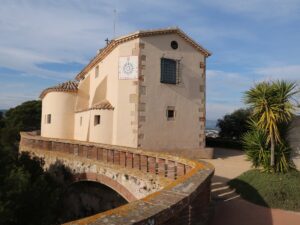
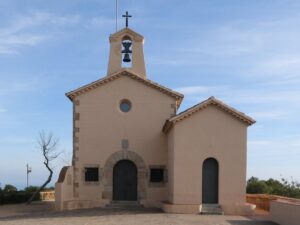
Sant Elm Hermitage
41.7746260000, 3.0274070000